- Choosing bags
- Choosing gear
Choosing bags
Brands
Trusted brands for bags and pouches for preppers include the market leaders Maxpedition, Vanquest, Osprey, 5.11, Vertx and North Face. Other leading brands on the High Street include Deuter for hiking with Eurohike at the budget end. Then there are smaller prepper oriented brands like 3V Gear‘s entry level Direct Action‘s mid range and Mystery Ranch‘s higher end tactical bags. Next are lesser known, less outdoorsy or more specialist brands like Everki and Bellroy for commuting, Nomatic and Wandrd for travel, Everyman for EDC, Defy for urban chic, Patagonia and Technicals for technical, Mission Workshop for outdoors fashion, Doughnut for school cred, Peak Designs for tech protection bags, Camelbak for hydration and Pacsafe‘s anti slash, some of which you have to import.
Format
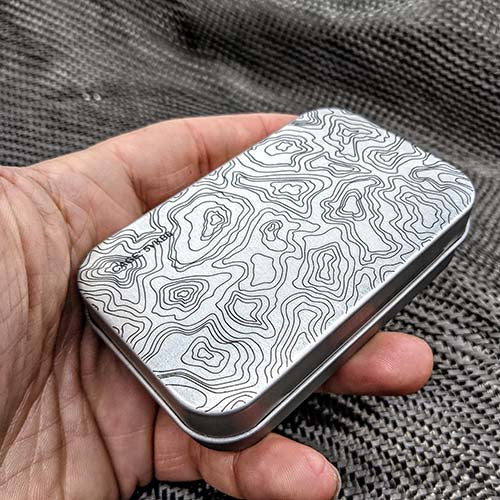
Your EDC kit fits in a tin, pouch or small bag, and a tin or pouch can then go in a bag.
Pouch
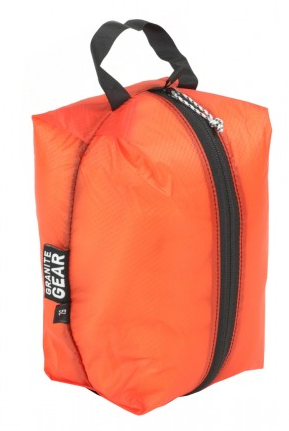
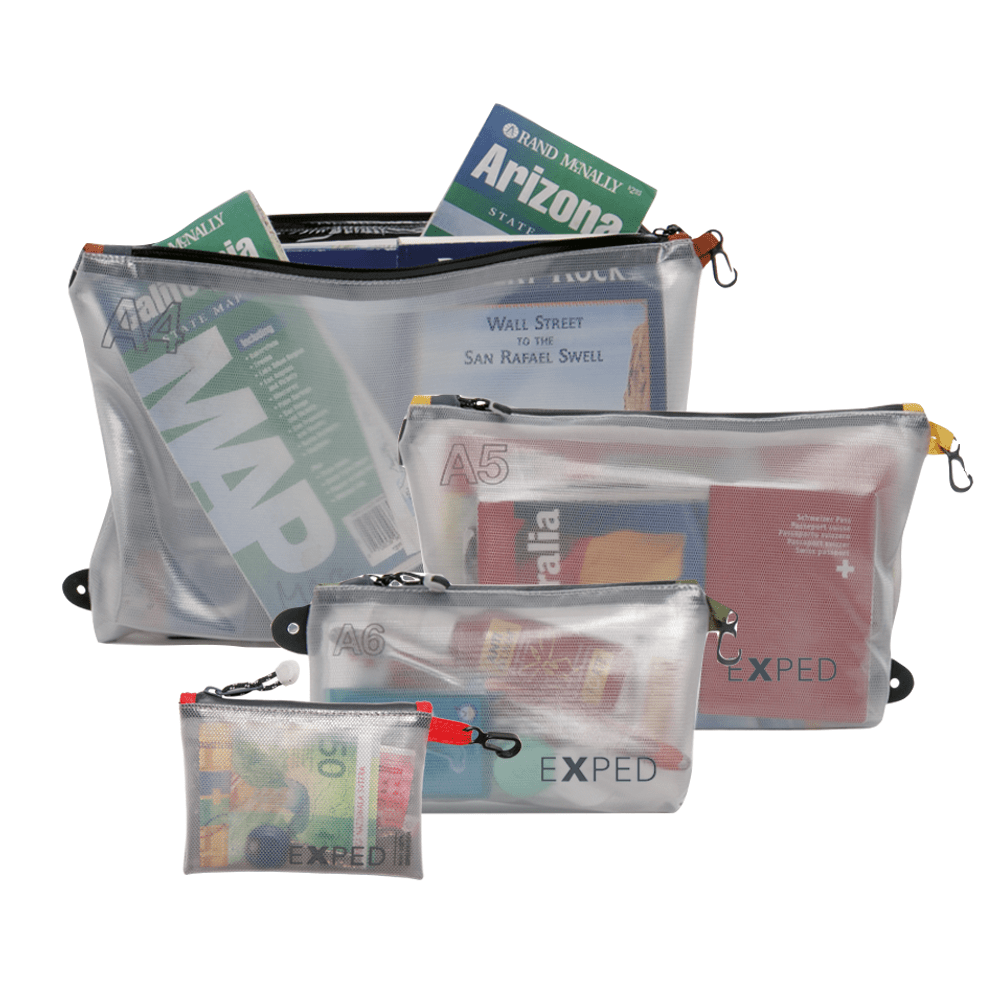
Pouches act as an extra cargo pocket and can handle a small EDC kit, especially for short journeys in good weather with skills. In reality they tend to be full of expensive convenience gadgets. They can also act as organisers inside bags, although packing cubes like Granite Gear’s Air Zipp Sack or Exped’s Mesh Organiser or Vista pouches, or bags with dividers may be more practical. They can also be slipped in car seat back organisers, and pouches for cars are available such as car seat side organisers and sun visor organisers, such as from One Tigris or Tasmanian Tiger, and boot organisers can be as expensive as you like, such as the Kelty Go Box.
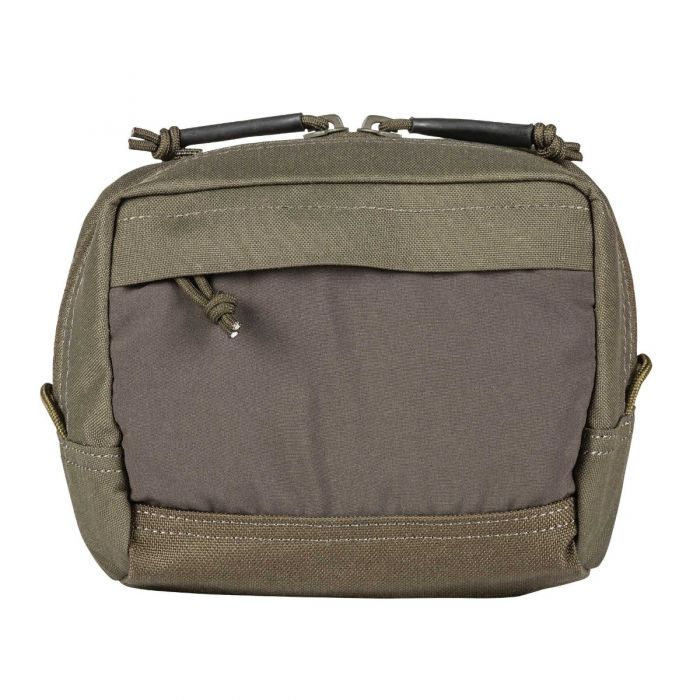
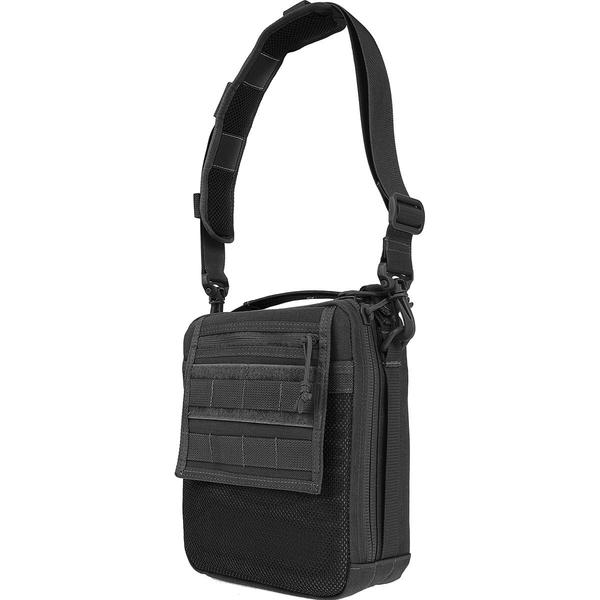
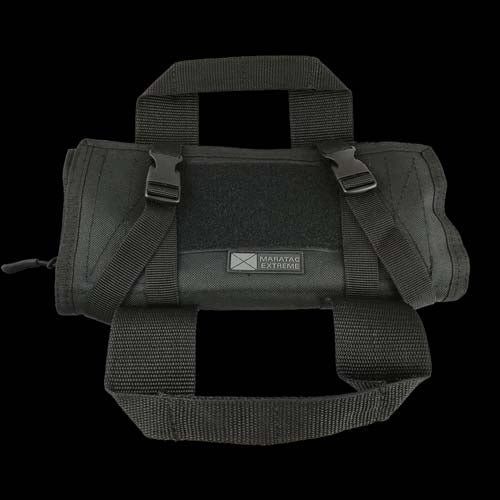
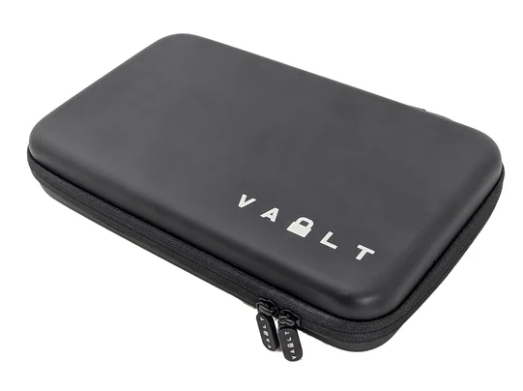
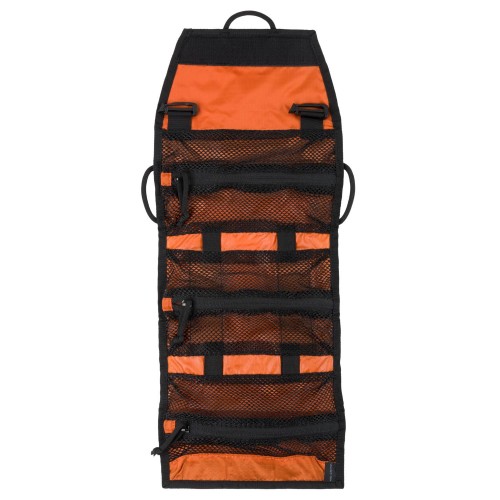
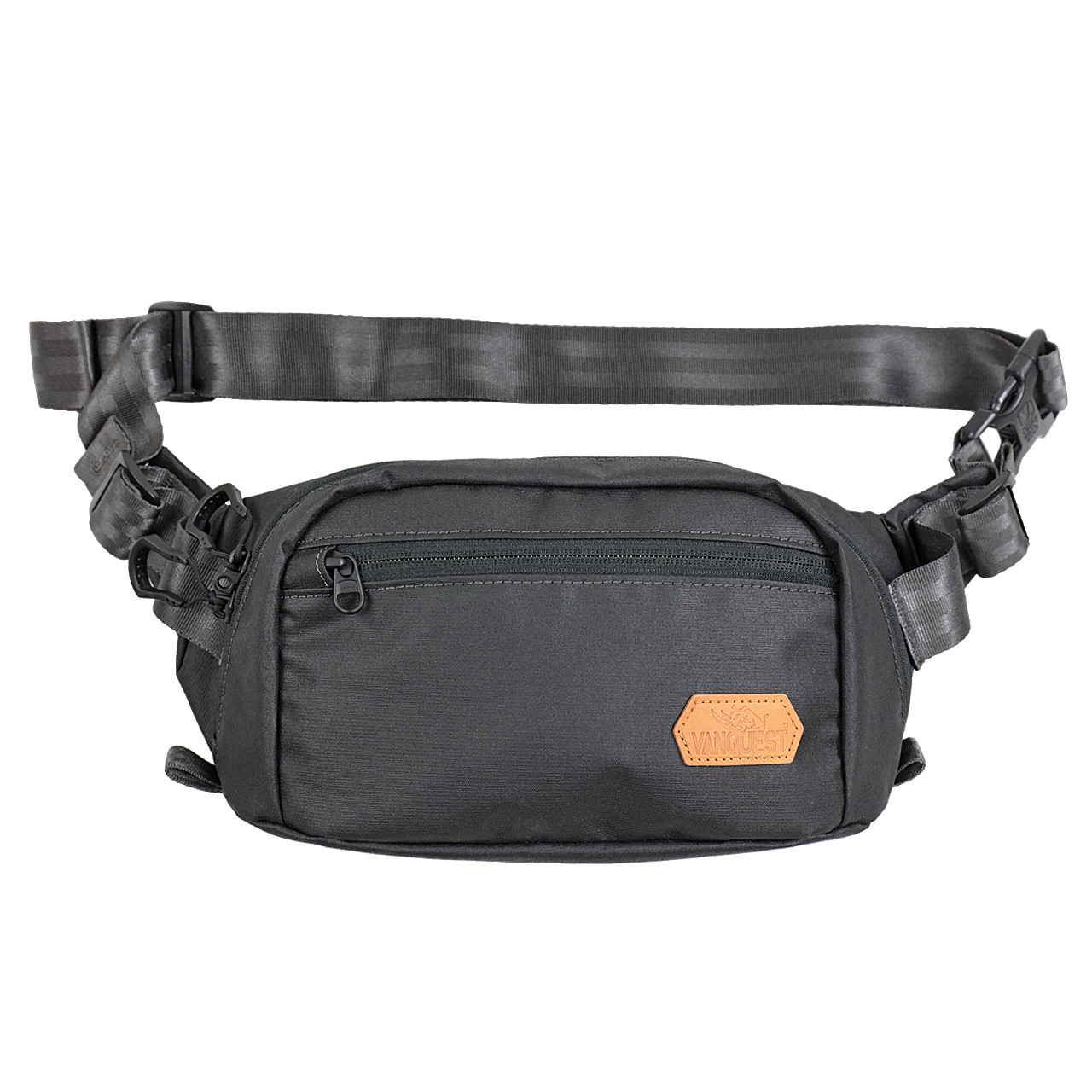
One of two leading EDC pouch manufacturers is Vanquest who offer the Pocket and EDC ranges. The other leader is Maxpedition with their similar Pocket Organisers. 5.11 also have a smaller range. TAD do premium organisers and have a few pouches such as their Booster Pods. Viperade and CountyComm have a good EDC pouch range. Tywi Tactical sell an EDC waistband. LoneLabs do the Covert Utility Pouch, a purse with loops and dividers. Viper do cheap tactical pouches. Kombat do cheap tactical bags from pouches through slings and messengers to backpacks. Fox Outdoors and Clawgear do mid range military style pouches. Brandit do dearer military pouches. Head to Heinnie Haynes for premium EDC gadgets beyond just pouches, such as knives, torches, pens and survival kits. Tactical Geek are worth a look for pouches. Nite Ize and Tatonka have premium waterproof pouches. Bonus do Dyneema pouches. Vault do hard cases, with available panel and pouch insert; StatGear have similar with their Clip & Carry. Helikon-Tex do a camping tool roll the Trip Roll Organiser, but for something bigger and more see-through you may have to pay around £131 for Canadian Prepper’s Bug Out Roll. For carry cases such as drones or waterproof caches, see Plastic Panaro at Trifibre, or Peli.
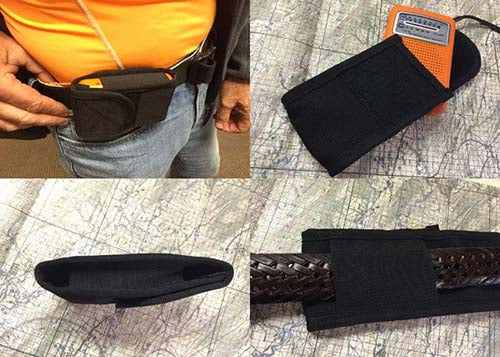
Bear in mind each pouch is extra weight. See-through fabric and hi-vis interior helps find stuff. Opposing elastic hoops need to be interlaced to close properly. Thick heavy belt pouches fall backwards unless attached at the top, but that dangles it in the way of your bum, so a bum bag or thin pouch in landscape format can work better, although anything on the belt is a nuisance when driving or sitting. An alternative is packing cubes if simply organising bags, or clothing with extra pockets perhaps teamed up with pocket protectors for mounting items with clips like pens and torches.
To have something for everything you will want a pouch, pocket protector, waistband, ankle wrap, packing cubes, purse, survival tin, hard case, tool roll and car organisers to, for example, phase from person to bag to car to campsite. You could even load up your dog with panniers such as from Ruffwear.







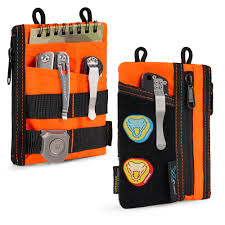
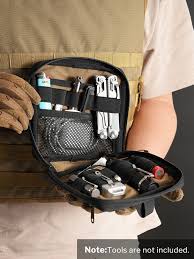




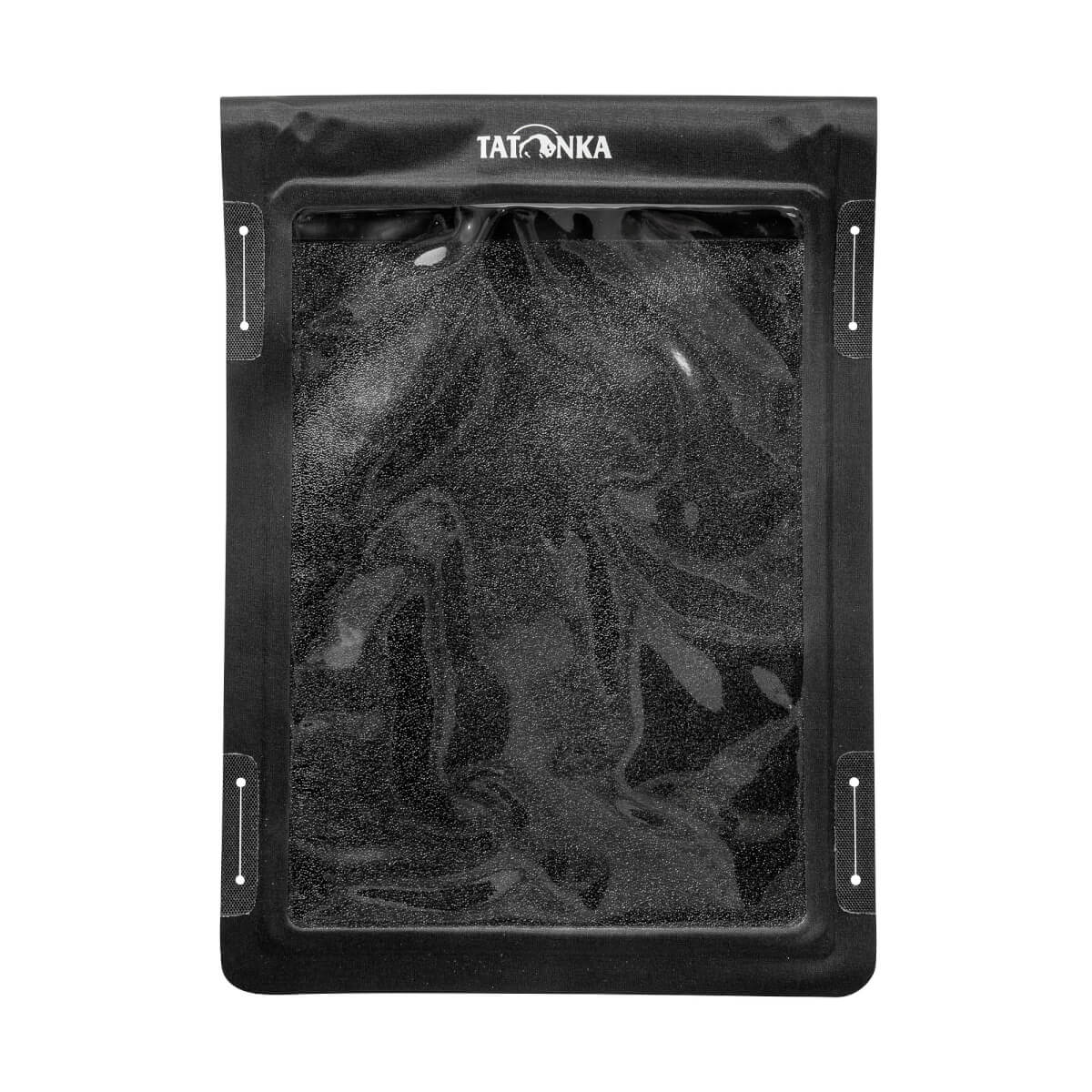

Editors choice:
A good start for pocket organisers would be a Vanquest PPM Husky or Viperade VE26, or the Kombat budget version for £10.
Sling
Suitability
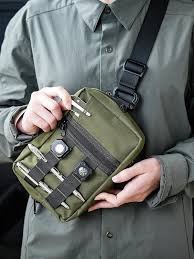
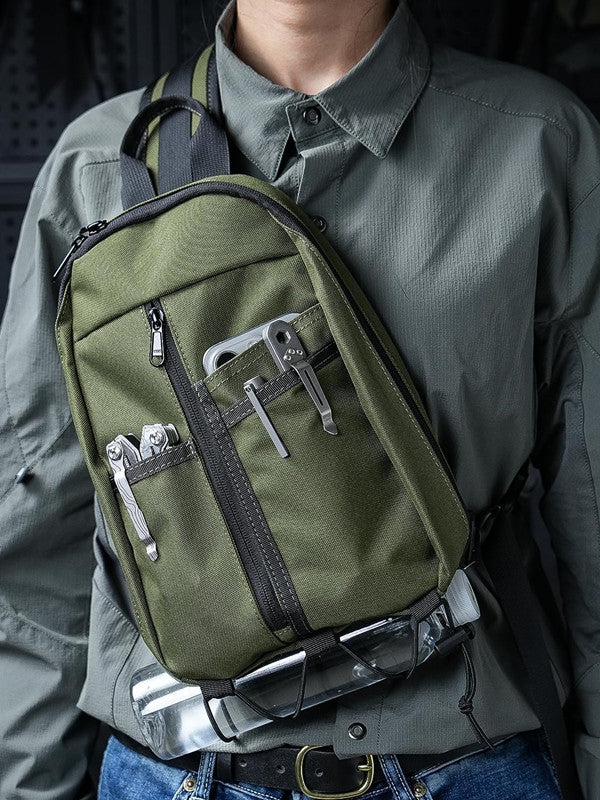
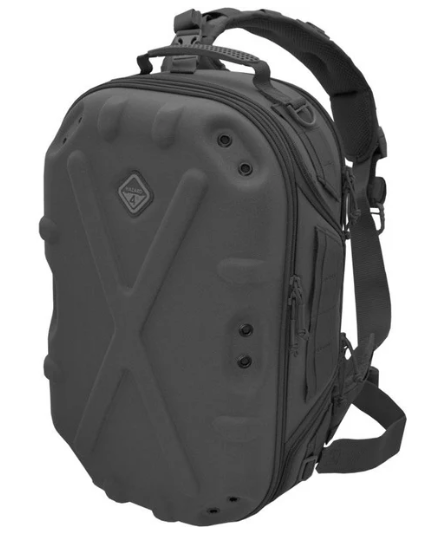
One theory is that a sling helps with the grey man look, as you don’t look like you’ve got much stuff, but you will grow tired of the weight on one shoulder if you expect to walk far enough to need a survival bag. In reality, slings are pushed by the gun community in USA, as you can spin them round in a split second to access the hidden gun compartment. But they could be just right for a large EDC kit, or a get home bag for a short journey, and quick access makes it more likely you’ll use equipment at the right time. So if you work in your home town, or just want something for running around at weekends in peacetime, then you can go at tactical as you like.
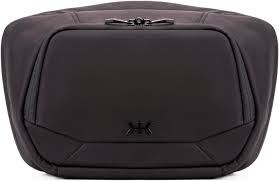

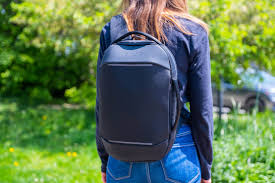


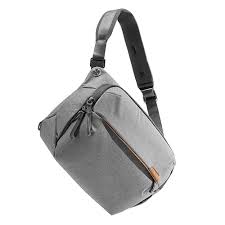








Products
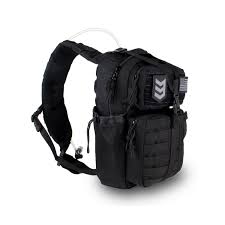
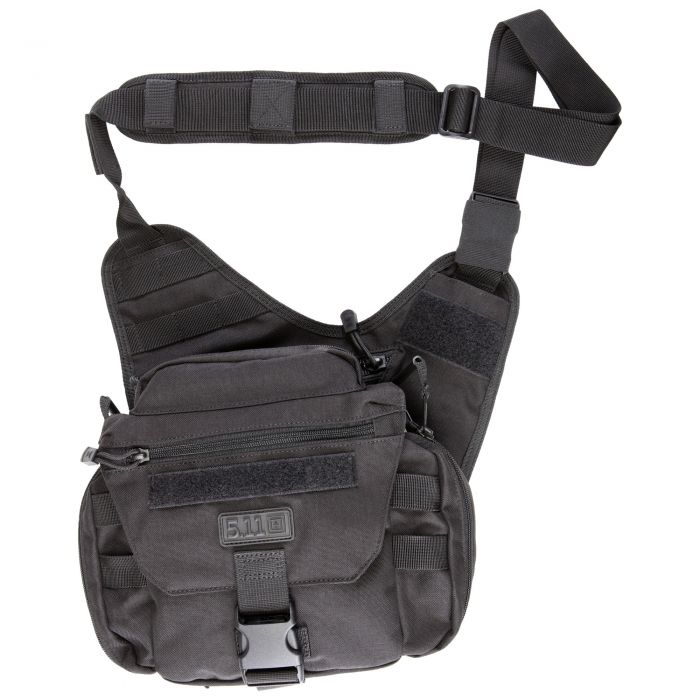
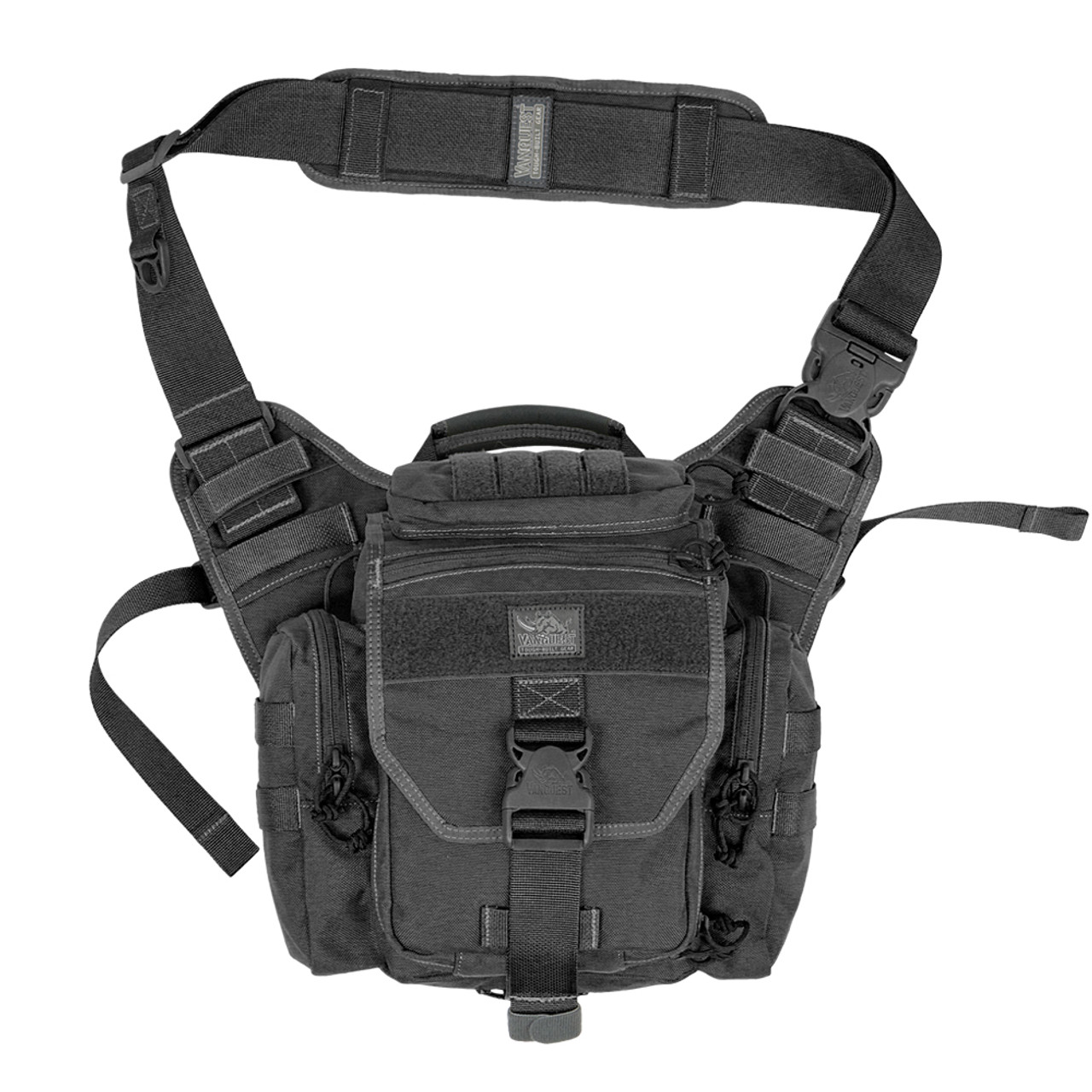
- Perhaps the most unashamedly tactitcool example of the genre is Maxpedition’s Wolfspur followed up by Vanquest’s Mobius and 5.11’s Push Pack.
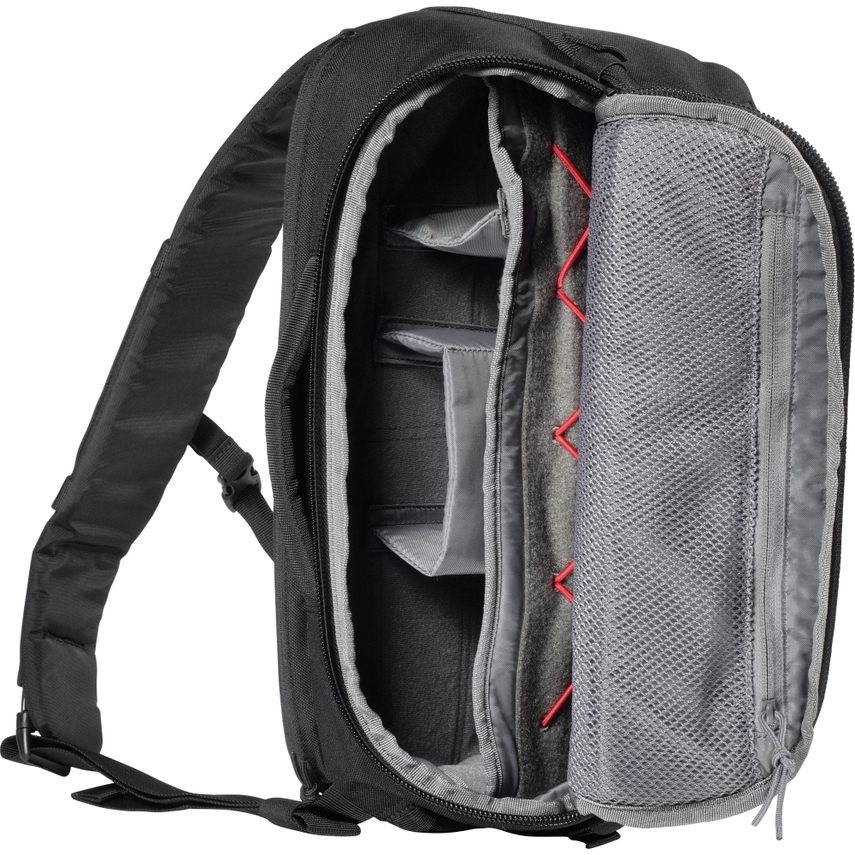
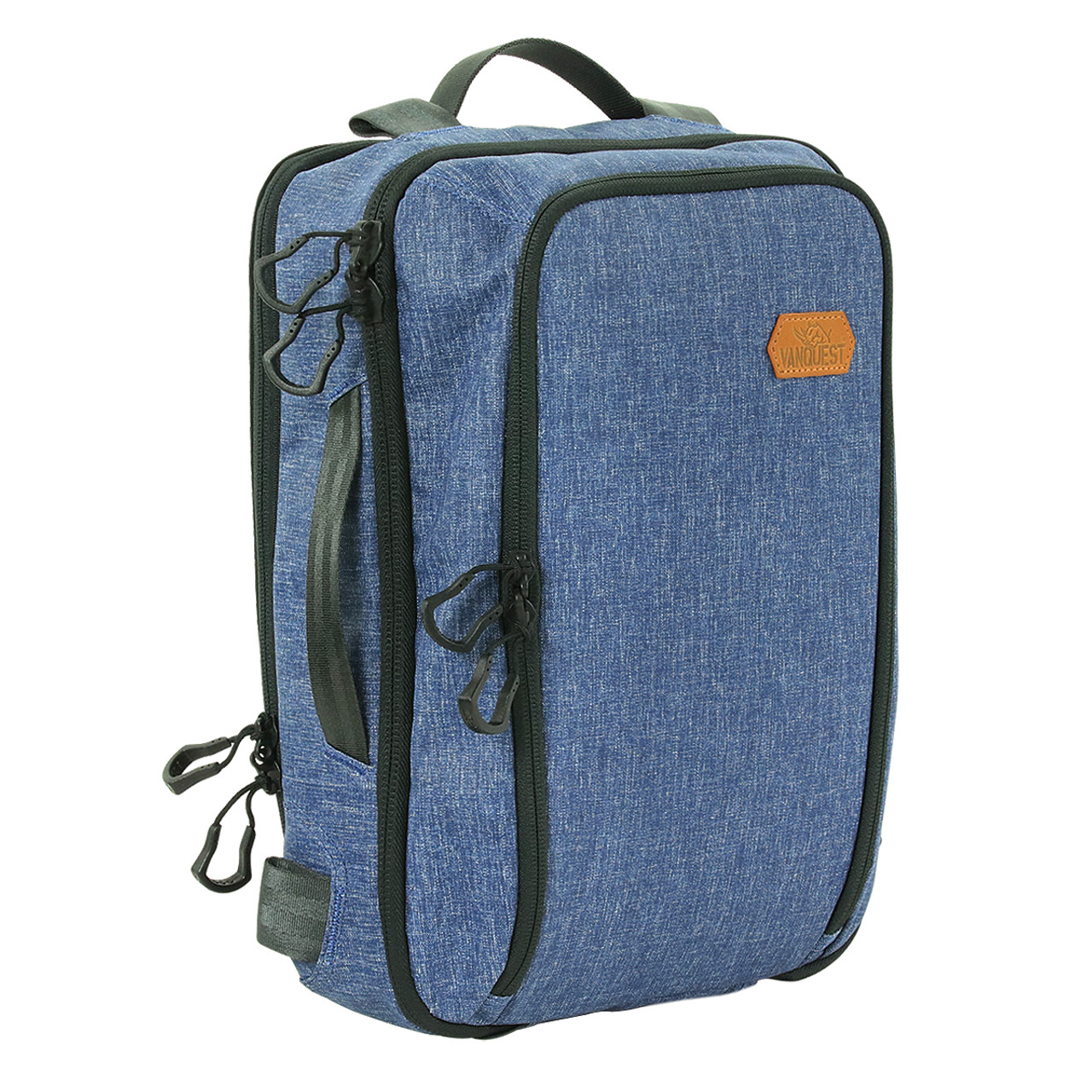
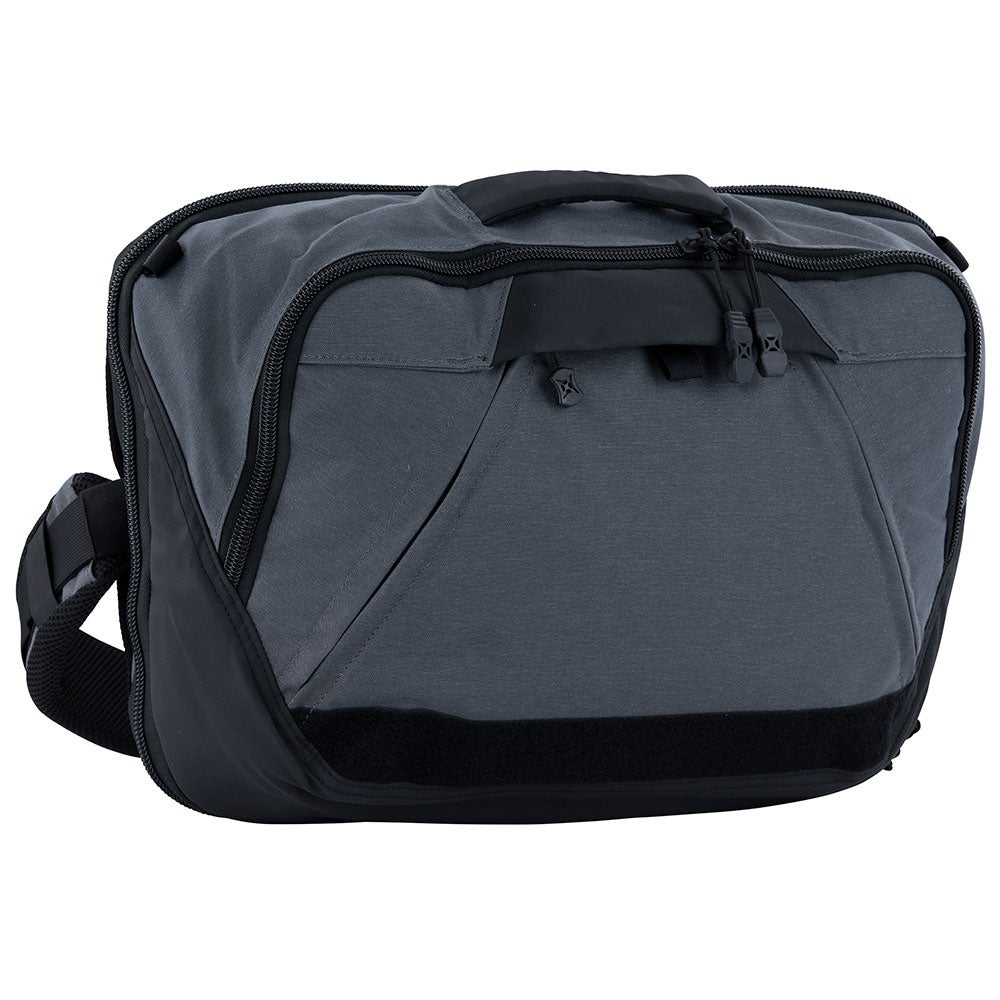
- Vanquest do an Entity lookalike commuter sling, the Carbide, and the smaller Dendrite, which is organised inside like the front of the Addax.
- Vertx do the messenger sized Dead Letter for concealed carry with rapid access options, although is a bit flat for bulky equipment as it’s chopped in half internally, but is now half the price of its newer cousins like the Commuter.
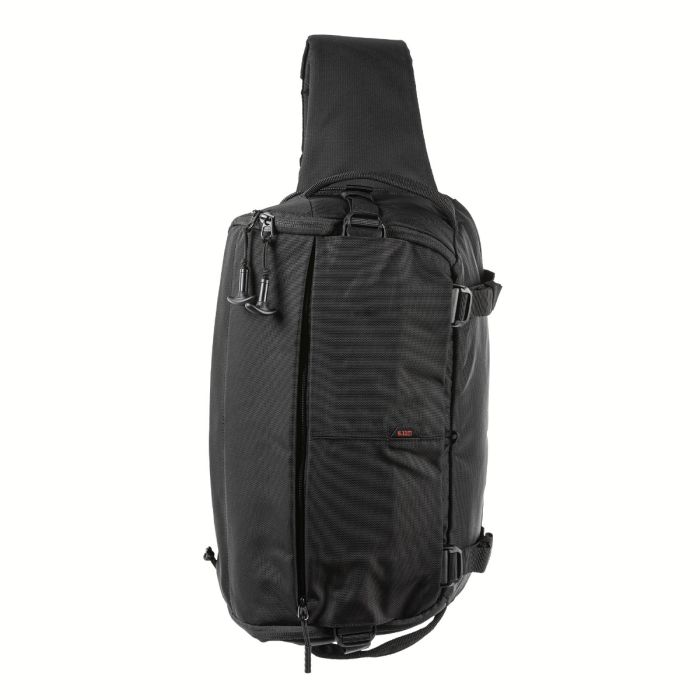
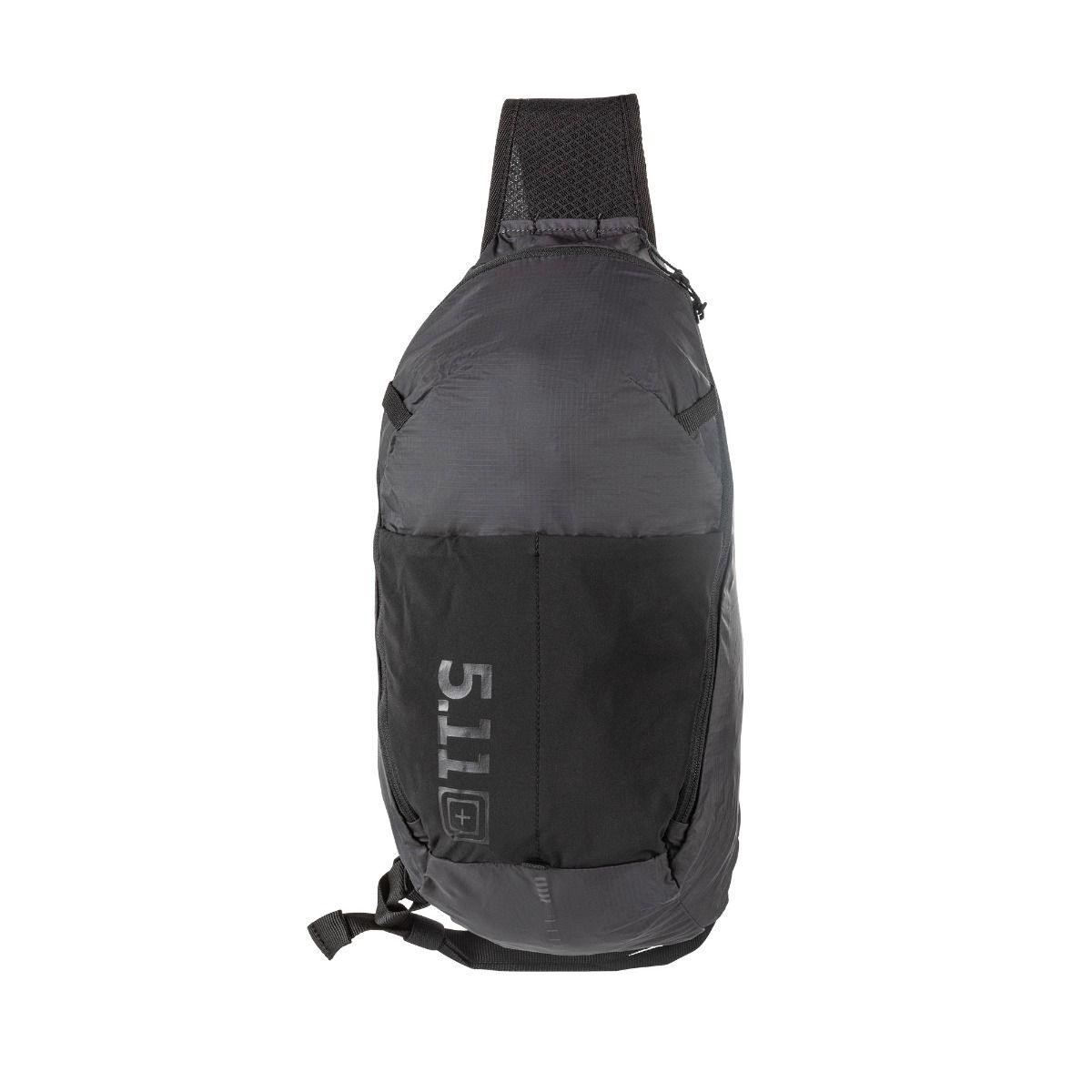
- 5.11 do slings, the 13l LV Utility (aimed at first aid, but a great go bag with its compartments) and Molle Packable Sling ranges.
- North Face do the Borealis and Base Camp Voyager slings.
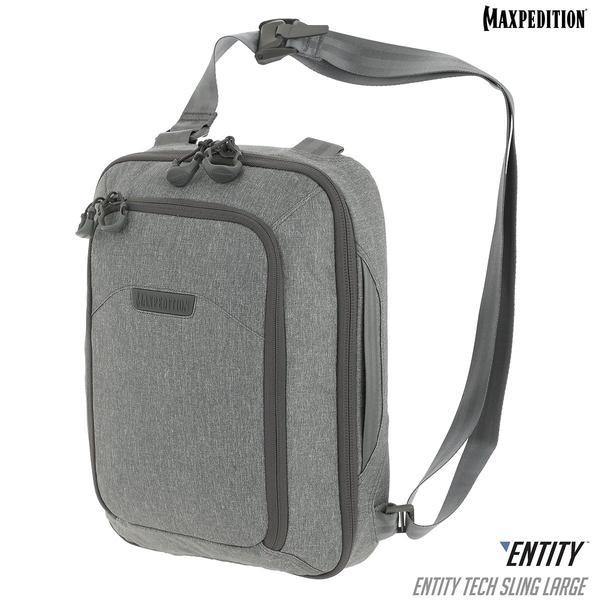
- Maxpedition also do a 16l sling version of their Entity commuter backpack, which is their ‘NTT’ or ‘non tactical tactical covert range with concealed carry, drawbridge and laptop compartment but no molle. They also have the telephone book shaped smaller sling, the Tech in 7l and 10l with CCW and pulldown admin compartment, but which is actually configured as a clamshell mini suitcase – meaning you have to wrestle away contents to get to the laptop sleeve; avoid overloading these as the shoulder strap is a narrow seat belt. They also have a matching Entity Crossbody in 9 and 14l which is a shorter version of the backpack rather than a sling or messenger.
- Alpaka do the 10l 650g Bravo Sling Max with main compartment with organisation, front pocket, rear pocket, 14″ laptop compartment, tablet sleeve, handle, removeable shoulder strap, USB port, hidden SIM & pin and hi-vis interior, and comes in X-Pac VX21. The 5l version, the Bravo Sling Mini, comes in X-Pax X42, and has tablet sleeve, rear pocket and internal organisation. They have a 4 or 5l (they can’t decide) sling in X-Pac VX21 with tablet sleeve and the hi-vis pockets, the 330g Go Sling Mini, although the 5.5l 620g Go Sling packs more in if you don’t mind doubling the weight. Of more interest for EDC may be the 3.5l 420g Vertex Pouch tech bag in X-Pac RX36 with hi-vis interior, which can sit flat on a desk and has more space for its purse layout and internal pockets, with handle, detachable shoulder strap. They all have clip on accessories available like a stabiliser strap.
- Black Ember in California do the 8l Grip Sling which is a tech EDC satchel with front phone pocket, and holds a 11″iPad, with optional camera insert if you wanted padded compartments.
- Bellroy have the 10l Venture Sling, supposed to be for cameras but the padded compartments may be useful, available as a 9l without the dividers.
- Camelbak do the 8l Arete Sling with water bottle and bladder pouch.
- Chrome Industries in Portland Oregan have a range of slings, which if anything look too nice. They do the 15l Kadet Max with laptop sleeve but not a huge selection of pockets. They say their 7l Tensile has lots of internal pockets, but are careful not to show them.
- Doughnut do the 6.5l Lighthouse with straps for carry as backpack or crossbody.
- Hazard4 do the 29.5l Blastwall tactical camera sling (sling version of Pillbox) with handles, hydration compatible, molle, velcro, attachments, dividers, 16″ laptop sleeve, rails, admin panel, sternum strap and removable hip belt, with separately available beavertail stuff pocket.
- Hex do the 8l 1.3lb Ranger DLDR Sling V2 with dividers in main compartment, rear tablet pocket, front glasses pocket, inside lid mesh pocket, front admin pocket, top access, handle, secret strap pocket, attachment straps for clothing etc.
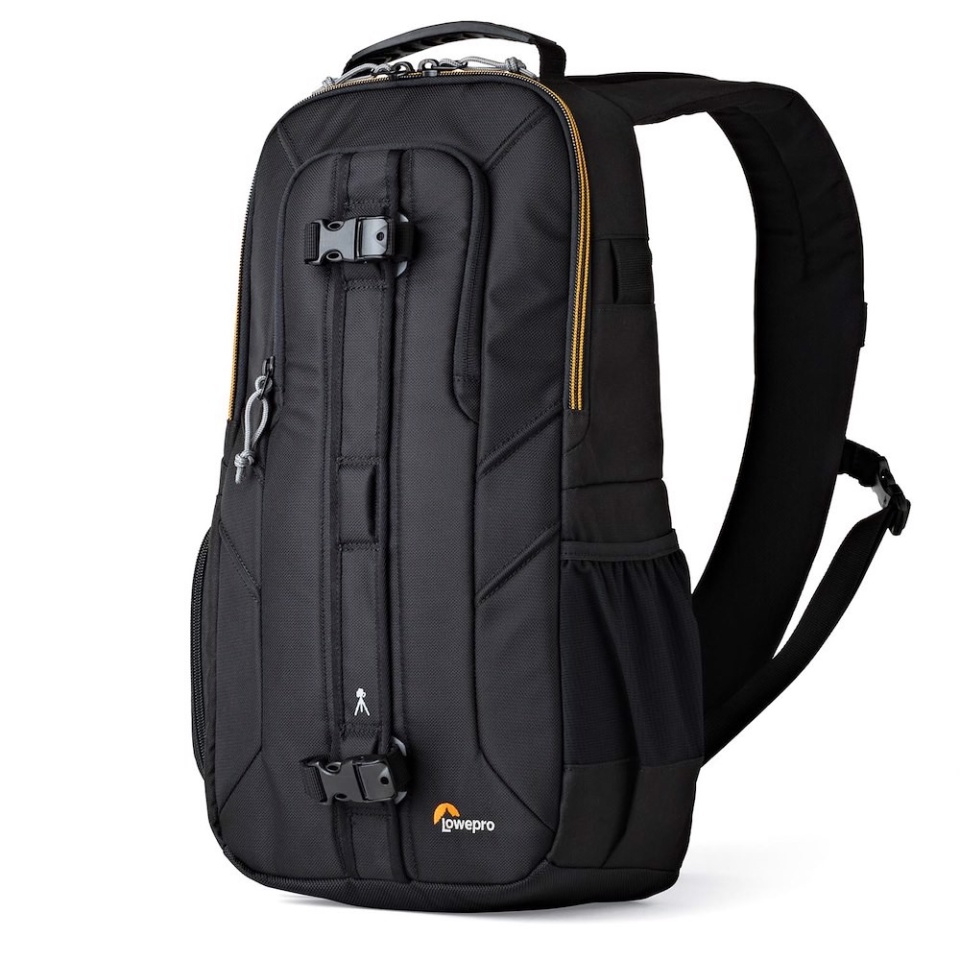
- LowePro do the urban £99 0.8kg 9.5l Slingshot Edge 250 AW, with tablet sleeve, bottle pockets, handle, peel-away front & side access at bottom half with dividers, mesh pocket in top compartment, and front admin pocket and rain cover.
- Magforce’s 12l Mini Gemini 500D sling is available through Hennie Haynes. It comes with pockets into which you can buy separately bought organisers.
- Mountainsmith do the 560g 21l Timber sling with bottom bottle pouch, velcro, shoulder strap phone pocket and zip pocket, internal sleeve and attachments for tools.
- Nightcore do the 9l 760g SLB09 Commuter Sling Bag with molle, internal three pockets and laptop sleeve, and front and rear compartment.
- Nomatic do a 10l Navigator Sling.
- Pacsafe do a 10l Vibe 325 anti-slash sling with tablet compartment and 12l Eco sling with bottle pockets and bladder compartment.
- Patagonia do the 15l waterproof Guidewater sling.
- Peak Designs do the 10l Everyday Sling with laptop sleeve and dividers.
- Red Rock, an entry level tactical bag firm, have backpacks and slings, and for example do the 9l 660g Rover sling with concealed carry, molle and front pouch with two pockets.
- Tactical Geek do the Cache L3 EDC Shoulder Bag with , pockets, velcro, molle and hi-vis interior.
- Viperade do the 230g CHW2 sling with seven pockets, the UGS1 sling with four pockets, attachments and velcro, and the 350g CHS1 with molle and five pockets including for bottles.
Editors choice: I have the Entity Tech Sling 10 and Dead Letter, but I found both are too flat for ideal packing and too big for EDC, the Dead Letter is messenger size and really only for CCW, while the Entity uses an uncomfortable seat belt, and slings can be tiresome as get home bags due to time on shoulder. But the Entity has accessories available, including a shoulder pad. Otherwise, go for the 13l LVC10 Utility (£112), 10l Venture (£165) or 10l Everyday (£80) for an EDC, go bag or short get home sling. As I always have other preps to buy I would probably rule out the pricey Venture camera bag and customise my own extra dividers in an Everyday (the cheapest of the three) or just buy the bigger cheaper LV Utility. For extra size and organisation in the LV Utility I suspect it will be my next sling for the extra £30 odd so I can cram in nightwear as a go bag, unless I decide to live dangerously and plump for the too nice looking cheaper but smaller Edge camera sling. The best overall sling is the LV Utility.


Messenger
Suitability
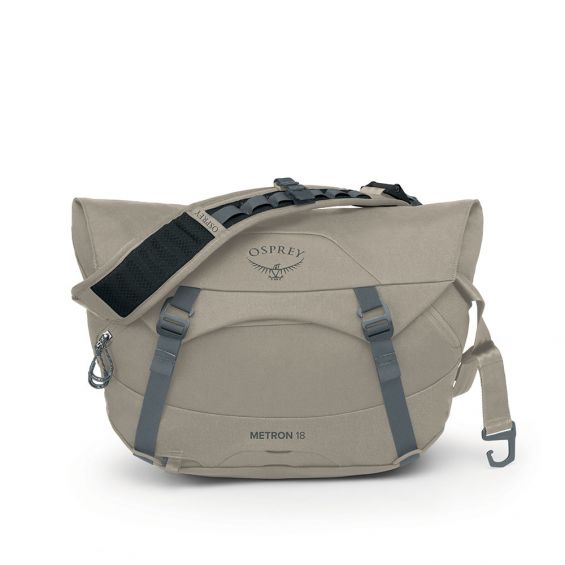
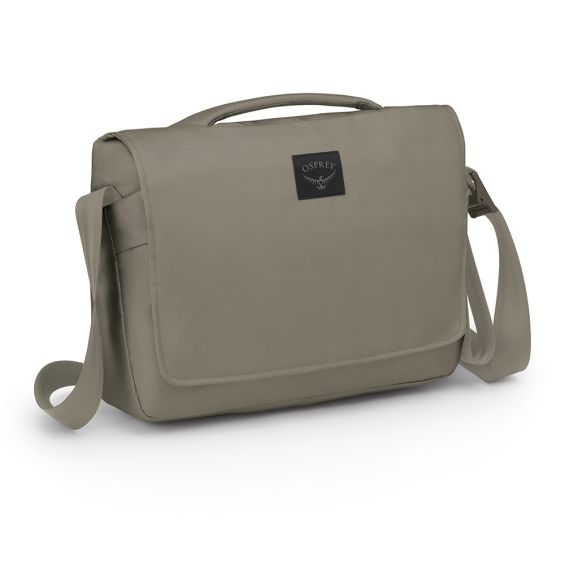
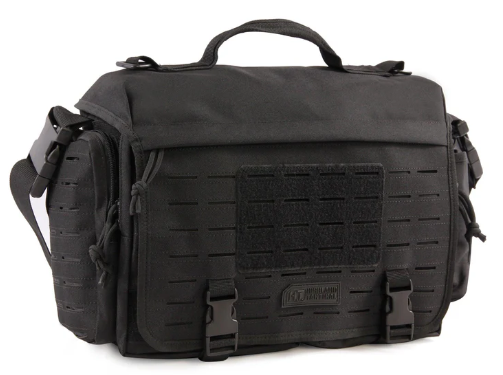
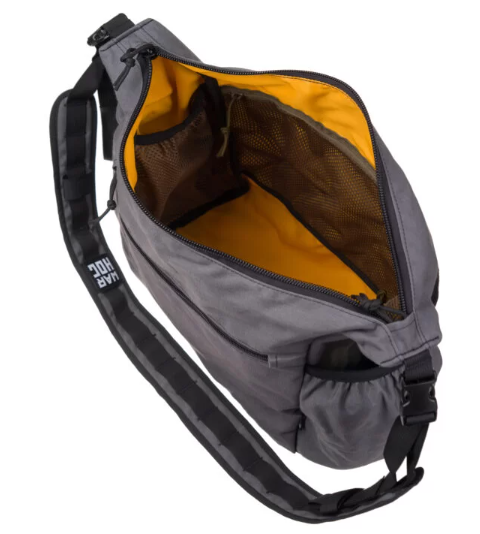
The next size up is the messenger bag, which suffers the same problem of dumping weight into one shoulder. They are better for large flat objects like laptops, which is a risk in civil disorder, but once things are so bad thieves don’t need laptops they look less like you have tons of military survival gear on you. They need a lot of rummaging to get to stuff from the narrow top, but this can be mitigated with packing cubes. They are available with quick access gun compartments and are great for commuters with short journeys, but a bit cumbersome for EDC.




Products
- Aer do the 12l Travel Sling 2 X-Pac with laptop pocket.
- Chrome Industries do messengers with wet and dry sections. The 20.5l Mini Metro takes a laptop but not padded. Their 24l Buran III and Citizen have a padded laptop sleeve.
- Code of Bell do the X-Pak 3-way briefcase’s sling cousin the 11-23l expandable roll-top X-Pak Evo, with bottle pocket and internal and external pockets, 13″ laptop sleeve, handle and sternum strap, and with optional laptop pouch and backpack harness.
- Defy do the 10.5l Insidious and the 6l Insidious Junior for EDC.
- Everki have a mini messenger for EDC, the 6l Venue XL with laptop sleeve and organiser compartments; the larger vertical messenger, the 20l Urbanite with clamshell laptop sleeve, organiser compartments, bottle pocket and handle; and a bike messenger, the 18.5l Contempro with bottle pockets, organiser compartments, handle, cross body strap and laptop sleeve.
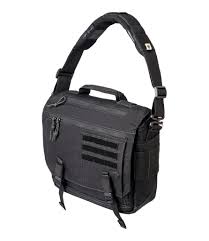
- First Tactical do the 1.4kg 25l Ascend Messenger with pockets, concealed carry, padded dividers, 12 internal pockets and six external pockets, and 18″ laptop compartment. For EDC there is the 800g 8l Summit Side Satchel with velcro, concealed carry, 12″ tablet compartment, five external pockets and 10 internal pockets.
- Hazard 4 do the 16l 1.63kg MOD with molle, velcro, handles, admin panel, drawbridge flap, 15″ laptop pocket.
- Highland Technical do the 14l 1.2kg Timer messenger with molle, admin panel, two front pouches (one drawbridge), laptop sleeve, side admin pouch, side bottle pocket, see-through pocket, velcro divider.
- Mission Workshop do messengers from 21 to 35l.
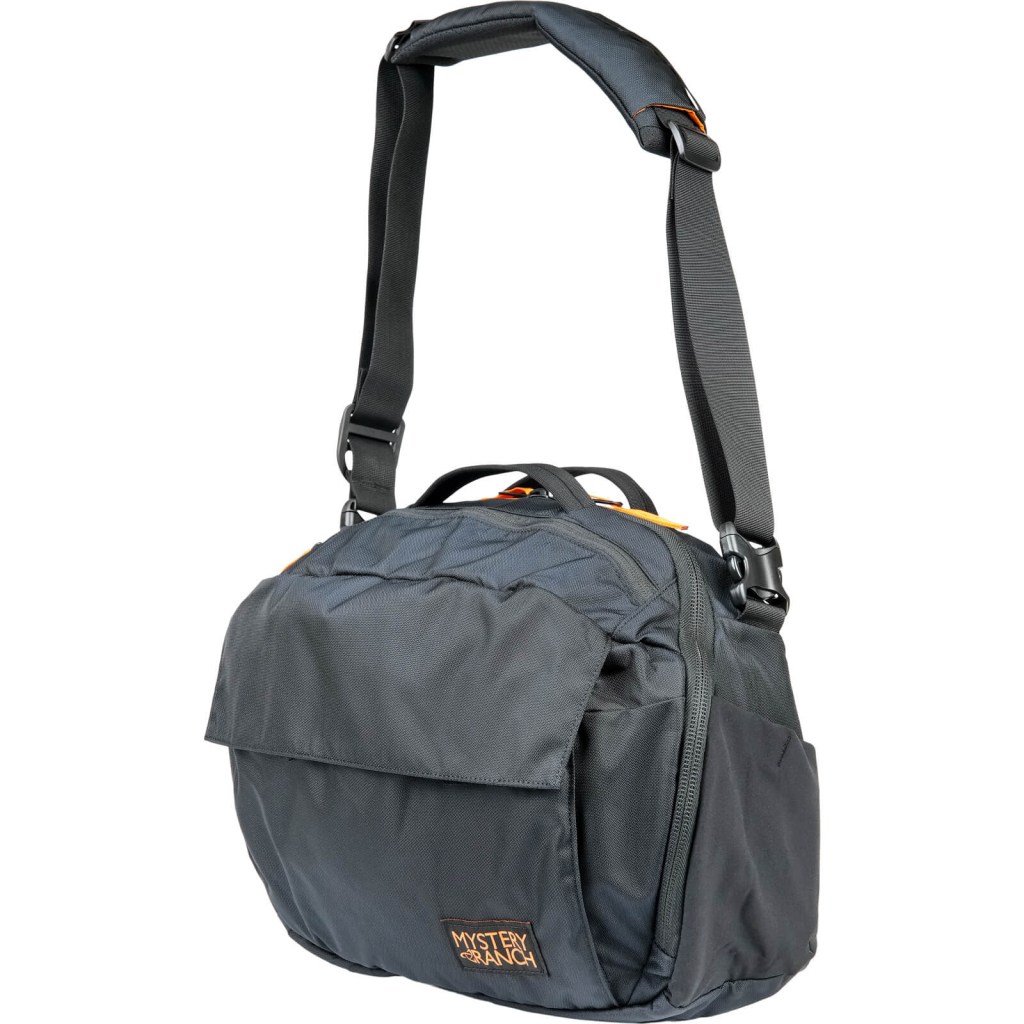
- Mystery Ranch do the 17l District Pro messenger with high vis organisation.
- Nomatic do a 15l Messenger Bag.
- Peak Designs do the 13-16l Everyday Messenger with laptop sleeve, pockets and dividers.
- Pentagon do EDC satchels such as the 2.8l Messenger Shoulder Bag with molle.
- Snow Peak do the 10l Everyday Middle Shoulder Bag with zip pocket and two external mesh pockets.
- Tasmanian Tiger do the 1.26kg 15l TT Modular Equipment Case with molle, velcro, handle, 12″ laptop compartment, lid pocket, front pocket and padded divers.
- Vanquest do the Gofer for commuters.
- Wisport do the 550g 18l Polaxe with internal mesh pockets, external zip pockets and bottle pockets.
- 3V Gear do the 24l 5.11-esque Outlaw sling with handle, admin pocket, bottle pocket and molle.
Editors choice: I have the noisy Rush, but beware using a messenger for more than a short get home – mine remains in a cupboard empty. For a family go bag or short get home bag consider the 17l District Pro (usable ‘square’ shape but ideally with small packing cubes as it lacks cross dividers), 16l Peak Everyday (sleek & better dividers), 15l Nomatic (basic dividers & looks like contains laptop), 12l Travel Sling, or 11l Gofer (velcro patch gives hint of tactical maybe). The District Pro has the best shape if you need the extra space as a get home bag, while the smaller Gofer is more tactical with velcro divider and CCW options as a great EDC or personal go bag. But, with the Everyday being maybe too sleek for its own good, the Gofer being too busy and the Nomatic being too ‘business’, and all three being too stiff to wrap around you, the District Pro would be my next messenger, perhaps with some DIY dividers. For EDC or a smaller go bag, the 8l Summit Satchel is another gem. The Travel Sling is small and subtle runner up, but has no cross dividers. The District Pro is the best overall messenger.


Backpack
Suitability
The best bet probably to cover most scenarios, like long journeys, commuting, civil disorder and disaster, is a backpack to fit everything you need and spread the weight over both shoulders and hips. They are available in grey man versions to avoid looking like you are running a grand’s worth of tacticool on your back. They still involve compromise as, for example, you cannot have the comfort of big hip and shoulder straps or a frame without looking like you have got a lot of stuff.
You basically do two things with a backpack, carry it and open it, so once you narrow down your choice to a bag with a hip belt to get the weight off your shoulders, your choice is mainly about how you get in it.
You also need to decide if it has to double up for shopping, work, after work, hiking or travel.
- Commuter bags have some internal organisation although tend to be vertically sliced like laptop compartments, usually one to three compartments effectively added behind what would have been a school book bag with an extra zip above the front pouch, and zipped side pockets, so not great for bulky items, but some are made to look like outdoors bags with attachment points, zips less visible on the front, and a large main compartment without being sliced up.
- Work bags take the vertically sliced commuter bag and add premium materials and an adult look, heading towards a leather briefcase. As they morph into urban bags the compartments tend to be limited to two and zips become discreet or invisible as the bag become slicker, or they turn to fashion with rolltops, buckles or sharp angles, some keeping side pockets for umbrellas and bottles. Laptop bags sometimes keep side pockets but accommodate bigger laptops and are more rectangular compared to the trapezoid profile of a commuter bag.
- Heritage bags can safely be ignored as often a fashion gimmick, such as school bags with a couple of leather straps slapped on.
- Likewise for convertibles as if it light enough to become a handbag it’s not a serious backpack.
- Tactical bags avoid the slicing by going even squarer and with extra storage outside in pouches, the fashion tacticool bags can often be outed by being plastered in molle.
- Camera bags are as sleek as laptop bags, but often with side access and usually padded shelves and dividers that would encourage you to use your preps and gadgets, so worth considering if subtle enough.
- Travel bags tend to be more squared and to open like a suitcase and they keep the size zip pockets of the work bag, but with a couple of zips or pouches in front to break up the boxiness, so on the one hand everything could fall out, on the other hand they may be ideal for laying out in a tent.
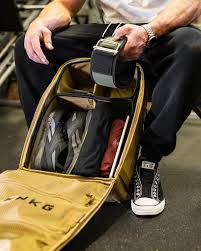
- Active bags vary in what weather they can cope with but are distinguished by being design to take clothes; they vary in whether they have attachment points, decorations, front pockets. Gym versions are pretty much work bags with a shoe compartment. Each sport has its own bags. Outdoors or technical bags are designed for weather: backpacking bags are tall to cram in camping and cold weather gear, technical or daypacks are for warmer or shorter treks and stop at shoulder height. Backpacking bags are effectively tubes with everything stuffed down in one compartment with a rain hood, with stretchy side pockets, so, although they can be more comfortable with frames and padded hip belts, you will regret carrying stuff you cannot be bothered to get to.


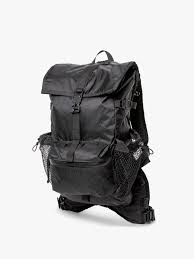
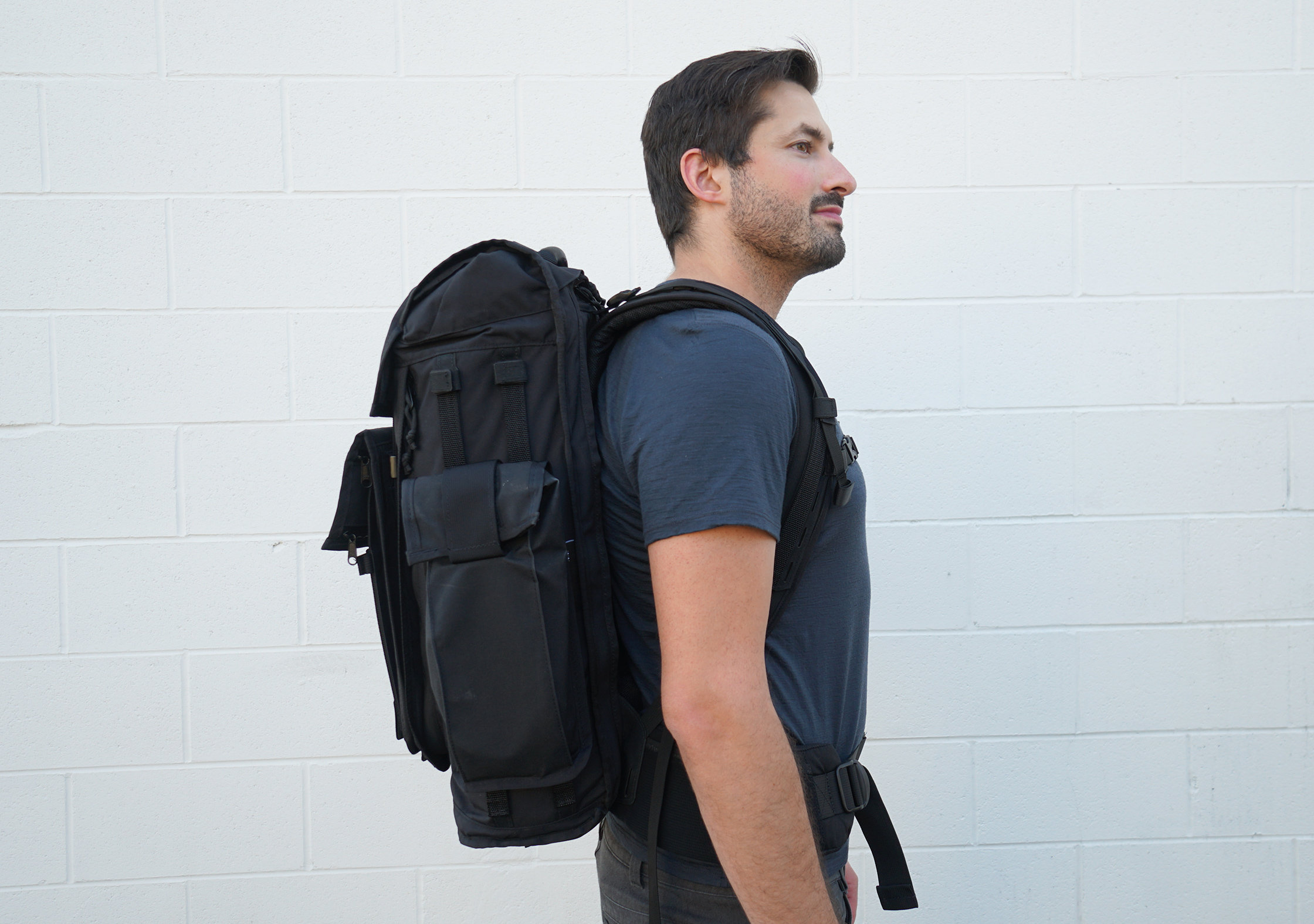














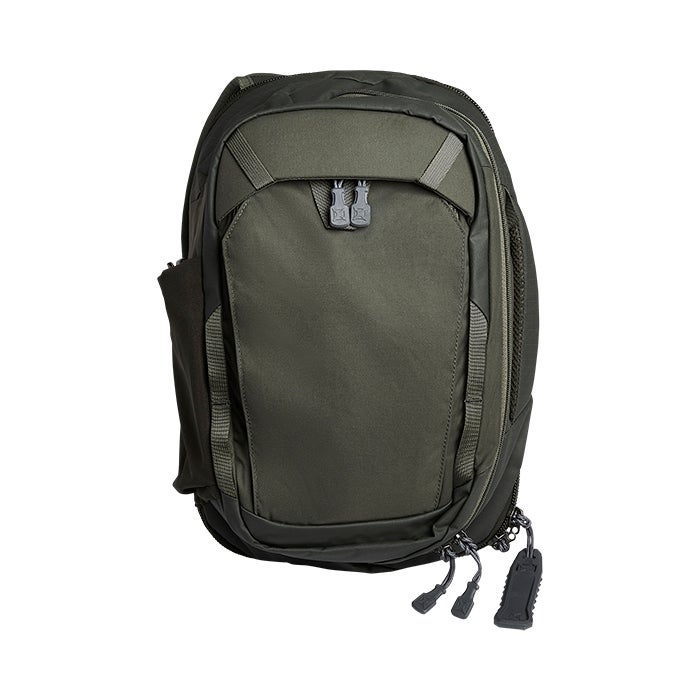
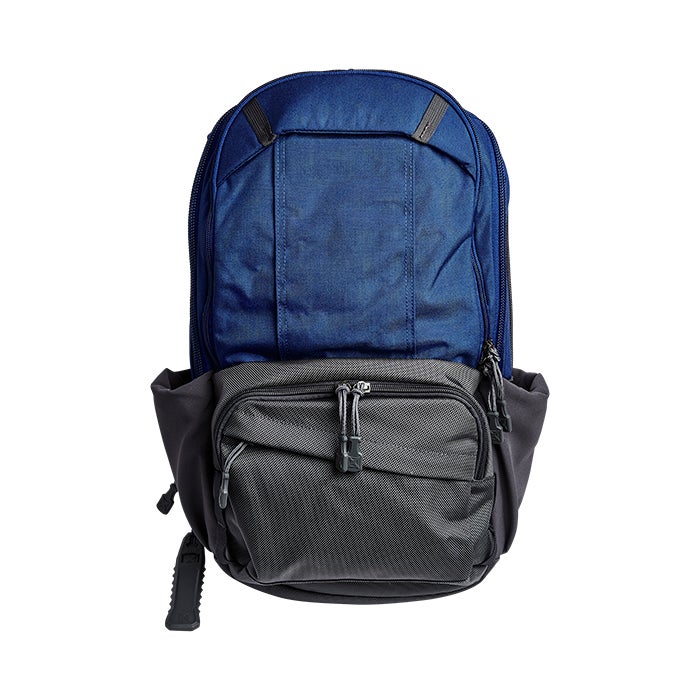
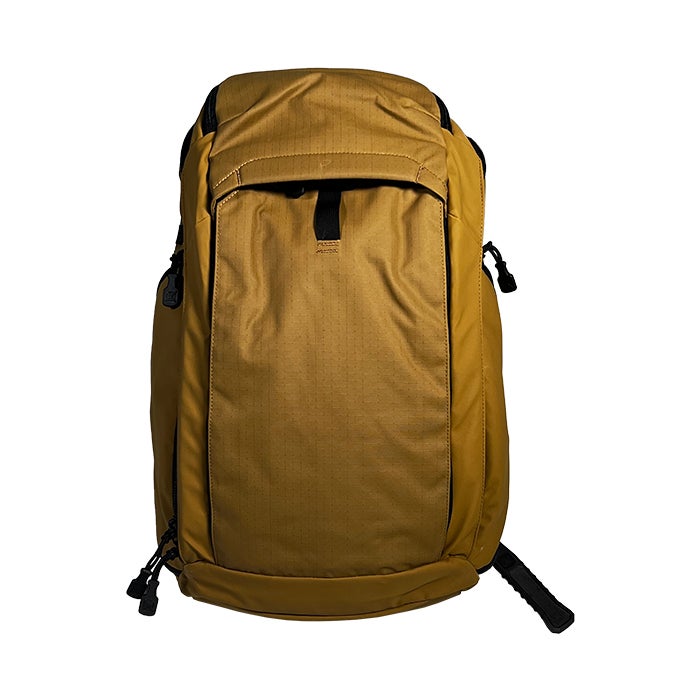

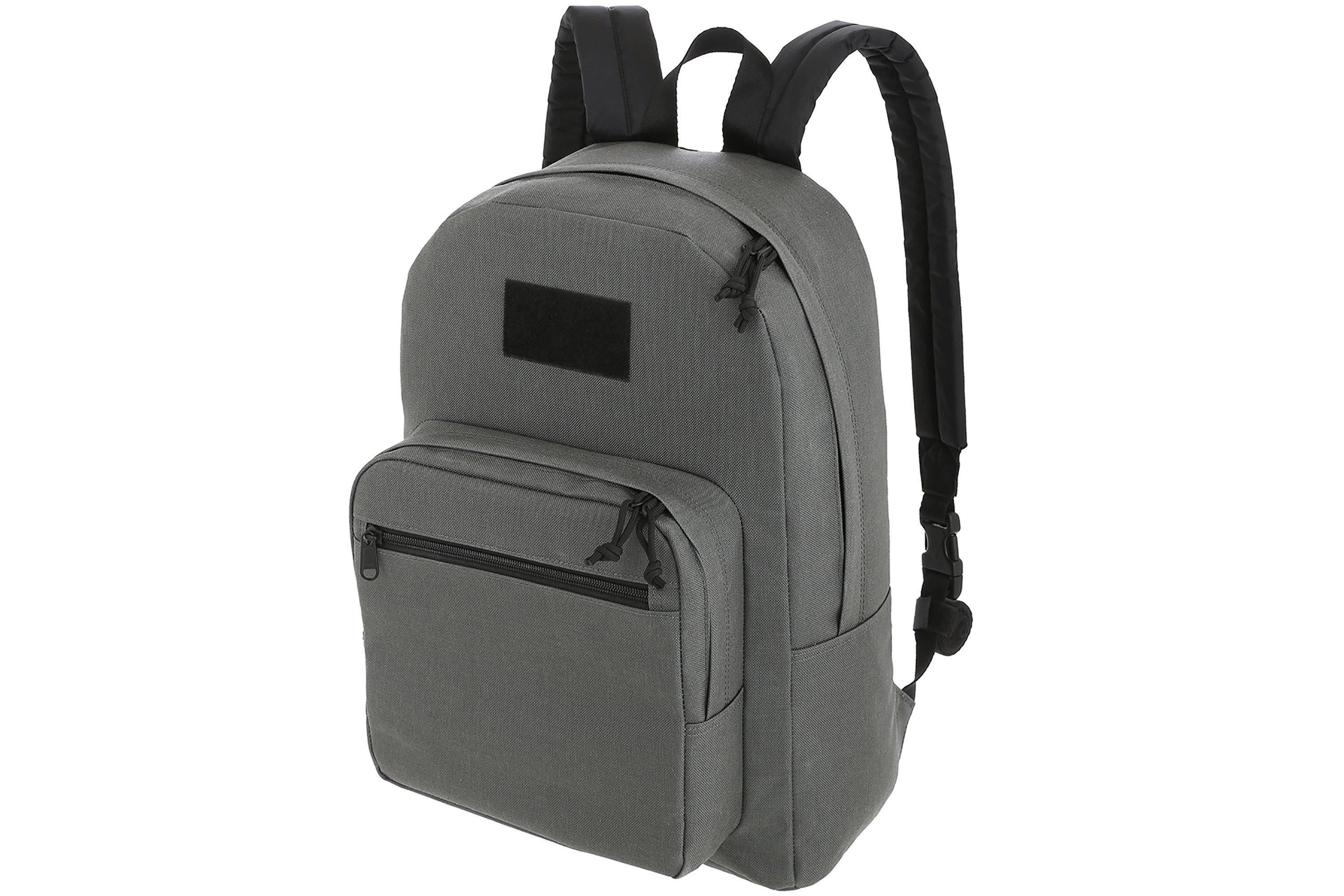







Products
There are tons of brands to choose from, and Backpackies maintain a directory. The selections below are the author’s choice of bags that bring something to the party such as dual use for gym, work, laptop, commuter or tech, or technical or tactical features, starting with the usual suspects recommended for preppers, followed by manufacturers not aimed at the tactical or EDC market. Anything that attracts attention has been avoided, such as leather, gold zips, rainbow colours, roll tops or shopping bag handles, as has anything impractical such as 40l carry on bags with no hip belt and a clamshell back that would let everything fall out, or compression straps blocking the zip.
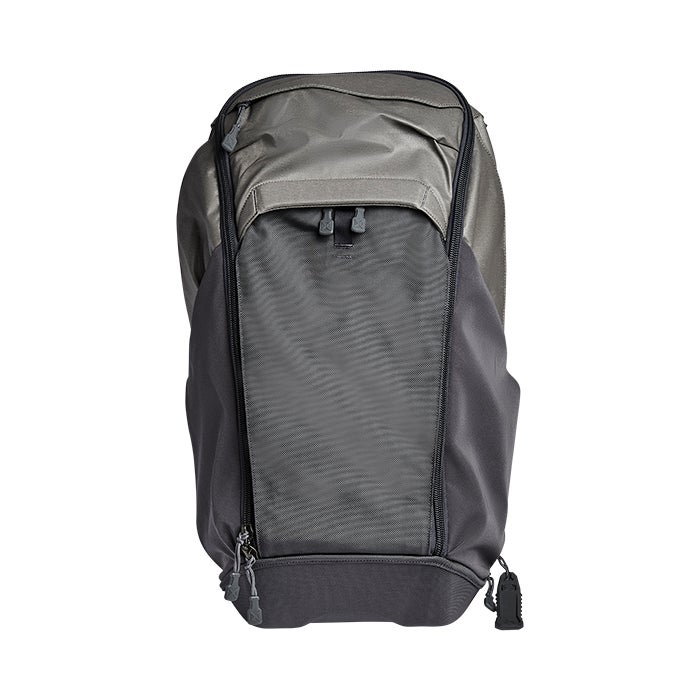
- Vertx do a covert tactical backpack, the Ready Pack, and the bigger Gamut and even bigger Basecamp.
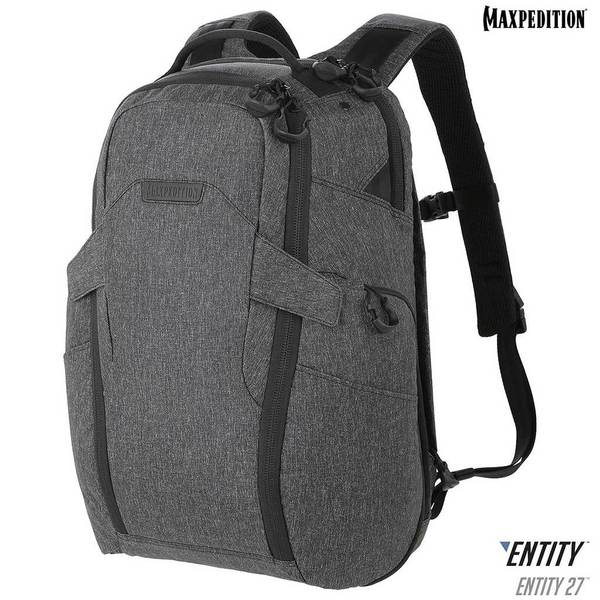
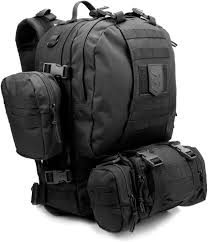
- Maxpedition do concealed carry commuter backpacks, the sleek Entity with laptop compartment, concealed carry, drawbridge and sternum strap, hip strap from 23l up, and the Jansportesque Prepared Citizen (discounted now being discontinued). The largest Entity, the 35l Entity 35 CCW-enabled Internal Frame Backpack, has load lifters and a pocketed padded hip belt, and all the range benefit from optional accessories (straps, pads, pouches, holsters, buckles, pulls).
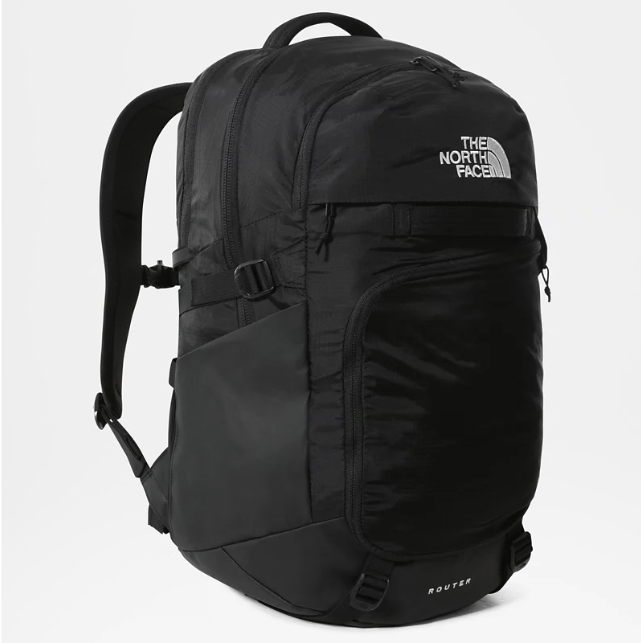
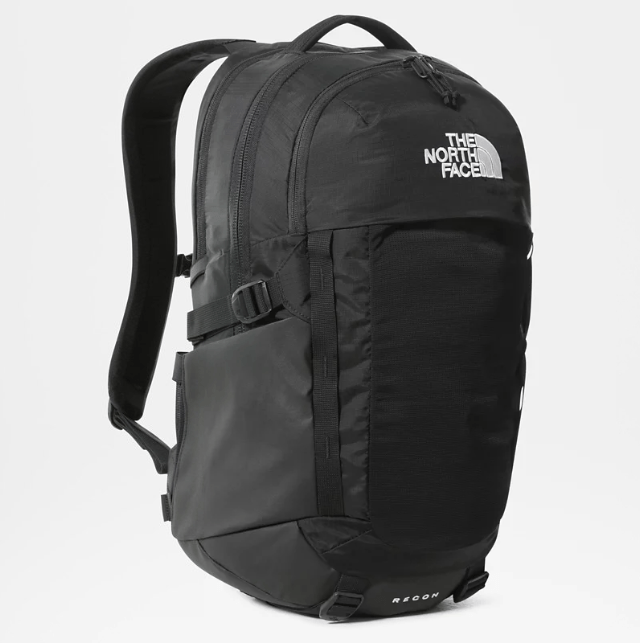
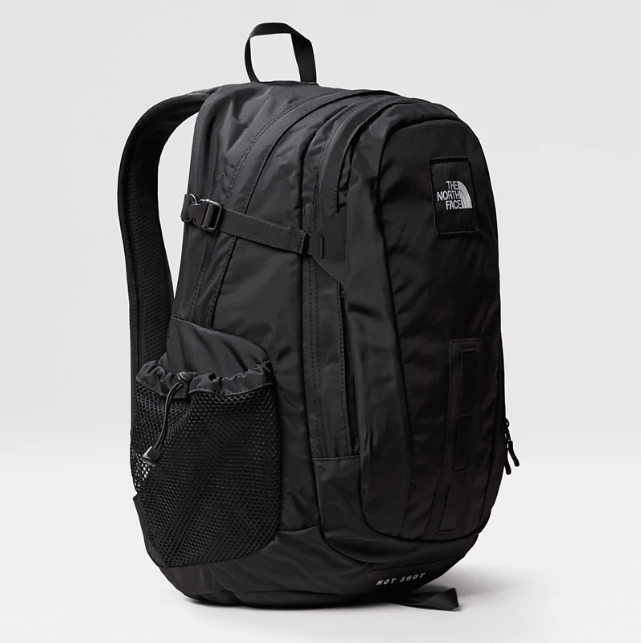
- North Face have the 40l Router, 31l Surge, 30l Recon, 30l Hotshot, 29l Borealis Classic and 28l Borealis.
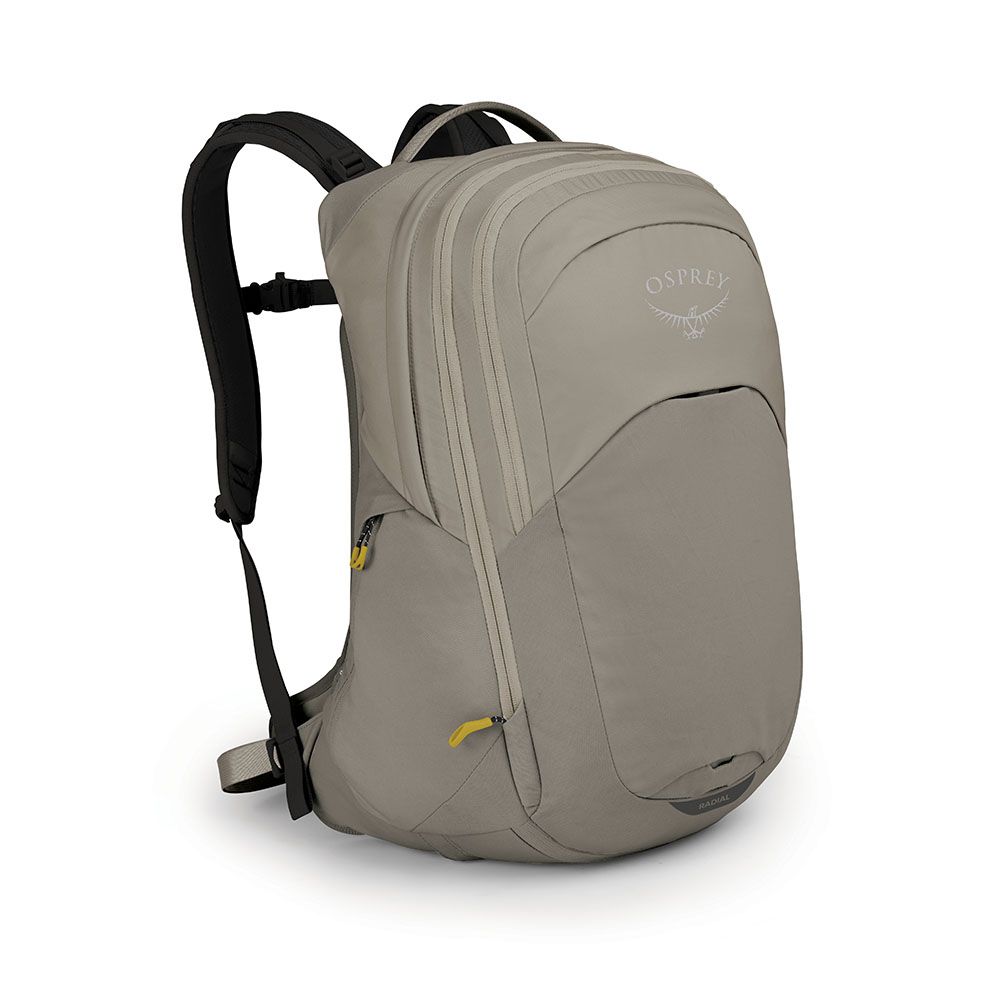
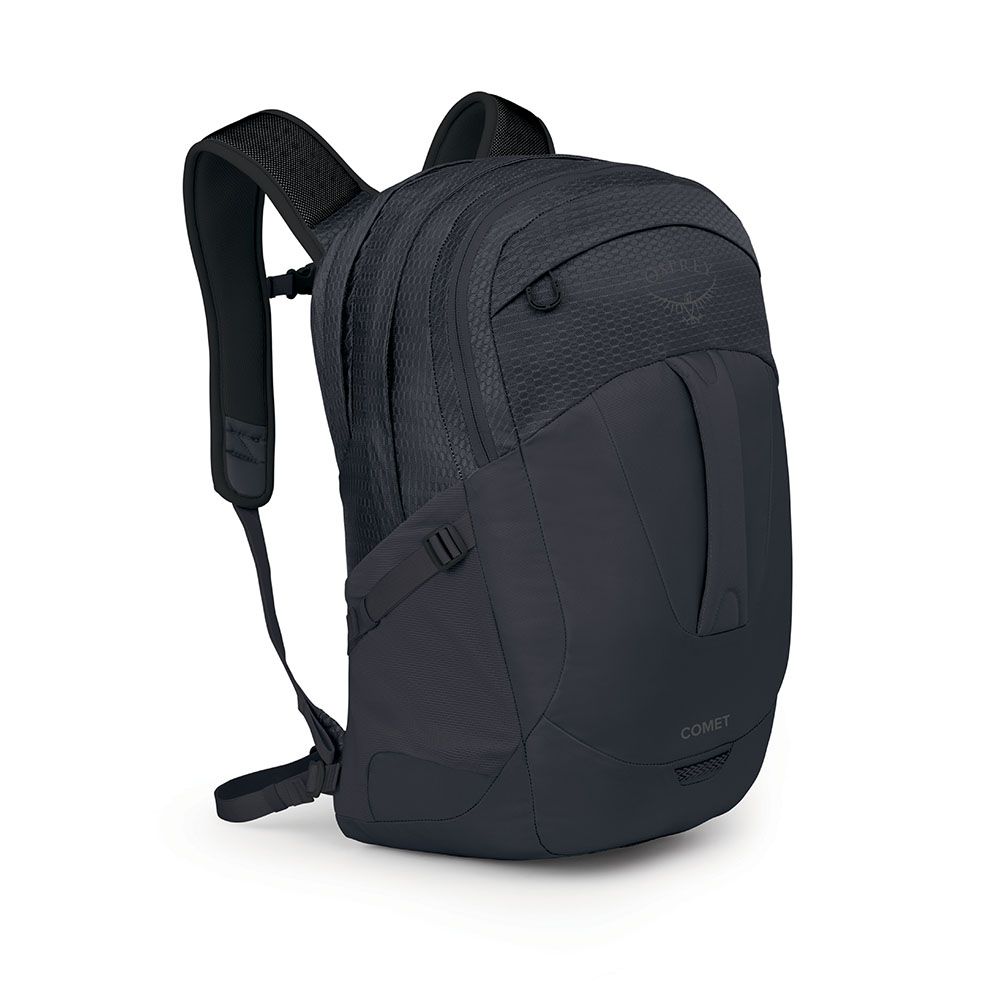
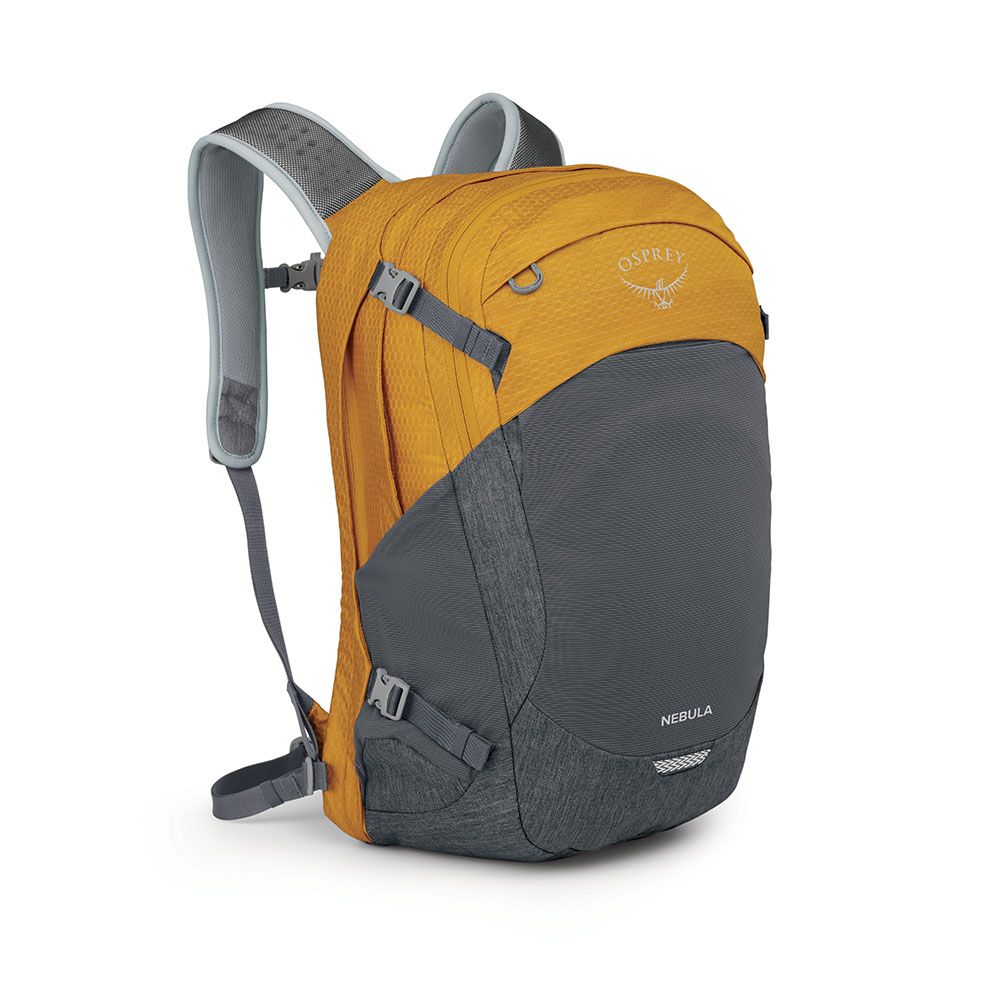
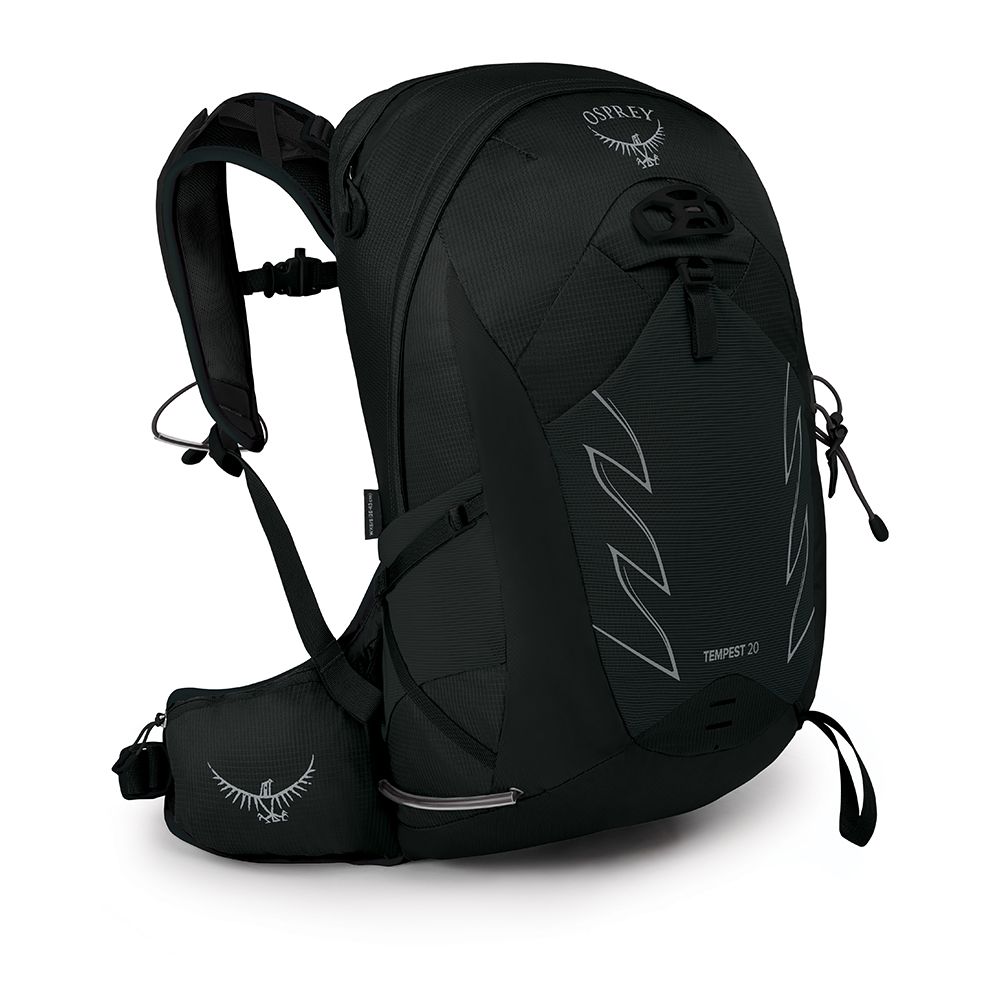
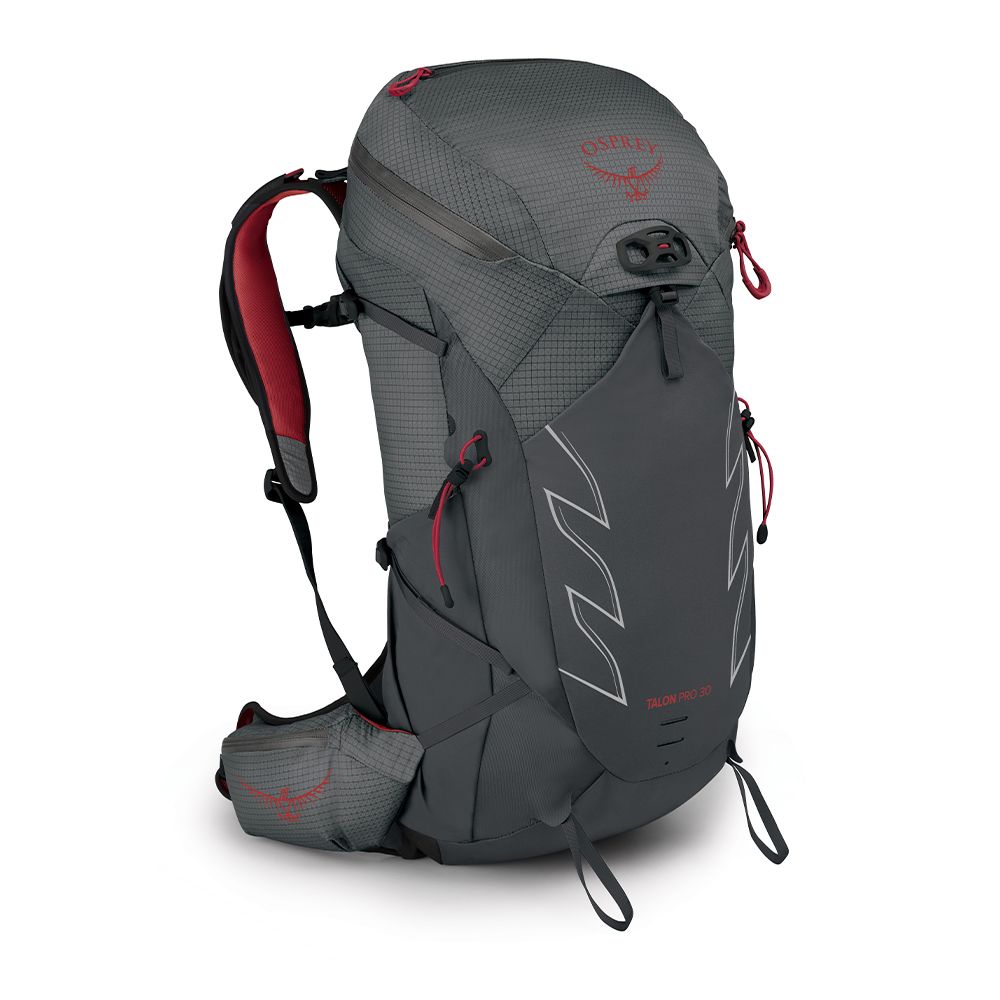
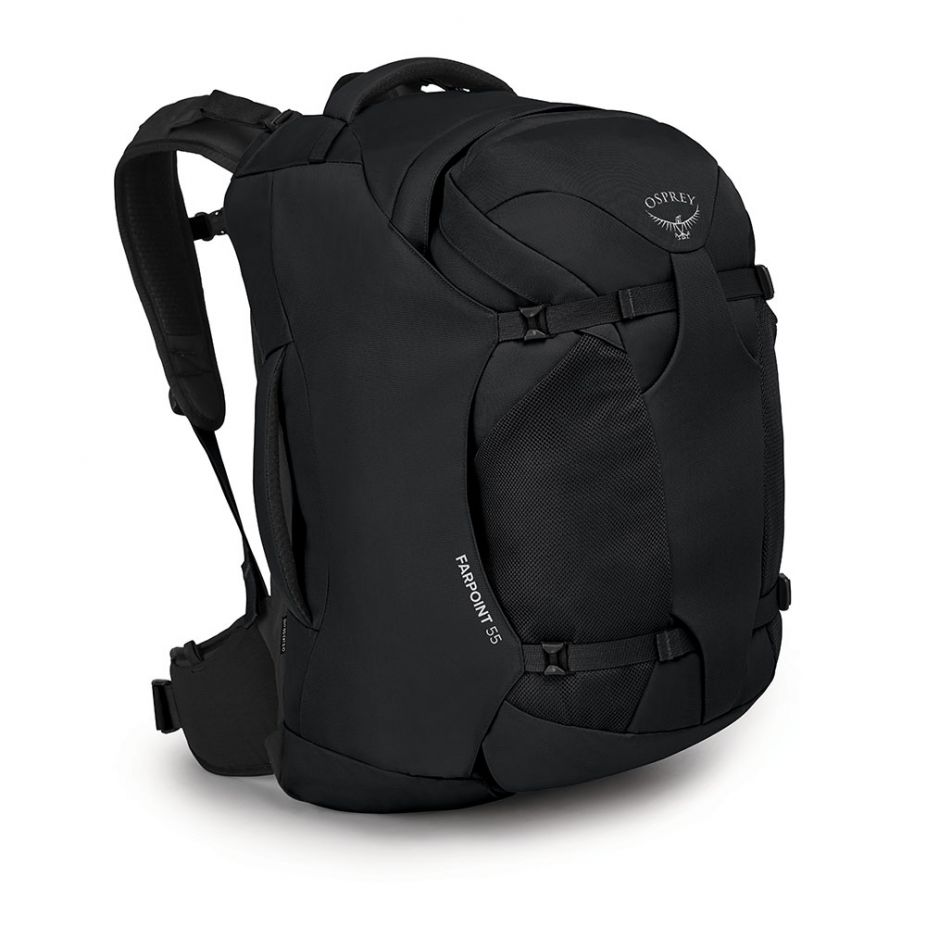
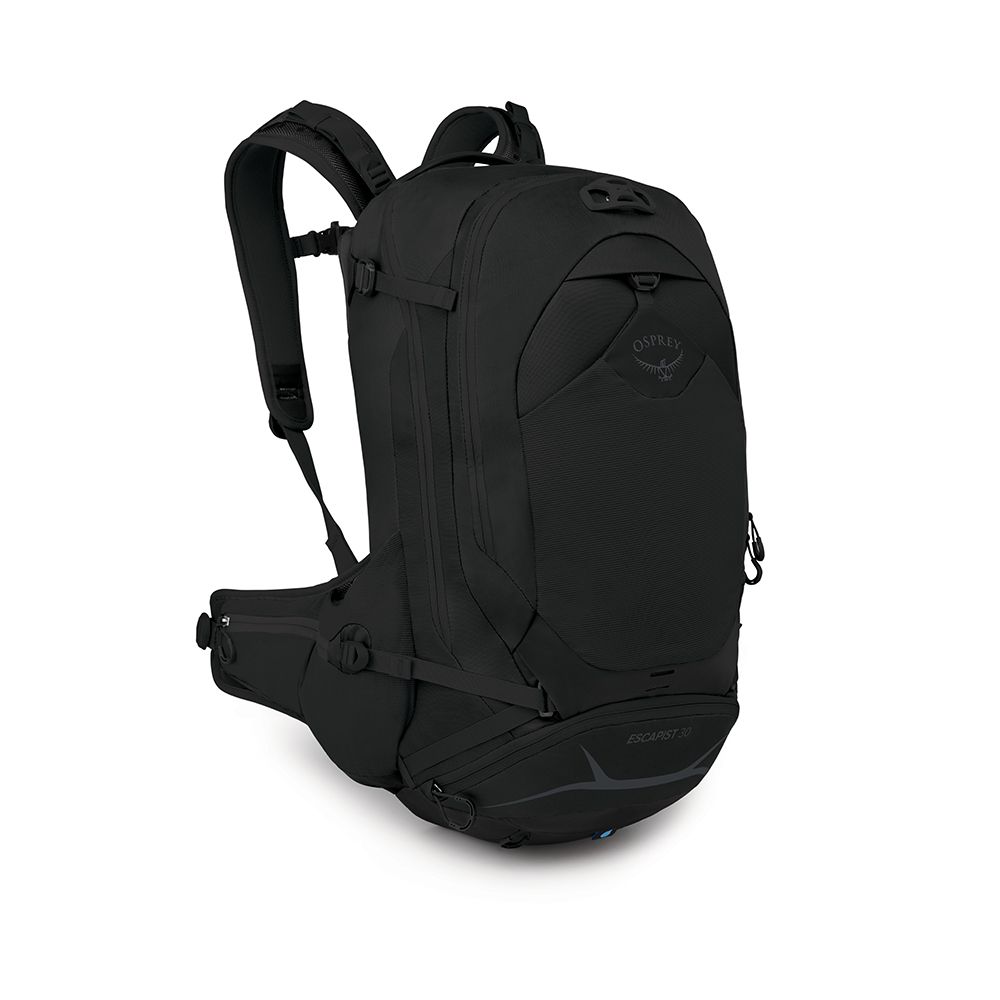
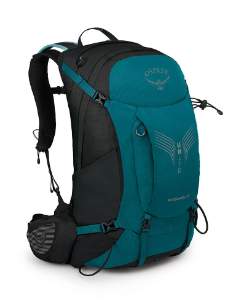
- Osprey have an interesting expandable 26l cyclist commuter backpack, the Radial, with kickstand, laptop and tablet sleeves, soft lined electronics pocket, LED and helmet attachments, sternum strap with whistle, detachable hip belt, shoe compartment and trampoline mesh, although the mesh won’t take much weight and the bag is only 210 denier despite the 1.5kg weight. They also do the lighter 30l Comet, 32l clamshell Nebula and 32l Tropos with prop stand and trampoline mesh, and a technical bag, the Talon Pro with massive hip belt (the women’s version is Tempest). Osprey are worth a look for the option of hip belt or trampoline mesh, but are built for comfort rather than not looking like a hiker. If you don’t mind stuff pocket straps crossing the main compartment zip, the ultimate in comfort is probably the £300 1.53kg 32/34l Unltd Hike Antigravity with sternum strap, padded pocketed hip belt, load lifters, torso adjustment and ventilation mesh. Their 143g 18l Ultralight Stuff Pack is a packable backpack at £45 with sternum strap and padded shoulder straps.
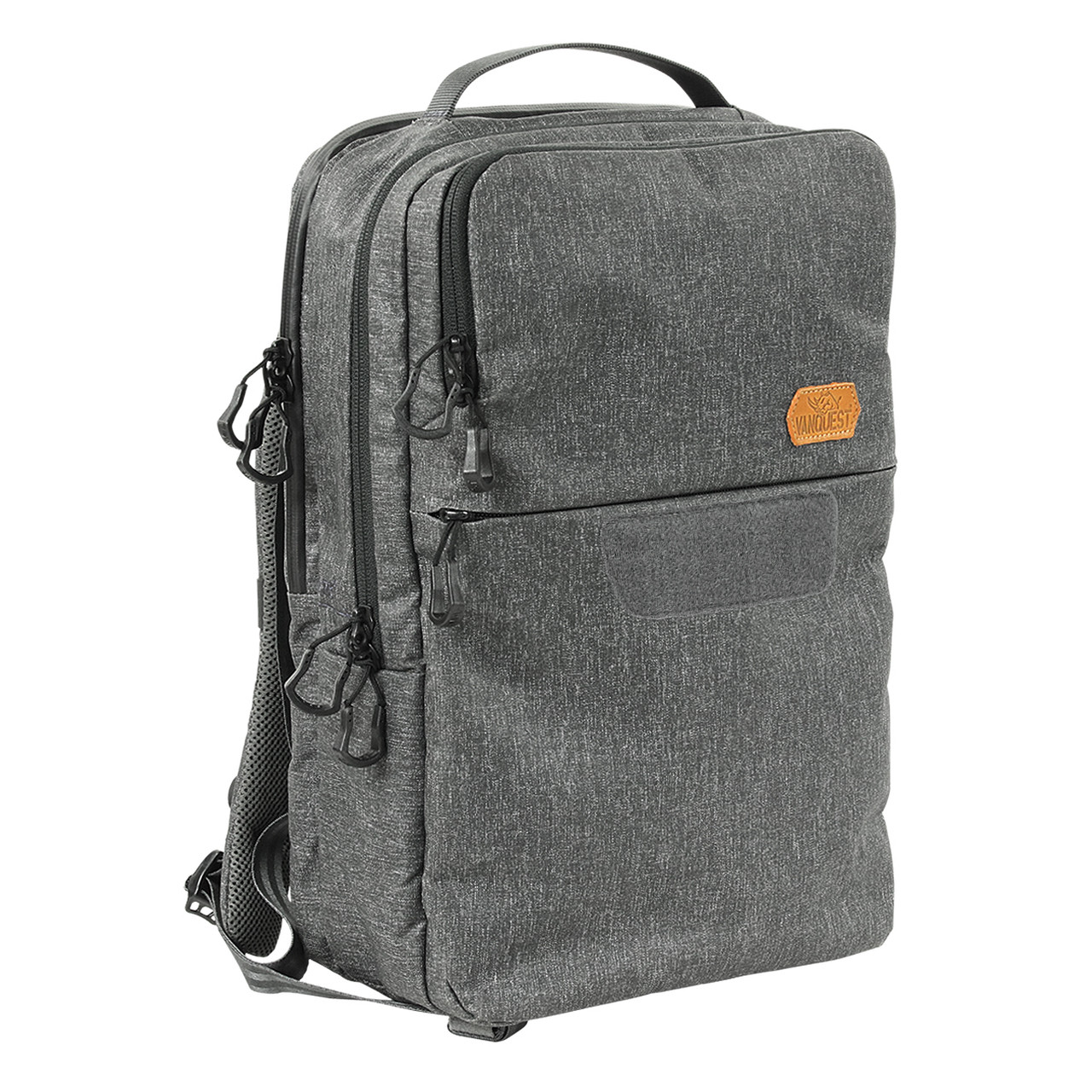
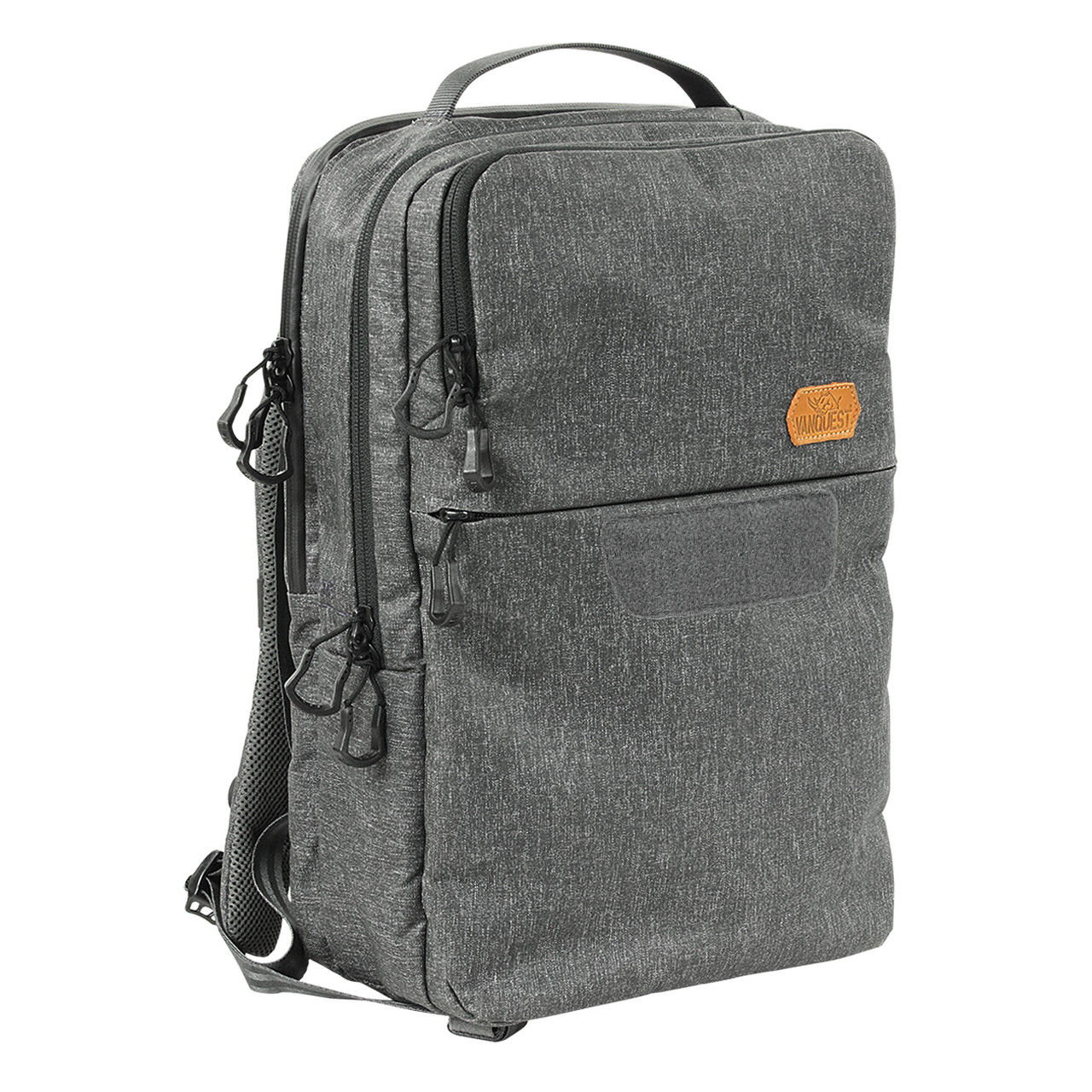
- Vanquest’s commuter backpack is the Addax.
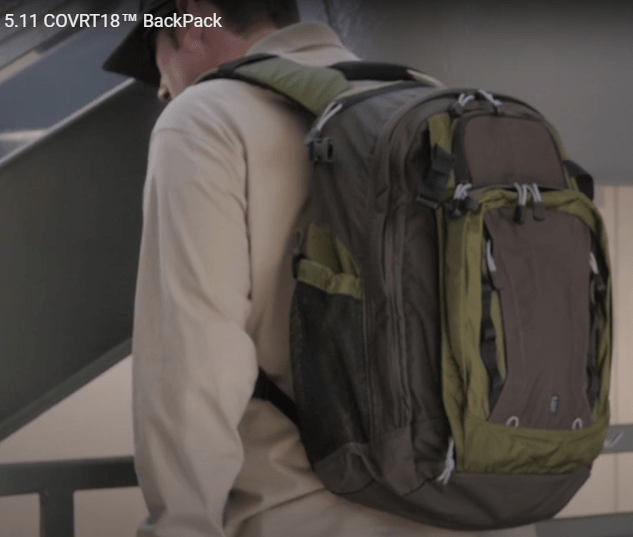
- 5.11 have what in US prepping is an industry standard get home bag, the 24l Rush 12 2.0 with laptop sleeve, bladder pouch, bottom gear loops, concealed carry compartment, soft lined electronics pocket, grab handle, stuff pocket, and optional hip belt, but it is plastered in molle and pouches so might be too obvious. Its cousin, the 27l Rush 12 2.0 Tech is aimed at the commuter get home market, with top handle, sternum strap, bladder pouch, soft lined electronics pocket, laptop sleeve but no hip belt. Next up is the 37l Rush 24 2.0, a goto bug out bag in the US prepping community, with laptop sleeve, bladder pouch, soft lined electronics pouch, bottom gear loops, concealed carry compartment, removeable frame sheet, sternum strap and plenty of pouches on the front, but no hip belt although it is an option. Its bigger sister, the 55l Rush 72 2.0, is available in 55l with laptop sleeve, bladder pouch, soft lined electronics pocket, removable backboard and stuff pocket. Another tactical get home bag, aimed at ammo and first aid, is the 29l All Hazards, with laptop sleeve, top handle, bladder pouch and velcro grab bag inside, soft lined electronic pocket, stuff pocket between bag and pouch, bladder pouch and velcro grab bag inside. It has a smaller sister, the 21l All Hazards Nitro with soft lined electronics pocket, 180 degree opening, base handles shove pocket, but no hip belt, bladder pouch or laptop sleeve. The Nitro is an out and out tactical urban get home bag with pass through sleeve for tools like crowbars. For travel or EDC they have the entry level boxy 28l Daily Deploy 24 with laptop / bladder sleeve, laser cut molle and attachable hip and shoulder straps (hip belt is sold separate); it looks like a modern commuter bag trying to be a tactical bag so is maybe not too tacticool. But perhaps their best looking bag with molle uses it as decoration, their gym bag, the 30l PT-R Gym. It is useless for bug out, travel, missions or even a long walk home, but it is perfect for a shorter walk when the trains are suddenly cancelled, with sternum strap, laptop sleeve and bladder hook, shoe pouch for trainers, and water bottle side pockets, if all you need to shove in is an energy bar and anorak. For a compact bug out bag they have the technical 34 / 36l Skyweight with clamshell opening, bottom attachments, removable hip belt, sternum strap, load lifters, shove pocket, rear handle, laser cut molle bladder pouch and side bottle pockets; its smaller sister comes as a 24l with front and rear handles, bladder pouch, sternum strap, bucket lid, removeable hip belt, side bottle pockets. For emergency warehouse foraging there is the 28″ 45l Covert Carry with pockets to hold tools, removeable sternum strap, laptop sleeve, back board and optional hip belt, side handle and internal molle. For covert options, they have the often recommended 32l Covrt 18 2.0 with concealed carry compartment, laptop sleeve, shove pocket, bottle side pockets, sternum strap and clamshell opening, but no hip belt; this is their grey man flagship.
- Aer in San Francisco do the 19l Fit Pack 3 X-Pac gym bag with centre zip, shoe compartment, bottle pockets, laptop sleeve and optional hip belt (no lumbar pad and only attaches via small strap), suited to short get homes. For long get homes or short bug outs they do the 30l Ergonomic Backpack with three tiered organisation, side pockets, adjustable shoulder straps, and sternum strap, lumbar pad and hip belt.
- Alpaka do the 35l 1.6kg Elements Travel Backpack in XPac VX42 with main compartment, front admin compartment with ribbons, laptop compartment, front pocket, sternum strap and pocketed hip belt, handle, bottle pocket zip side pocket, internal pockets, and attachment points, and accessories available.
- Amazon Basics are the place to go for value in a bag you’ll only use once where you don’t expect stitching to last forever. For traditional bugouts where you want a backpacking pack they have the Internal Frame Hiking Backpack in 55, 65 and 75l, with frame sheet, full hip belt and adjustable shoulder straps, the 55l going for about an incredible £33. For organisation consider their Camera Backpack with zipped side pockets and top and back access with shelves.
- Barebones Living do the canvas 2.1lb Hunter Gatherer bag for fruit scavenging.
- Bellroy in Melbourne have the 26l Venture Ready Pack with side and top pockets, sternum strap and laptop sleeve, and Classic Backpack Plus with splay rear laptop compartment, grab handle and sternum strap in 16, 20 & 24l.
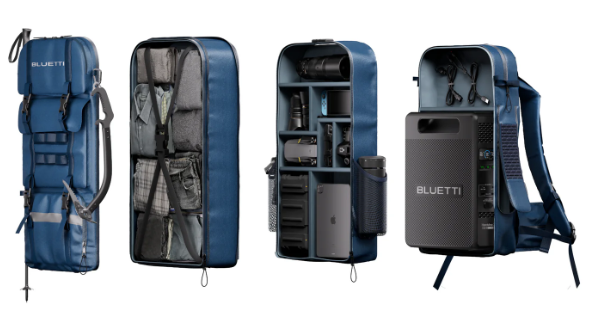
- Bluetti do a monstrous 7.5kg 60l camera power bag with 120W panel and 512Wh powerbank plus camera divider section and suitcase section, the Handsfree 2.
- Briggs & Riley in Long Island do the 24l Cargo Backpack with grab handle, sternum strap, zip side pockets, rear laptop compartment, main compartment with U zips over and around top.
- Burton have the 25l Dispatcher snowboarding bag which has a decent looking hip belt with pockets, and main compartment dividers for tools. Their 30l Day Hiker has a hip belt and laptop sleeve, while their 25l Sidehill has a hip belt and also comes as an 18l. Their 27l Annex 2.0 has side access to a laptop compartment, and top access to main compartment.
- Camelbak have a range of bags with bladder pouches and hip belts. The Rim Runner X22 has side pockets, hip belt pockets, sternum strap and is top opening. The 23l or 29l Fourteener has hip belt pockets, sternum strap and is top opening.
- Code of Bell specialise in redesigned Japanese bags. The X-case is a 20-42l expandable convertible briefcase with handle, messenger strap and shoulder straps with sternum and hip straps, with laptop compartment, bottle pockets, internal pockets, orange hi-vis interior and attached packable duffle, and can be expanded with accessories.
- Cotopaxi sell expensive kids backpacks, which may be of interest if you are struggling to get your children into carrying them as they are multicolour.
- Dakine in Oregon have the Builder Pack, designed for trail builders, it has pockets for tools and can even carry a five gallon bucket and sports a hip belt, so an unusual but maybe perfect choice for WROL foraging. The 30l Motive has a hip belt, sternum strap, rain cover, attachment points, u-zip top to front access to main compartment with internal pockets, bottle pockets, front pocket, glasses pocket and clamshell laptop compartment.
- DB Journey in Norway do the 1.5kg 26 & 31l Ramverk Pro camera bag with top opening compartment and front opening, hip belt, bottle pocket, mesh pocket, camera insert available.
- Deuter do front opener Speed Lite hiking packs with framed mesh, attachment points, bladder compartment, sternum strap & glasses stow, shoulder phone pocket, pocketed hip strap, side pockets and rain cover,. The 28l Trans Alpine Pro 28 trail bag aimed at biking, with phone pocket, sternum strap, side pockets, bladder compartment, framed mesh, pocketed padded hip belt, helmet stuff pocket, shoulder glasses stow, rain cover, pull-down front compartment and main compartment, internal organisation and zipped bottom compartment. The 25l Rotsoord is a hiking inspired bike commuter pack with laptop pocket, lid that opens like a cooler bag and expandable U-zip bottom access front compartment for cloths or shoes. The Jaypack 34 camera bag has a front pull-down admin panel, a 4l top compartment with access to main compartment, and rear opening to padded dividers main compartment, laptop compartment, attachment points, sternum strap, removable padded hip belt, shoulder glasses stow. The 38l Aviant Access 38 carry-on has a 13″ laptop compartment, back internal frame, handles, rain shielded zip and the front peels down as far as you want to pull out your packing cubes.
- Defy in Chicago have the 18l/23l/28l Menace and Bucktown both with side pockets and laptop sleeve.
- Direct Action offer loads of camo colours for their tactical bags. The 40l 2kg Halifax peels from top to bottom down the front with wall to wall molle inside and out, attachment points, bottle pockets and top pouch. The 20l 1.2kg Dust MkII has molle, handle, two u-zip compartments – main compartment with pockets then front with admin panel, and laptop sleeve, hydration sleeve, hip belt, front pocket, and bottle pocket. The 31.5l 2.3kg Ghost MkII with u-zip top access, detachable molle hip belt, laptop sleeve, hydration sleeve, two front zip pockets and bottle pockets, and compared to the Dust adds a detachable clamshell front admin pouch separated by a bungee stuff pocket. The 30l 2.2kg Dragon Egg Enlarged has a handle, front pocket, bottle pockets, hydration sleeve, laptop sleeve, molle including on the hip belt and is split into two vertical compartments with u-zips and pockets for admin and radios. This comes in a 25l 1.6kg version with molle, laptop sleeve, hydration sleeve,.
- Doughnut in China have the 25l Pathfinder which opens down a corner for wide access and converts to a chair! They have the 22l Dynamic Large Titan with hip strap, bottle pocket, laptop sleeve and lid top, also available in 18l. Their Guild The Actualise is 23l with detachable front sling pouch, and phone, bottle, laptop and glasses pockets. The 26.5l Stargazer has bottle pockets, laptop sleeve, grab handle, hip belt and detachable sternum strap and waist bag formed by hip belt with pockets. The 20l Sturdy Shield is a backpack sling duffle combi with grab handle, bottle compartment, laptop sleeve and lid top. The 20l Ground Control has bottle compartment and rear laptop pocket. The 24l Excel has shoe pocket, laptop sleeve and bottle compartment. The 21l Domestic has built in hood, and bottle compartment, detachable sternum strap, laptop sleeve. The 22l Dynamic Large Shield has laptop sleeve, bottle compartment, front pocket and hip strap. The 28l Astir Large has bottle pockets, laptop sleeve and detachable pouch. The 28l Astir Large Shield comes with shoe pocket, laptop sleeve and bottle pocket. The 22l Astir comes with bottle pocket, laptop sleeve and shoe pocket.
- Eagle Creek in Colorado have the 40l travel backpack, the Tour Travel Pack with load lifters, sternum strap, hip belt, rear laptop pocket and top zip and side U zip for book style opening. Their 26l Ranger XE Backpack has bottle pockets, bladder pouch, stash pocket and detachable hip strap.
- Ebags in USA have the ProSlim and MotherLode ranges. The Mother Lode Rolling Travel Backpack has front pocket, front access, side clamshell opening, wheels and bottle pocket, but at nearly 5kg is only suited to light loads like clothes. The more manageable Pro Slim Weekender has a handle, sternum strap, rear bottom compartment, bottle pocket, rear laptop pocket, front admin pouch pocket, front bottom compartment and inside organiser pouches, but no hip belt so is only really of possible interest for the front and rear bottom pockets. The Mother Lode EVD has rear laptop pocket, top zip and splay front organiser pocket. The 50l Mother Lode DLX Travel Backpack has handles, pocketed hip belt, bottle pockets, front clamshell admin pouch, side opening suitcase expandable main compartment with separate top compartment and laptop compartment.
- Evergoods do the Civic Travel bag in 26 and 35l (1.815kg) with front clamshell access, internal pockets in main compartment with laptop sleeve, and front stash pocket, internal side carry frame, hip belt and handles, and can be run as a holdall or on shoulder as well as backpack.
- Everki in Germany specialise in laptop backpacks, some of which may be of interest for their wheels or load lifters, although none have hip straps. Their monstrous 42l Contempro 117 has a rear laptop pocket, quick top access zip, splay front access, zipped side pocket and the main compartment has compartments for gaming which could suit bulky lightweight bug out gear bearing in mind there a sternum strap but no hip belt. The 40l Business 120 comes with zipped side pockets, clamshell rear laptop pocket, splay main compartment, splay front organiser pocket, top quick access zip and load lifters. The 32.5l Beacon has zipped side pockets (which stick out a lot) and front access to main compartment with organiser compartments, load lifters and two handles. The more manageable 32l Atlas has clamshell rear laptop pocket, splay main compartment and front organiser pocket, magazine pocket, zipped side pockets, quick access top zip and load lifters. Their 30l Atlas has three tiered splay compartments, laptop sleeve, front organiser pocket, side pockets, stowable shoulder straps and wheels, so could work for pavement bugouts or light travel INCH. Their 28.5l Flight has four tiered compartments, three splayed and one clamshell for laptop and load lifters and zipped side pockets. Their boxy 18.5/26l expandable Studio has two splay compartments, laptop sleeve and zipped side pockets.
- Everyman in Utah do the 24l 3lb Hideout Pack with handles, double J zip splay opening, rear clamshell laptop compartment and top pocket lid, with no hip belt and not much organisation it will do as a work bag with emergency clothes. The 18l Hideout 5 Way convertible commuter has a laptop sleeve, internal organisation sleeves, velcro secured packing cubes and compression straps, and you can run it as a backpack, messenger or sling; at 3lb though there is a weight penalty for the carry options and the flat design with no hip strap is better for getting across town, with perhaps a stop-off at a hotel, rather than scrambling home cross country.
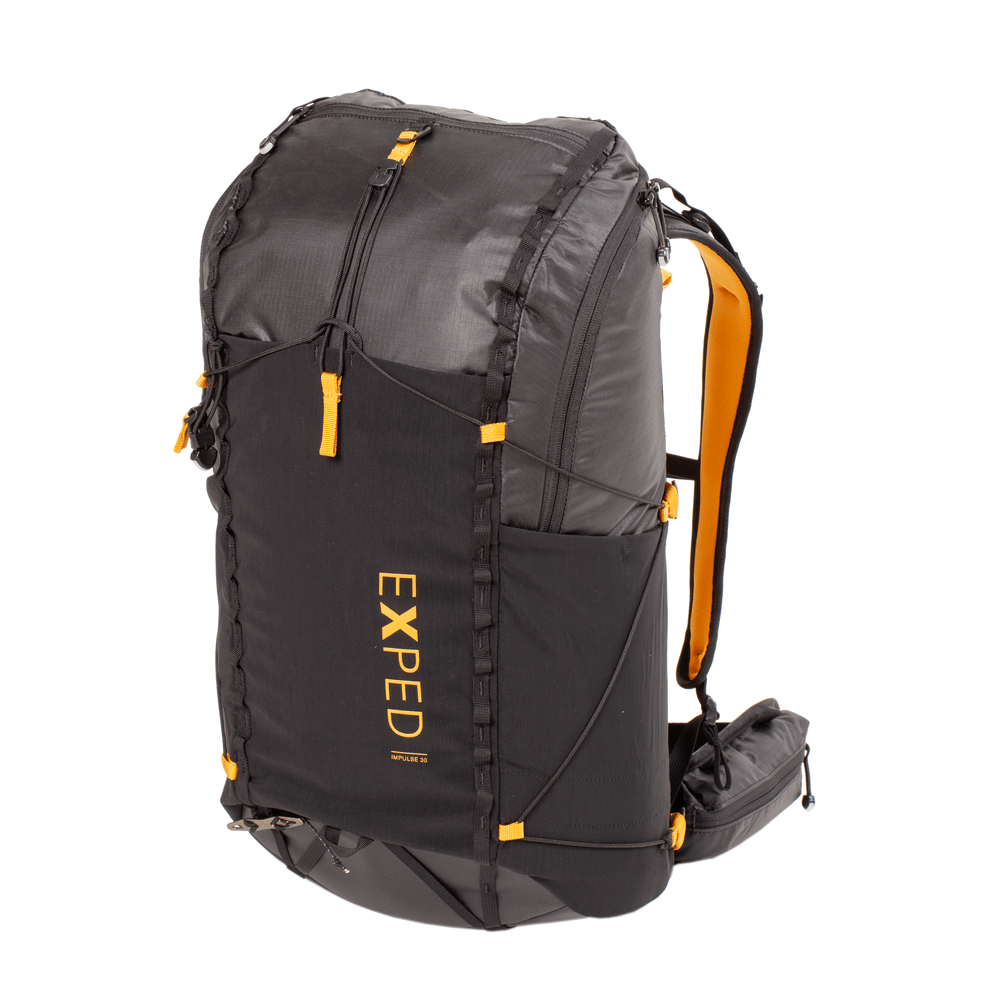
- Exped (Vision Products) in Vietnam do the 30l 700g lightweight Centrum 30 with 15″ laptop compartment, one handed sternum strap, removeable hip strap, daisy chains, bottle pockets. They say their 20l version is 20g heavier. The 25l 930g Cascade 25 has frame sheet front pocket, side access 13″ laptop compartment, attachment point, mesh pocket in main compartment and water resistant zips. They do the £49 lightweight 25l 353g Summit Lite 25 which folds into it’s pocket and it hydration compatible, it has a bottle pocket and shoulder strap pockets, daisy chain, and removable sternum and hip straps. The 519g 25l Summit Hike 25 is the heavier duty version. The 720g 30l Impulse 30 has cord compression, internal and external mesh pockets, external pocket, bottle pockets, padded zipped hip belt, frame sheet and hydration compatible.
- Decathlon sell Forclaz bags with 10 year guarantee. The 40l 1.2kg Travel 500 Organiser at £60 is relatively lightweight with suitcase style clamshell sideways opening, laptop compartment, handle, thick padded hip belt and frame sheet. Their 10l 45g Foldable Backpack has one pocket on the main compartment, and costs only £2.99 so well worth sticking in the glove box. They also have the cheap Quechua range coming in at £30-£40. The 30l 620g NH Arpenaz 100 has front side access pocket, sternum & hip straps, 15″ laptop sleeve, bottle pockets and front bungee. Still a bargain is the larger heavier 32l 1.1kg NH Escape 500 with a claimed 15 pockets including 17″ laptop sleeve and 15″ tablet sleeve, two front pouches, phone pouch on shoulder strap, although users say models vary. Another affordable entry level bag is the 30l 1.3kg NH Arpenaz 500 Ice version with eight pockets including bladder sleeve and bottom cooler compartment. You can go without the insulation in the bottom compartment with the 30l NH Arpenaz 500 and cut weight to 815g, with bottle pockets, bottom compartment, front admin pocket, bungee, main compartment with bladder sleeve and more padded shoulder straps. It’s not too clear whether it’s actually a 20l bag though.
- Fjallraven of hiking bag fame do the 28l Skule 28 with hydration pouch, sternum and hip strap, top opener u-zip, laptop sleeve, internal zip pocket and two mesh pockets, and front bungee stuff pocket; the name says it all, it is their entry level bag with no real internal organisation and access is limited. Spend a bit more and you get the 30l Ulvo 30 with lid compartment with rear zip and additional mesh pockets, and main bucket format compartment with two vertical sleeves, one for laptop, bottle pockets with zip, front pocket, light loop, and sternum and removeable hip strap; with limited access and ventilation it is probably best a for a few bulky items like clothes where you are not looking for lots of items. The next bag up is the 28l Singi 28, for which accessories (straps, drawstring pocket and lidded pocket) are available to hang off the side loops, it has sternum and padded pocketed hip belt, its front has loops and bungees and pulls down three quarters of the way and has two flat pockets, the main compartment has a hydration pouch, the zippered lid houses the top compartment and comes down with the front.
- Filson do about the ponciest packable backpack, the £195 27l 10oz Chris Stapleton dry waxed cotton Traveller Stowaway Backpack with drawstring top and three external pockets.
- FStop do the 28l 1.3kg Lotus 4 Core with attachment points, aluminium internal frame, bottle pockets, lid pockets, sternum strap and padded hip belt and rear access. Its bigger sister is the 32l 1.5kg Lotus 32. The 30l 1.1kg Kashmir 30 Ultralight is aimed at the female torso. The range have divider units available to slot in through the top.
- Gossamer Gear do the ultra lightweight 36l 361g Murmer 36 Backpack, hydration compatible, roll top, with sternum strap and pocketed hip belt, attachment point, mesh stuff pocket.
- Granite Gear do the lightweight 22l 0.68kg Dagger, with sternum & removeable hip belt, removeable frame sheet, hydration pouch, bottle pockets, front bungee stuff pocket.
- Gregory’s Border Carryon 40 travel bag opens sideways like a suitcase split into four compartments, with laptop compartment, bottle pockets, handle and hip belt. The Citro 30 hiking pack has framed mesh, sternum strap, attachment point, pocketed padded hip belt, shoulder glasses stow, hydration pouch, bottle pockets and rain cover.
- Hazard4 do the 29.5l Pillbox tactical camera backpack with molle, velcro, attachments, dividers, 16″ laptop sleeve, rails, admin panel, sternum strap and removable hip belt, with separately available beavertail stuff pocket.
- Heimplanet do the 28l 1.52kg Transit Line Travel Pack 28 with clamshell suitcase-style main compartment, 17″ laptop compartment, front pockets top and side, bottle pocket, load lifters, sternum and hip straps. This also comes in a 34l 1.66kg version. The 24l 1kg Transit Line Daypack 24 lacks the front top pocket but has as much else, such as handle, detachable sternum and hip straps, plus side access to main compartment with internal organisation and 16″ laptop compartment. The 25l 920g Motion Ellipse 25 has main compartment, front breathable compartment, lid pocket, top zip pocket inside, hydration sleeve, 16″ laptop sleeve and removeable sternum and hip straps with hip strap pockets available. The 20l 800g Motion Arc 20 has a main compartment, front breathable compartment, bottle pocket, side zip pocket, top zip pocket inside, hydration sleeve, 16″ laptop sleeve and removeable sternum and hip straps with hip strap pockets available.
- Highland Outdoors do the 36l 1.7kg Ridgeline Evade in green with molle and thick padded shoulder and hip straps, bottle pockets, front admin pouch, tablet pocket, hydration sleeve, handle, rain cover. It fits up to 17″ laptops. Their 2.6kg 80l Explorer has a detachable 20l daypack, hip belt, compartments, adjustable torso, suitcase opening and handle.
- Highland Tactical do a tool backpack that could work for scavenging raids, the 24l 1.45kg Task with handle, internal tool pockets and molle, hard base, front pocket and side pockets.
- High Sierra do the 40l Powerglide Pro Wheeled Backpack with laptop compartment and bottle pockets, but it weighs 3kg, and the dearer but less suitcasey 40l XBT Wheeled Daypack with more pockets.
- Hyperlite Mountain Gear do the lightweight 17l 539g Daybreak 17 day pack made of DCF, with attachment points, front bungee stuff pocket, internal zip pocket, 13″ laptop sleeve, bottle pockets, front pocket (fits Camelbak sort of), sternum strap whistle and hip belt. They have bigger roll-tops. DCF bags have no real padding or ventilation.
- King Kong in USA do the Conquer weightlifters backpack in 19 or 38l, with no hip strap but with molle, hidden rear compartments, an internal shelf and divider, bottle pockets and laptop pocket.
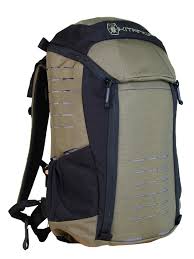
- Kitanica do the Vespid 30L with rip-open top over pull-down front, bottle pocket, lid pocket, mesh pockets, laptop sleeve, molle and removable hip belt.
- Klattermusen do the 26l 840g Gilling with bungee, pocketed hip belt, stuff pocket, bottle pockets, lid pocket.
- Knack do a 30-46l Series 2 Large Expandable Knack Pack with laptop pocket, 16l suitcase compartment, hidden bottle pocket, sternum strap and detachable hip belt.
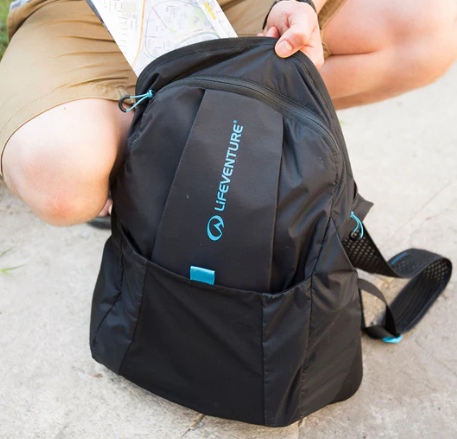
- Lifeventure do a 160g 16l (one bottle pocket, no stash pockets) and 235g 25l Packable Backpack with handle, two stash pockets, two zipped pockets and bottle pockets.
- LL Bean’s 39l Approach Travel Pack is a carry-on suitcase with shoulder and hip strap and top pocket, and opens to a top and main compartment plus a front pocket, all with mesh covers for clothes.
- Long Weekend’s 22l 780g Morro Convertible Backpack isn’t subtle but has lower front access to space for their camera cube for separating gadgets, side access, 16″ laptop compartment, bottle pocket, upper front pocket and sternum strap.
- Lowepro have the biggest camera bag range if you are willing to pay the weight penalty for internal organisation. Their top bag is the £399 43l 3.65kg ProTrekker BP 650 AW II with lid compartment, bottle pocket, hydration pouch, laptop sleeve, sternum and padded hip straps, rear clamshell access to main compartment with about 17 shelves. But their top bags mostly rely on rear access. A few models down the lineup comes the more interesting tactical £269 25l 2.84kg ProTactic BP 450 AW II with wrap-around molle and top, rear (flat pockets) and side access, side pockets, padded hip belt with pocket, handle, lid pocket, rain cover, with accessories available (straps and pouches); if you can live with the weight you get plenty of comfort, access and organisation. Next down is the £245 30l 2.65kg Whistler 350 Backpack 350 AW II, with lid with mesh pocket, 7cm deep front compartment for clothes etc, main compartment with hydration pouch, laptop compartment and top (remove shelf) and rear access to dividers through panel with mesh pockets, rain cover, sternum strap and hip belt with pocket, but no bottle pocket, so you would only buy if you like the flat front compartment. Next down is another interesting tech bag, the more manageable £193 1.34kg Droneguard BP 250, especially if you want a bag for drone surveillance, with laptop sleeve, tablet sleeve, DJP Mavic Pro case, shoulder smartphone pouch, handle, front elastic webbing, front access main compartment with cables admin on cover and dividers, bottle pockets, two top admin pockets, zipper compartment between that and main compartment below, laptop compartment, and sternum and hip strap. Next down is another bag with interesting access, the £139 25l 1.45kg Fastpack Pro BP 250 AW III, with handles, sternum and hip straps, laptop compartment, two compartments – bottom one with dividers, 4.5cm deep front compartment, bottle pocket, two front pockets and clamshell access to the bottom half which is the ‘camera zone’ by peeling open the side and the continuing to front too if need be. Next down is the £129 25l 1.48kg PhotoActive BP 300 AW, with laptop / hydration pouch, top compartment with pocket, top and dual side access to main compartment with pockets inside flaps, fold & lift shelf unit, rain cover, front sunglasses pocket, front stuff pocket, bottle pockets, shoulder glasses pouches, sternum removeable hip straps, handle.
- Lululemon do the 28l All Sport Backpack with sternum straps and padded hip belt, side bungees, load lifters, shoulder strap pockets, pocket hood, bladder pouch and top access.
- Magforce in Taiwan have some products available through Hennie Haynes and are made at the Maxpedition factory, hence do an incredible array of bags including tactical backpacks, slings and messengers.
- Matador do the 45l 2kg Globerider 45 Travel Backpack, with attachment points, handles, clamshell access to main compartment with one open side and other side with 3/1 (stretch pocket) layout, internal frame, load lifters, sternum strap, removeable padded hip belt, laptop compartment, front top admin pocket, front stash pocket, bottle pocket, front daisy chain. Its smaller cheaper cousin the 28l 1kg Seg 28 Backpack travel bag has more front pockets and is half the weight, but being smaller does not have the load lifters or frame, and has a narrower removeable hip strap; it also has the attachment points, handles, laptop compartment, admin pocket, bottle pocket and sternum strap; what is unique about is the row of front pockets are stitched into a bag going all the way into the main compartment in case you want that organisation, or you can share the space with the back half accessed clamshell; the thin hip strap probably confines it to carry-on duties. A more mobile option is the cheaper, lighter, packable 28l 680g Beast 28 with steel frame, hydration pouch, two internal pockets (glasses pocket inside front compartment and key pocket in main compartment), full height front compartment, semi-clamshell main compartment, attachment loops, daisy chain, bottle pockets, removeable sternum strap and padded mesh pocket hip belt; this has to be one of the best packable backpack and would be a luxury backup to keep in the car for a get-home bag to be made up from car kit supplies. An even cheaper option is the packable ultra lightweight 28l 350g Freerain 28, with roll-top waterproof main compartment, hydration pouch, load lifters, pocketed hip belt, sternum strap and side pockets.
- Matein do a 29l baseball bat bag with bottom access compartment, for those contested territories.
- Mission Workshop do modular backpacks, 20l Speedwell laptop hydration bags with bottle pockets, Integer 24l camera bags with side access & shelves, and their top of the range is the 42l Radian Travel Pack rolltop suitcase with laptop pocket, bottle pocket, sternum strap and massive padded hip belt.
- Moment do the 35l 2.3kg DayChaser Travel Camera Pack with hip belt, load lifters, frame sheet, side access 16″ laptop compartment, top access 14l main compartment, side access camera compartment, two front packets, bottle pockets, stuff flap and attachment points .
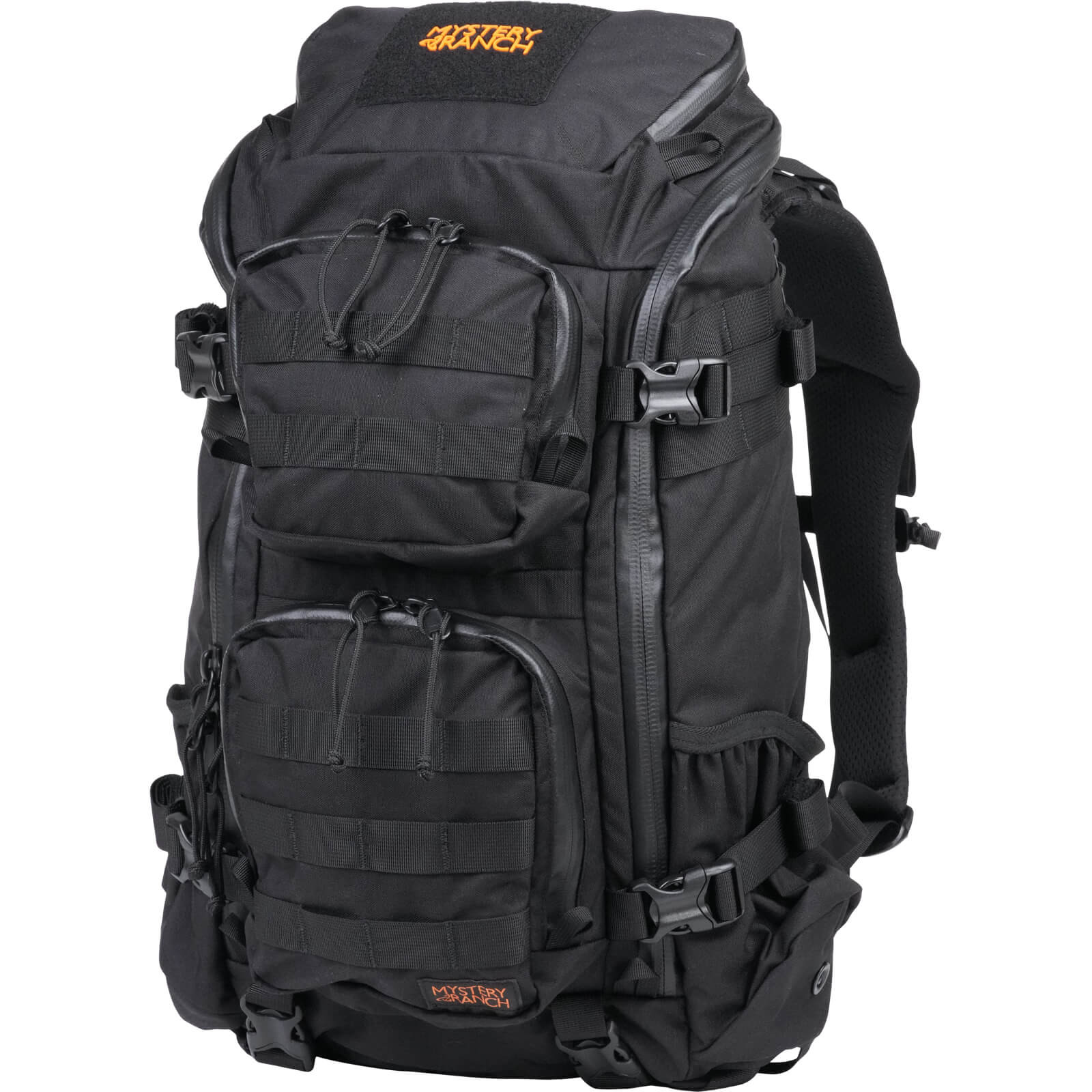
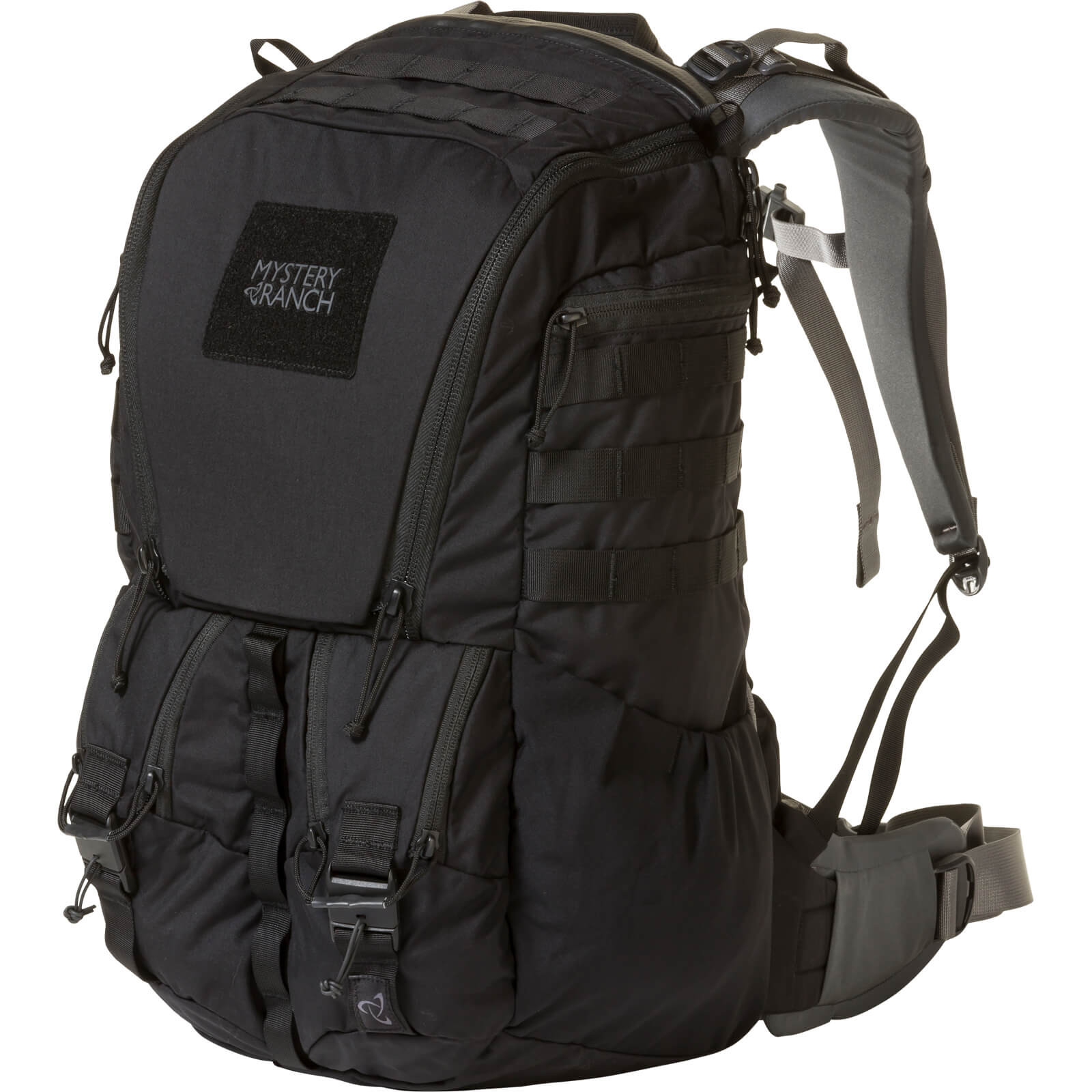
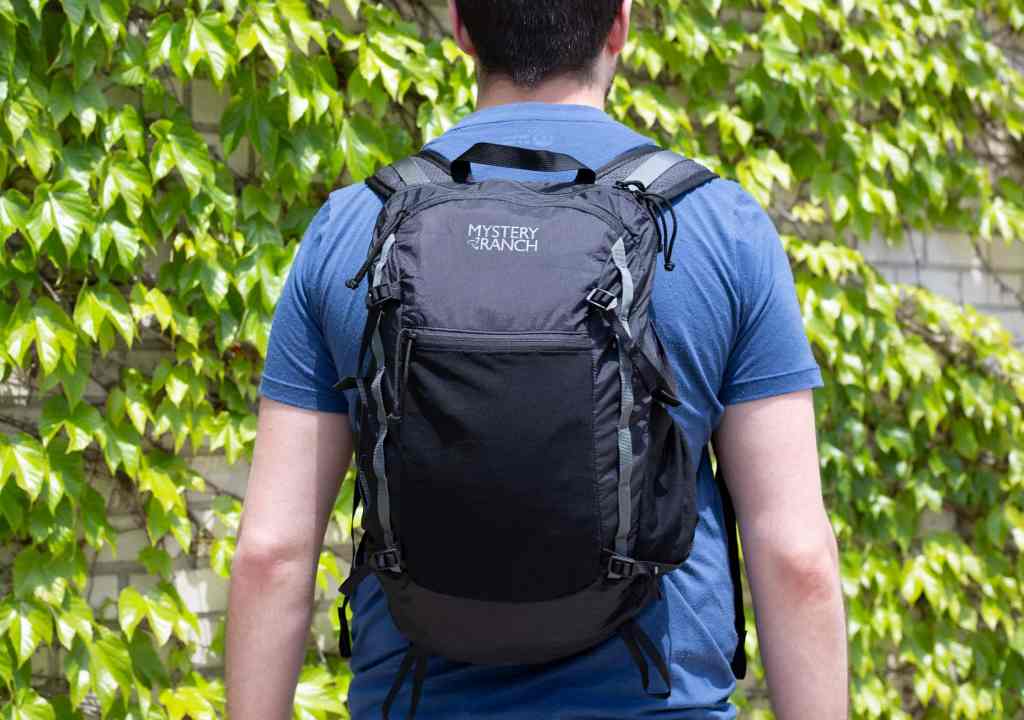
- Mystery Ranch do 30/45/60l Mission Rover suitcase backpacks with hipbelts, the 29l Blitz 30 backpack with front organisers, molle, laptop sleeve, pulldown front, velcro admin pocket and pocketed hip belt, and the 32l Rip Ruck with hip belt, rip zips and laptop sleeve.
- Nitecore do the 20l 1.5kg BP20 Backpack with molle front and sides allowing expansion by pouches, and handle, attachment points, top and bottom front pouches, height adjustable sternum strap, padded hip belt, 13″ laptop sleeve with bladder clip, mesh back and rain cover. Although it is small, heavy and not grey man, it is reasonable at £75, and the expandability, hydration compatibility and comfort of mesh and padded belt make it worthy of consideration for EDC or get-homes in permissive environments.
- NyaEvo do the 36l 2kg Fjord Adventure Camera Pack with aluminium frame, camera insert available, 15″ laptop compartment / hydration sleeve and tablet sleeve (at front), bottle pockets, internal pockets, rope carrier, helmet and tool attachments, mesh stuff pocket, top and rear access to main compartment, divider sheets to create wet clothing pocket at front and keep gear above camera insert, sternum strap, removeable padded pocketed hip belt.
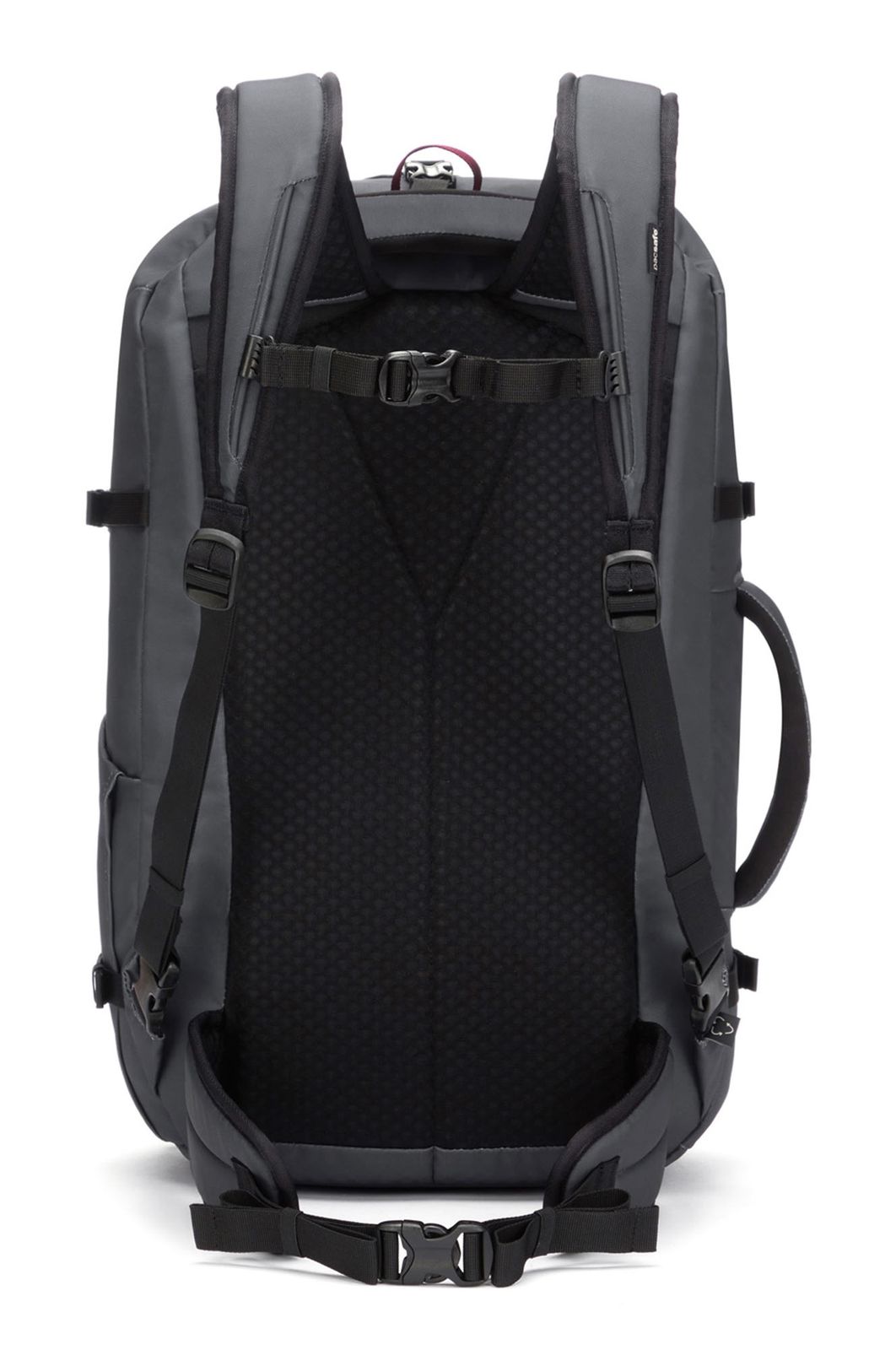
- Pacsafe do the EXP45 45l suitcase backpack with hip belt and Vibe 25l backpack with thinner hip belt.
- Patagonia do the 30l Stealth Pack with laptop sleeve, bottle pockets and hip belt, and waterproof 29l Guidewater.
- Peak Design do the 45l Travel Backpack 45 with laptop sleeve, detachable sternum and hip straps, and bottle pockets, dividers and front, rear and side access, while the 27-33l Travel Backpack 30 version has rear access and optional hip belt. The 15/20l Everyday Backpack Zip has a 270 degree zip, and dividers, sternum strap, bottle pockets and optional hip belt.
- Picture Organic do the 700g 20l Off Trax with glasses pocket, front and side mesh pockets, hydration compartment, front pocket, daisy chain, sternum strap, hip belt. For mountains they offer the 22l Komit with top compartment, axe attachment, helmet stuff pouch, sternum strap, hip belt, front pocket, internal bottle pocket, clamshell rear access.
- Prometheus Design do the 1.73kg 24l Shado Pack with hi-vis interior, stuff pocket, mesh pockets, bottle pocket, laptop sleeve, removeable sternum strap, hip belt & lumbar pad, frame sheet, removable admin panel, shock cord, molle, velcro, handles, attachments.
- RAB do the 980g 27l Aeon with sternum strap, mesh over ABS back, attachment points, zipped pocketed hip belt, adjustable torso, top pocket, side pockets, front mesh pocket, internal pockets. The suspension and ventilation make it worth a look despite looking ‘hikey’. The 20l version only saves you 50g and £10. Of more interest may be the 490g 12l Aeon LT runner’s day bag for £75 if it’s your style for EDC or a short get home, it handles a 3l bladder and compared to the Aeon boasts a handle, double sternum strap and shoulder strap pockets big enough for a bottle; it looks too good to be grey man unless you’re surrounded by runners. The 700g 28l Aeon Ultra Lightweight is a bigger rolltop version of the Aeon LT with load lifters, although is just a bucket inside, but exceptional for access on the run where stops aren’t planned, maybe for water and navigation, as it has six pockets accessible without stopping: two on shoulder straps for phone and bottle, two on hip belt and two rear accessible side pockets. Their 350g 7l Lowe Alpine Space Case is an oversize bumbag with hip pockets, stuff pocket, bottle pockets, rear pocket, handle and light loop; don’t overload it though as with no shoulder straps your stomach takes the strain.
- Regatta do one of the cheapest laptop bags at £30, the 35l Paladen II with hip belt, laptop compartment and internal mesh pocket. They also do a 20l packable Packaway Hippack for £10.
- Ridge do a 15l Jansport-style Essentials packable backpack with bottle pocket, front pouch, and internal pocket and mesh pouch. Handy for unexpected excursions from the car.
- Rohan do a 16l packable backpack with hip belt, bottle pocket and two zip pockets.
- Samsonite do the 55l Ecodiver with laptop compartment, sternum strap, hip belt and front opening, and its cheaper sister the Roader.
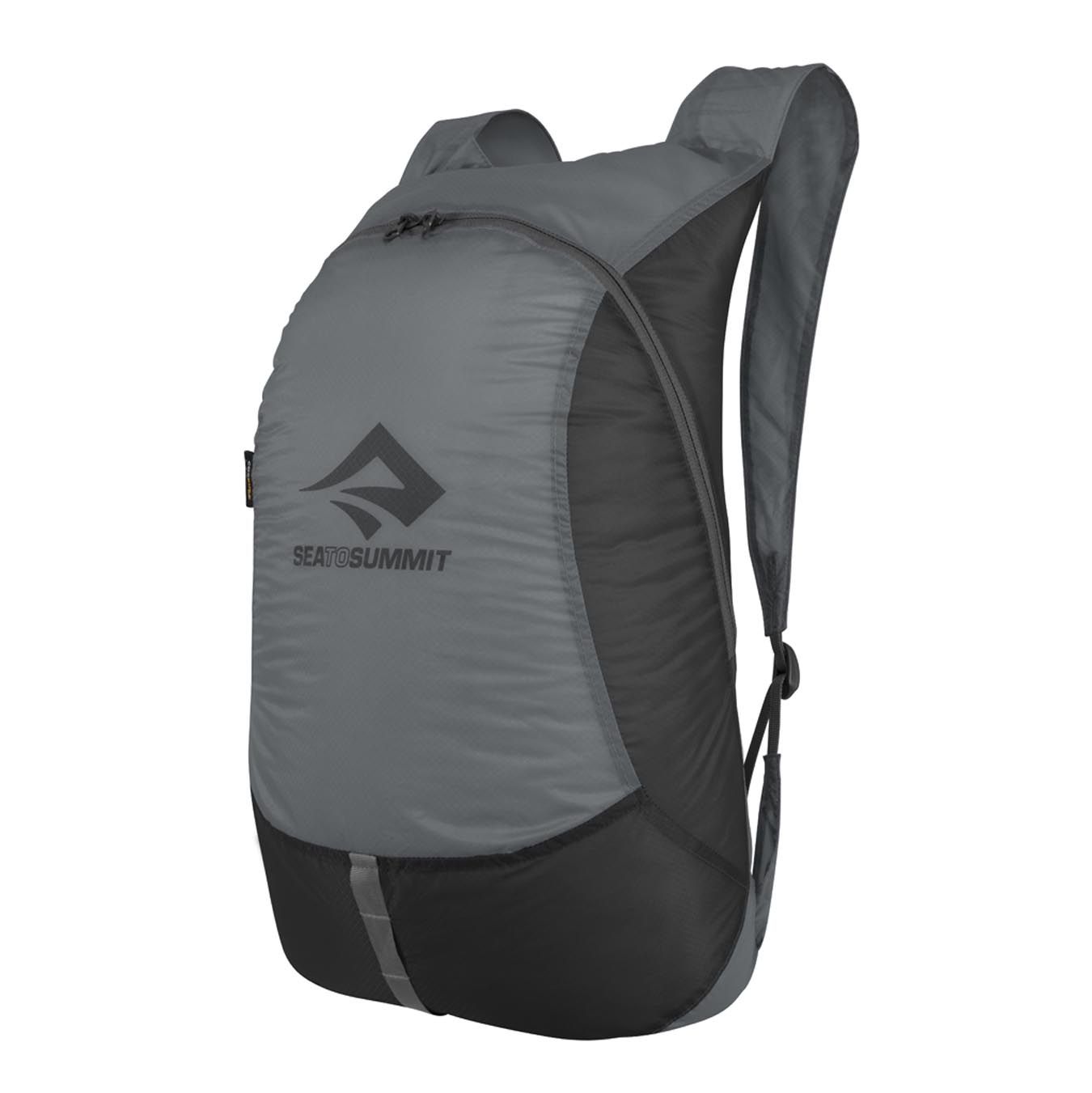
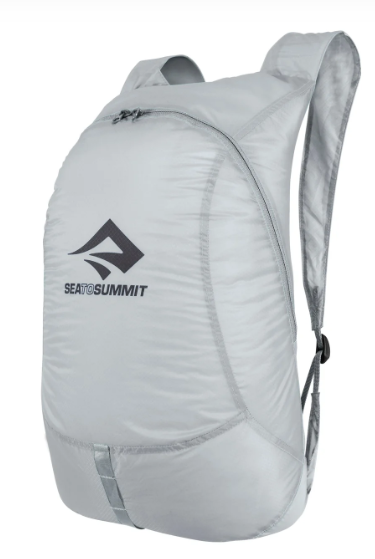
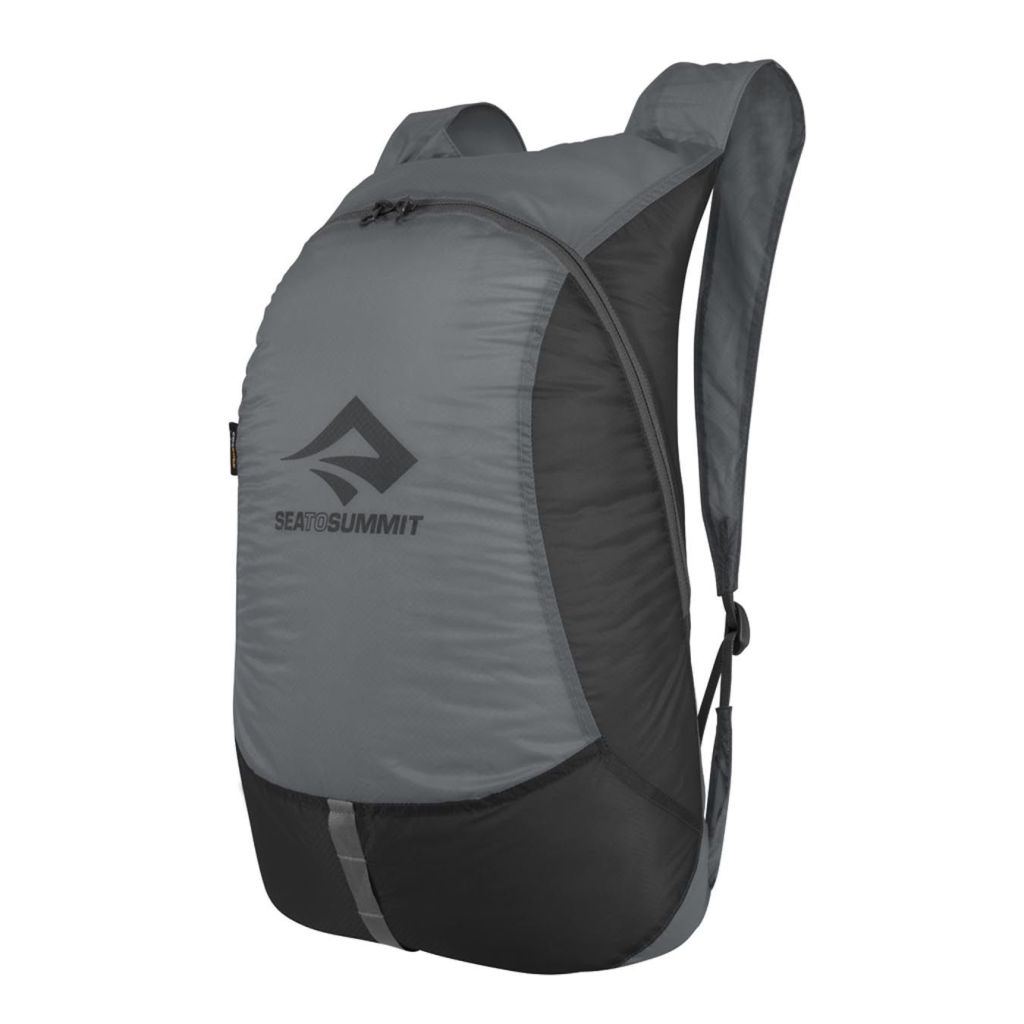
- Sea to Summit do the ultra lightweight 72g 20l Ultrasil Daypack.
- Shimoda in UK do the 2kg Explore v2 35 camera backpack with handle, adjustable torso, rear & side opening, 16″ laptop sleeve, bottle pockets on shoulder straps and sides, sternum strap, removeable padded hip belt, and divider units available. Also in 1.65kg 30l version.
- Snowpeak do the 25l Active Field Backpack with zipped hip belt, front, lid and bottle pockets, daisychain, laptop sleeve.
- Stubble & Co do the packable Ultra Light Backpack with front pocket, bottle pockets, thin padded straps & back, 20l main compartment. For those wanting to pack out a soft bag with packing cubes there is the 42l 1.6kg Adventure Bag with handles, bottle pocket, laptop compartment, front and top front pocket, rain cover, pocketed detachable padded hip belt and clamshell suitcase-style main compartment split 1/3 one side and 1/2/1 (shoe) the other side, all orange hi-vis inside.
- Targus do the 35-40l Ecosmart Mobile Tech Traveller XL expandable backpack with suitcase opening, laptop compartment and hip belt.
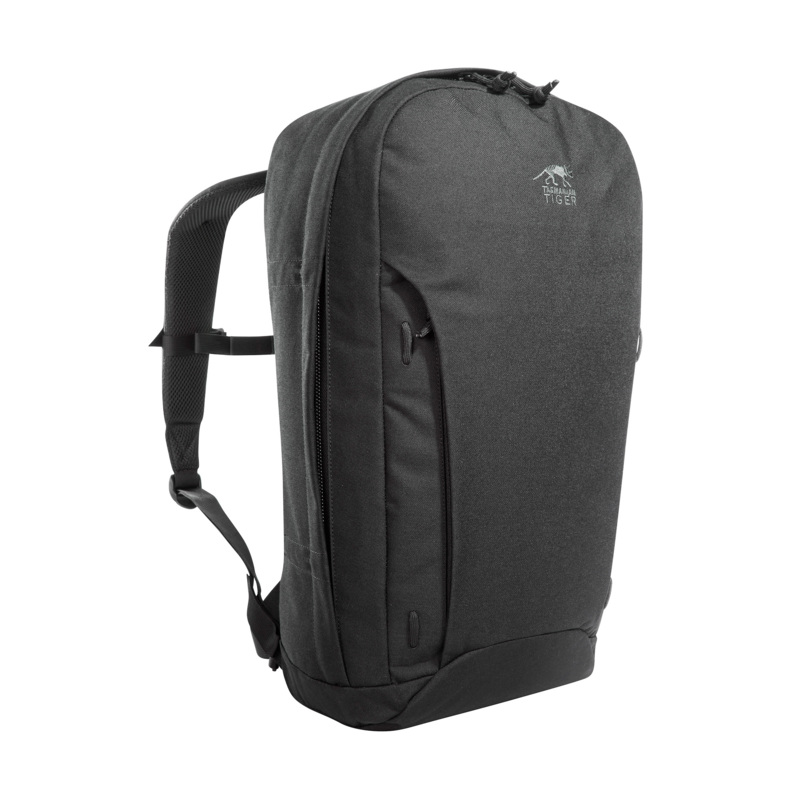
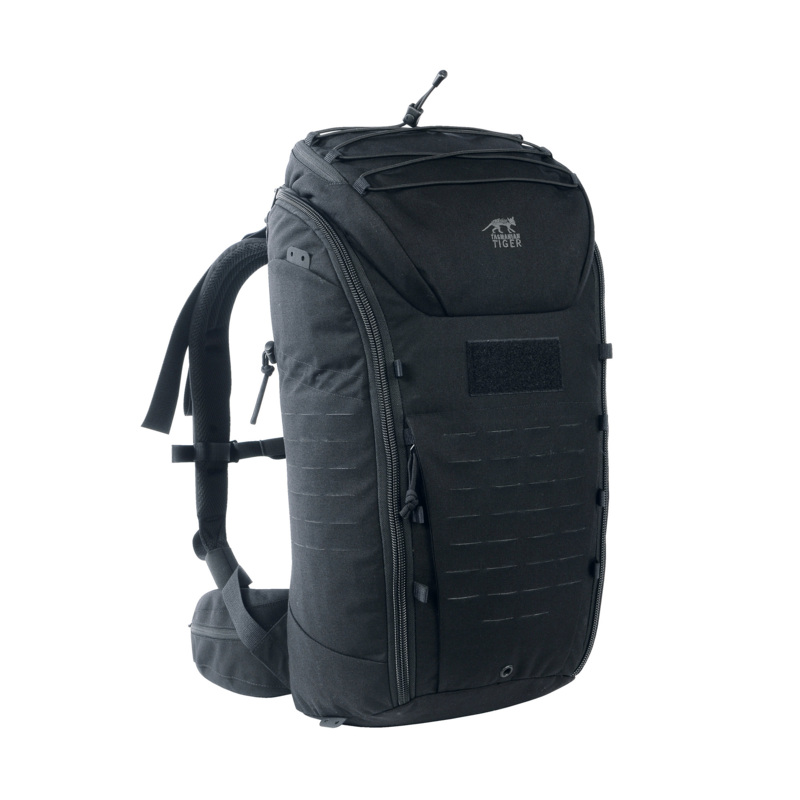
- Tasmanian Tiger do the mission-oriented 1.65kg 30l TT Modular Pack with lid pocket, velcro, molle, zip pocket hip belt, antenna ports, side pockets, hydration compatible, detachable rear panel and front opening. For tech they have the 2.4kg 30l Modular Camera Pack with handles, molle, velcro, front pocket, lid pocket, bottle pockets, front and top access to main compartment with dividers and available camera inserts, height adjustable sternum strap, tablet compartment, load lifters, removable padded hip belt and rear panel, shoulder camera strap. The TT range has dozens of accessories available. For town they have the 22l Urban Tac Pack with front pocket, handle, internal mesh pouches, removeable main compartment with molle and velcro, detachable hip strap and rear panel, height adjustable sternum strap.
- Thule do the 24l Covert 24 camera backpack with top purse action access, side access, rear access for laptop compartment (revealing main compartment held in place by mesh or dividers), shelves and dividers, sternum and hip straps, reconfigurable as a suitcase or shoulder bag, with removeable sling pod, and the bigger cheaper 32l Aspect without the rear access and sling pod, but with padded hip belt compared to the Covert’s thin belt.
- Timbuk2 do the 21-35l expandable Parker Commuter Backpack with sternum & hip straps, laptop compartment and bottle pockets.
- Tom Bihn do the 36l Brain Bag with two laptop compartments, an attachment point, bottle pockets, phone pocket, hip strap, removeable sternum strap, optional padded hip strap; bear in mind the zips only come down half way so it’s more for sliding flat objects straight out like laptops and lacks internal admin and hydration. The 25l Synapse 25 has removeable sternum and hip straps, and bottle pocket, four further external pockets, attachment point and main compartment with pouch tether loops. The 22l Synic 22 is a smaller new improved cousin of the Synapse, with removable internal frame and sternum and hip straps, and 13″ laptop compartment, handle and pockets, and is one of the smallest backpacks you will find with a hip strap or with clothing straps and clamshell opening like a suitcase. The Synic 30 handles 16″ laptops and is a better fit for those over 5’10”. The Technonaut in 30 or 45l is a convertible carry-on backpack you can run as a duffel or messenger (with optional strap), with removeable sternum and hip straps (and optional padded hip belt), handles, pockets, laptop compartment and main compartment with front pull-down access and bottom compartment with front access. It sacrifices one end compartment from the Astronaut and the bottom compartment can be unzipped to extend the main compartment, and there is an optional internal frame.
- Topo Designs do the 30-35l / 40-45l expandable Global Travel Bag with laptop sleeve, mesh organisers, sternum strap, handle, removable shoulder and hip straps, and claimed load lifters. The 40l has a bigger hip belt.
- TravelOn are worth a mention for their women’s anti theft bags, although none have hip straps, and would be more of an EDC or short get home option.
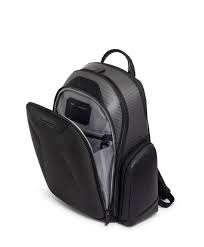
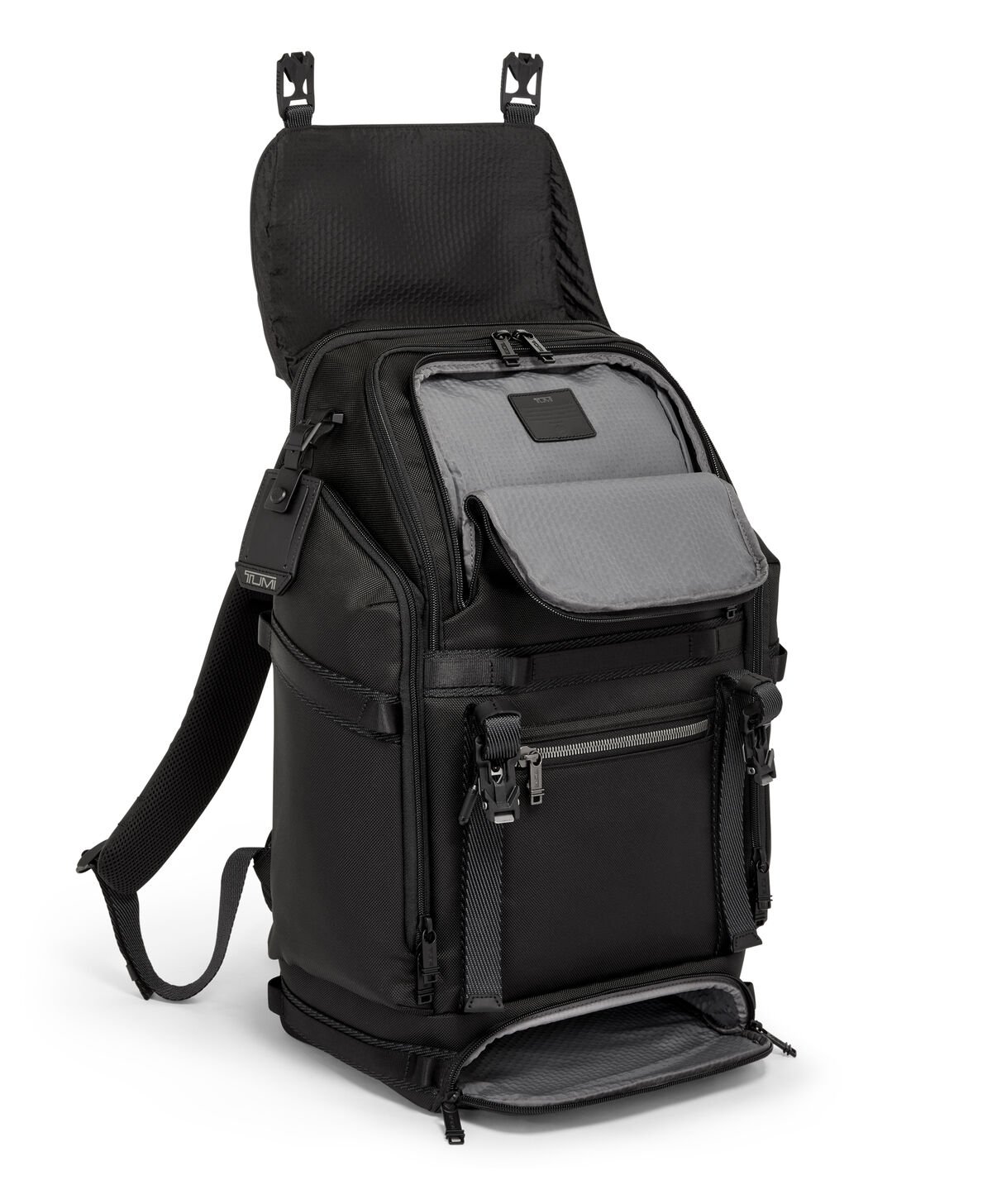
- Tumi do the most expensive backpacks, like the £2,050 carbon fibre 27l Paddock with laptop compartment and media & powerbank organisation. If you fancy being mugged while you cut through the hood, Tumi will sort you out. However, for £790 their Expedition Flap Backpack almost has an air of JustEats cooler bag to it and boasts hip and sternum straps, top entry, handle, bottom compartment and zip pockets, although the main compartment contents are held up by the zip that separates the bottom compartment, and weighing in at 5lb you might find a takeaway is all you can comfortably carry.
- Victorinox have diversified from making swiss army knives with no blade into backpacks. Their Touring 2 Traveller Backpack has load lifters and hip belt and expands from 33l to 41. Its smaller sister is the 28l Altmont Original Dexlux Laptop Backpack with thinner hip strap.
- XD Designs in China, known for their anti theft backpacks and laptop bags, do the 24l Bobby Backpack Trolley backpack on wheels with laptop sleeves and USB port, flips open like a suitcase.
- Wandrd do the 18l 1lb Veer packable backpack with inflatable back panel, optional inflatable cube to protect gear like cameras, with bottle pocket, top pocket, sternum strap, front daisy chains, side and top access; there is no ventilation or fancy organisation and it is saggy, but it works well with light stuffing like clothes to give it structure for for short walks. If you want organisation and ventilation their 50l Fernweh Backpacking Bag has all the answers, in fact too many answers, as it tries to be a camera and ski bag: hydration pouch, front, back, side and top (suitcase-style with rain flap) clamshell access to main compartment, and laptop sleeve, top pocket, attachment points, four handles, airmesh straps, bottle pocket, padded hip belt with pocket, removeable packing bag ‘bucket’ consuming the top half – which you can just about get into from the front through a short zip, the camera cube consuming the bottom half – removeable only from the rear, and padded dividers accessible through rear clamshell. It is of course heavy, and looks like someone has strapped a suit carrier on the front, which is for wet clothes and hydration, but centre zips are becoming popular.
- 14ER do the 35l 1.36kg Tactical Backpack with molle, handles, glasses pocket, main compartment with laptop / bladder sleeve and admin panel, CCW pocket, front pocket, side stretch and zip pockets, sternum and hip straps.
- 3V Gear do budget tactical bags with a 5.11 look at incredible prices, such as the 40l Paratus with laptop sleeve, sternum strap, molle, internal organisation, full hip belt and detachable pouches including their Rapid Deployment Pack. Its smaller sister is the 27l Velox with handle, clamshell opening and optional padded hip belt.
Editors choice: I use the Surge as my under the stairs bug out bag, Entitys for get home – the sling to get there and any cut-short journeys, with the backpack in a locker to get back on foot – and Forclaz Travel 500 Organiser for hotel holidays as a one-bag carryon with electronics switched to a sling for the weigh-in and day trips.
- For bugout, you could do worse than the 34k Radial for its mesh and hip belt, or for less ventilation but full padded hip belt they have the Talon Pro in 23, 29 & 40l so also an option for get home. Although if you are sacrificing mesh you probably want the sexier 5.11 lighter weight Skyweight in 24 / 36l with padded frame sheet, load lifters, more pockets and padded hip belt plus matching chest packs and slings available. For a long bugout consider Eagle Creek’s 40l Tour Travel Pack with padded hip belt.
- If you do not mind looking tactical, you could just reach for ol’ faithful, the Rush 24, but do yourself a favour and pay £20 for the hip belt. Other tactical lookers are Mystery Ranch’s Blitz 30 with hip belt, admin pockets, molle and pull down front, or the slightly more subtle Rip Ruck 32 with padded hip belt and less molle, or the bargain tactical option, 3VGear’s 40l Paratus at £72 with admin pockets, hydration-ready, padded straps and detachable pouches, or their 27l Velox II at £64 with laptop sleeve, clamshell opening, hydration-ready, optional padded hip belt and admin pockets.
- For a basic hiking pack, with hydration and padded hip belt, consider the 22l Camelbak Rim Runner.
- For a basic laptop bag, with padded hip belt, consider the Chinese Donut Stargazer, or Victorinox’s 33l Touring 2 Traveller for a bit of extra brandname and admin pockets. If you are OK with a thin hip belt there is the Pacsafe Vibe 25.
- For easy access, look at Peak Design’s camera bag with side access to shelves, the 15/20l Everyday Backpack Zip, or Thule’s 32l Aspect with hip belt. Another option for good access is the Tumi Expedition Flap Backpack with top and bottom zips, a snip at £750.
- For suitcase style opening, with padded hip belt, there is Knack’s 30-46l Series 2 Large Expandable Knack Pack, Mission Workshop’s 42l Radian, Pacsafe’s EXP45, Samsonite’s 38l small Ecodiver, Targus’ 35-40l Ecosmart Mobile Tech Traveller, but that rather assumes you are heading to a decent shelter like a tent or hotel. Peak Design’s Travel Backpack 45 could help with front and side access. Topo’s 30-35l expandable Global Travel Bag has only a thin hip strap but does have a shoulder strap and handles for extra carry options.
- Yomping across the Highlands in winter to get home? The Burton Dispatcher should handle the abuse.
- If you will have somewhere to stash your backpack after the worst of the journey, meaning you can finish with just a sling, consider the 24l Thule Covert which contains a sling and has back and side access and hip belt.
- To bring kids into light load carrying, look at Cotopaxi, Kavu or LittleLife for colourful bags.
- So in short, for tactical – Velox or Rush, for hiking – Skyweight, for access – Aspect or Travel Backpack 45 – or Thule Covert 24 if you want something smaller or with removable sling bag, for carry options – Global Travel Bag. If you need grey man that means the Skyweight or Covert, except the Skyweight has a grab handle, branding and massive straps so isn’t particularly invisible, but has the better straps and ventilation for peacetime use, so if you need the weight maybe you have to accept looking like you’re carrying a lot and funny looks at work. Otherwise the subtler Covert gives better access to smaller loads. If balls-out tactical is OK then the Velox covers most bases at entry level until you’re ready to upgrade to a Rush and perhaps pay for the name to an extent. For me it has to be subtle enough for work and easy enough to find stuff that I bother using preps, so I see the Covert as my next backpack, even though it is double the price of the Rush. The Skyweight is the runnerup as a bigger less subtle option for bugouts, the Aspect for get homes and the Everyday Backpack Zip for EDC. The best overall backpack is the Thule Covert 24.



Features
Looks
To get a grey man look you may want a bag that looks like a school or commuter bag but actually has features of a laptop bag but is really a tactical bag. Maxpedition’s 22l Prepared Citizen grey man bag is based on a Jansport school bag with a front admin pouch, and hides a CCW compartment and hydration style pouch designed for a ballistic panel, but lacks any fancy load bearing, configuration, carrying or organisation. North Face’s 28l Borealis looks like as a hiking day pack but has a laptop compartment and admin panel, plus the visible bottle pockets, compression, grab handle, sternum strap and removable hip strap, although the bountiful features are perhaps let down by the obvious branding. You can’t go too ‘work bag’ or tech bag or it looks shiny and tiered like you’ve got gadgets and cash, but you don’t want a bag with no functionality. Fashionable urban bags are a bit of a no-no as they are too unusual looking with roll tops, shiny fabric, decoration and gold zips. Carry-ons and travel bags tend to be too rectangular and open completely round the front so stuff can fall out. Technical and backpacking or hiking bags could look out of place in town and are geared towards overnight stops with contents being rummaged through in one go rather than internal and external organisation.


Organisation
To find stuff easily you want multiple access points and compartments, and theoretically ideal way to do that is use a cube with zips on all sides, yet to avoid strain from moment of inertia the bag ideally needs to drape over the body rather than stick out and so be more like half oblate spheriod (like an M&M) up the back would better, squared off to meet shoulders at the C7 cervical vertebra and iliac crest and avoid arms, and in a trapezoid shape (like the old Deuter Speed Lite 20) to reflect that the shoulders are wider than the waist. But to make it a useful shape for packing and spread the load it needs to be pulled out to more of a cuboid shape, then the ends rounded for the neck and lumbar pad, like a flattened spherocylinder or capsule. The end result is a rounded lozenge. So all bags are compromises, and in practice we resolve the conflict by accepting a long bag and negotiate access through one or more of: rummaging through a bottom-up packing order, fishing out packing cubes, throwing stuff in compartments, or side or bottom access. We also compromise on shape and access due to manoeuvrability (squeezing past obstacles), contents (school and work bags store prism shapes like books and laptops, outdoors bags store a pile of camping gear to be used in order, everyday bags like urban bags store items you need to find more often and need to not look like a work bag so have a slight half pyramid look), storage (usually assumes rectangles), packing (some contents will be long), cost, weight and looks. And compartments and zips add weight and cost and visibly give the game away that you have gadgets inside or money for a bag that might do. What we probably actually want is a normal looking reasonably slim bag, with cheap, lightweight hidden compartments with discreet access, to avoid having to keeping ‘dipping to the bottom of a bucket’. The ideal shape is closest to the traditional technical hiking bag, a cross between a spherocylinder and cuboid: it just needs extra pockets and access.

Travel bags can help with grey man but tend to lack organisation you need for access on the way and usually open like a suitcase so not ideal when on the run and they do not bring anything to the party for a bug out unless you want to make do with one bag for everything. Technical bags tend to have internal pockets but are still configured as a tall thin ‘bucket’ dominated by the main compartment so are design to dive into without laying it out but only once at night, and although they are best for load bearing other bags are sometimes almost as good. Tactical bags may have lots of features you want, but their pockets tend to be pouches hanging off the back of the bag and dripping with tell-tale molle or velcro. There’s nothing wrong with attachment points underneath, though, to hang a sleeping bag on. What you really want is a grey man tactical bag.

Size
Total capacity
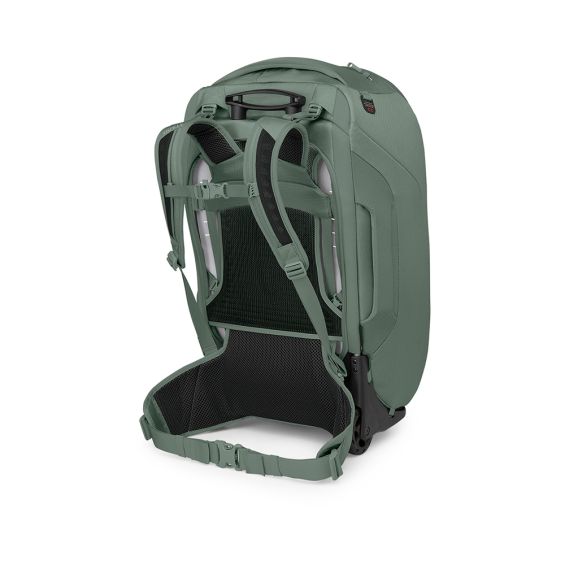
Capacity needs to be about 15-30l for a get home or go bag, 30-60 for a bug out bag and 60-120l for an INCH bag. Vehicle bags are for use in the car so can be, say, a patrol bag, tool bag or just gear thrown in the boot. EDC kit needs to be pocket sized or you might not bother with it if doesn’t fit, and if too small you could end up wishing you brought your get home bag. INCH bags probably need to have wheels and be something like a duffel. Duffels can also serve as a vehicle bag to build in some bug out or INCH capability away from home. Something like an Osprey Sojourn Wheeled gives you up to 80l wheeled backpack. From 15-35 or 40l would typically be called a day pack or weekend bag, without a frame and not intended to contain a tent, and the size range usually ranges from 10-30l, more commonly 20-30l. Above about 55l is an expedition bag. Over 30 litres you will eventually start to wish you had a vehicle.
The best way to keep size, and thus, weight down is training, caches and a prepared bug out location, so you know how to make do with less gear en route and don’t need to bring stuff to your destination either or even some of the consumables for the journey between caches. For example, for a get home bag, you know you have preps at home and you know the route so can stash preps on the way, so it is just a question of how light you can travel with your skillset. As weight is size, the heavier you are and longer your walk the smaller must be the bag. If you’re 20st and taking the train to the next county to work, walking home in a power cut is going to have to rely on only essential ultralightweight gear.
You also want to go for a bag that is already about right for your torso and ideally adjustable. Many popular models come in sizes and men and women’s versions.



Spare capacity
Bags should be the smallest possible to fit added winter clothes and foraging finds without looking suspiciously big. The author’s view is that the sweet spot is to buy a bag that holds 75% of your maximum safe weight and fill it two thirds, so, for example, buy a 22l get home backpack, fill it with 15l of gear (equivalent to a messenger or the biggest slings) and leave 7l for stuffing food, water and clothes in if and when you can gather it. We know from research that exceeding 30lb starts to causes injuries and collapse, and 30lb typically equates to a 30 litres of gear. Although knowing you will have to overnight on the way is a reason to go for the bigger 40l bag to accommodate that extra camping gear, if you are walking so far you need to camp you may well never make it, with feet in tact anyway.
Safe weight
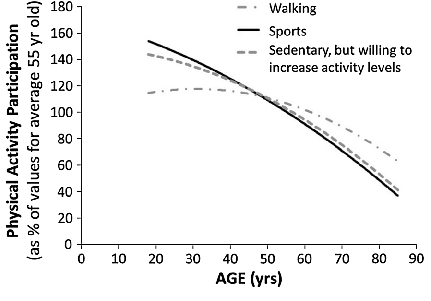
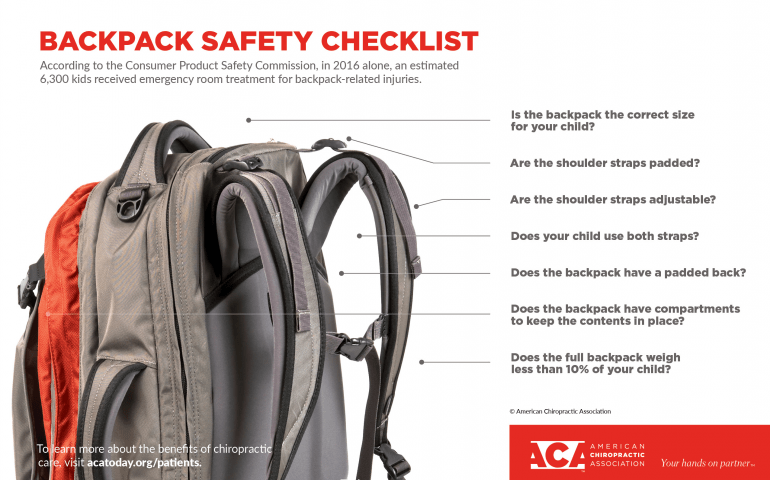
The old adage about keeping pack weight to 10% of bodyweight is a sensible rule of thumb for long distance tabs by civilians, but many preppers in the west are older, fatter and riddled with diabetes or asthma, so 5% may be more realistic. In the UK physical activity starts slumping after age 55 and 38% of the England population is overweight.
Guidance
The military assume a young fit man can carry 30% of body weight comfortably when fighting and 45% when marching – so an 11st soldier could carry a 5st bag which would typically be about 55 litres – basically a suitcase on your back. But other research says only 20% is safe, and one government’s advice is the weight limit for anyone is 11kg. With this conflicting advice you need to know the research behind it to make your own risk assessment.
Injury thresholds
We know that soldiers start getting stress fractures carrying 45kg. We know the average woman will start getting knee damage carrying 40% of body weight. We know people have already started losing balance and situational awareness, and anecdotally, getting ankle and knee injuries, at 30%. And each extra kilogram costs young adults 6% chance of back pain. Even if you are lucky you may only get skin chafing, blisters, joint pain (especially lower back), rucksack palsy and numb limbs (especially if women use a men’s backpack). But of course it all depends how far we walk and how fit we are. Assuming you cannot risk not making it to your destination, this gives us a potential upper threshold of 30% for adults and 10% for children, before we adjust for fitness for adults.
One test found soldiers had a 36% chance of injury carrying 46kg 20 miles a day for five days cross country, with 12% having to take time out afterwards and 8% unable to finish the march. Injuries were mainly blisters and foot pain, mainly in the youngest smokers.
Children
For children, the spine has to adapt less when weight is packed low down, at 15% of body weight anyway. Putting more than 10% of bodyweight on one shoulder twists the shoulder, and when exceeding 15% reduces breathing compared to dual straps. Exceeding 10% shortens their spine. Feet hit the ground harder once pack exceeds 15% body weight. Children’s cadence doesn’t change when loaded, and stride stays unchanged at up to 15%, but tests also show their speed slows even at 10% and contact time increases at above 15%. Children start to get back pain as soon as load exceeds 10%, and young children’s necks bend forwards once bags exceed 10%.
Weight
Total weight matters most
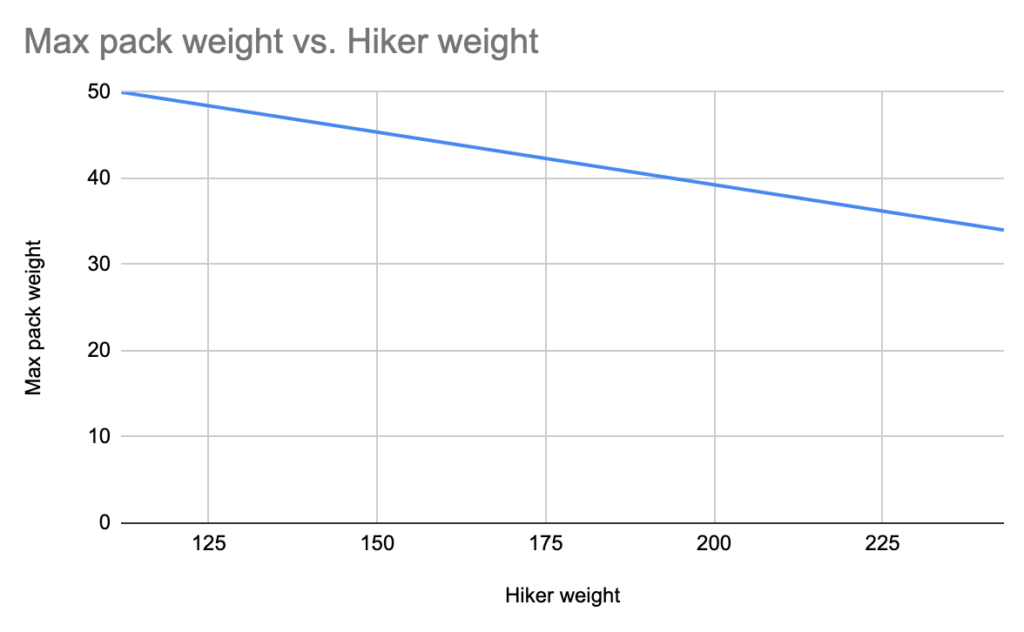
A study found the way to ascertain comfortable load is, assuming equal body fat ratio, to subtract body and pack weight, as strength doesn’t increase with size and big people have heavy bodies to carry, so small people might be able to carry more or at least big people can’t necessarily carry more. We also know that injuries increase as pack weight and distance increases. The best combination is a small person with a small bag, they can be better off than a larger fitter person with a smaller bag. As we cannot control distance, it is all about losing pounds, ideally from yourself, failing which from the bag. The O’Shea model posits that the heavier we are the less extra weight we can carry, and uses a sliding scale: from a 125lb person carrying 48lb to a 225lb person carrying 37lb, in other for every 9lbs you shed you can carry an extra 1lb in a bag. We know from research below it’s more important to shed weight (those over 13st rarely manage long walks) and practice long walks than be super fit. We also know. a bag over 2st predicts not reaching the destination, and much over that also predicts injuries in experienced hikers. Having to carrying muscle bulk that is not used to hikes will not help, you need to be light full stop, and it’s speed not strength that predicts distance covered.
Speed & weight matter more than fitness
Another study tells us that dedicated hikers tend not to maintain more than 15 miles a day, and those who can’t exceed 12 miles a day tend to not make the longest routes. We also know that if you weigh over 185lb you won’t finish the longest hikes, no matter what your bag weighs. This study found the best predictors of completing a long hike are gender, speed, bag weight and bag weight as a percentage of body weight – without distinguishing between fat and muscle which they found is not a factor, even though speed is. It found that on long hikes with heavy bags (of the sort used for hikes lasting months) you need to dump weight as you go or you are at much greater risk of injury or keeling over. You will lose body weight easily but you also need to use up consumables and dump equipment you don’t need. It found fast women with small bags do best. It found exceeding 28lb pack weight or 18% of body weight tends to take out long distance hikers. This suggests a safe limit for anything but the longest hikes of 13kg, which is also 18% of average weight of 70kg. As pack weight reaches 33lb or 20%, injuries significantly increase even for conditioned walkers who have been on trail for months. That suggests it is unwise to push it beyond 15kg on shorter journeys, especially if not in condition due to a sudden disaster before you’ve practised. The study recommended a limit of 20% for hikers under 150lb and 30lb for those over 150lb, so 20% of body weight of up to 150lb then stop. So for the average prepper they cannot just keep adding more gear in their bag to correlate to body weight, instead they need to stop at about 30 litres of stuff. This means that 60l bug out bags are only really a safe or even feasible option for short bug outs by the fittest among us, whereas a 30l big get home bag or small bug out bag should be fine with a mix of some lightweight gear.
Biomechanics
In terms of biomechanics for adults, exceeding 25% of body weight reduces motion when ascending. Exceeding 10% tilts the pelvis. Exceeding 20% changes foot flexion. Adults’ cadence may change when loaded. Adults’ stride may shorten under high load. Adults’ speed may slow above 20%. Contact time increases at above 20%. This confirms tests suggesting 20% is when the body starts suffering from adaptation.

Physiology
Pack weight costs you in terms of pulse, oxygen and calories, and muscles are weakened and brachial arteries start to suffer. A 20% pack weight reduces brachial flow by 44% and after 10 minutes can switch off circulation to fingers. 30% of body weight takes you to the safe working limit of 40% VO2max. Between 40% and 60% of body weight, VO2max starts growing, leading to exhaustion as each step takes more work than the last. If you feel shoulder pain that usually means microvascular flow is reduced. So 20% is a tourniquet, 30% is the maximum sustainable and 40% begins a collapse spiral.
Load carrying reduces marksmanship accuracy and decision speed, with situational awareness and balance reduced by a 30% load. Even a 15% load deteriorates memory. Tests on soldiers found an extra extra kilogram costs 1% performance. Carrying a backpack was found to slow down soldiers and cause disproportionate increase in pulse and oxygen consumption. They slowed down 4% at 22% body weight, 13% at 44% body weight and 24% at 66% body weight.

Although soldiers are expected to road march with perhaps 46% of body weight on their back, their mission is to get the vast majority to the destination in fighting health with equipment, whereas your mission is to guarantee your own safe arrival.
Conclusions
To try to draw a rule of thumb from conflicting and different research, you could say 10% is safe for any distance (and 10% is the limit of comfort), 30% is dangerous for any likely bug out distance and a happy medium of 20% still has risks depending on fitness and distance (and above that you lose the free ride of rotative torque), so 15% is safe but eventually uncomfortable for short bugouts.
The average untrained prepper will want 10-15kg to guarantee making the bug out location in one piece on time. Exactly where you fall in that range depends on your weight, fitness and distance, but, sadly, although the longer the walk the more kit you think you need, the less you must carry. Perversely this means that while 15kg may be OK for a get home bag, it might have to be 10kg for a bug out bag. This is bad news for Rambos buying Rush 72s saying they’ll head for the hills with tents, pots and crossbows.
Speed
Science has one last snippet of advice for walking: do it slowly as the body is most efficient for carrying at a slow walk due to leg muscles being designed for body weight and that being cancelled out perhaps at up to 20% of body weight by rotative torque through the trunk.
Material
Fabric
Humans have had backpacks for some 45,000 years, but still don’t know how to make cheap comfortable waterproof ones.
- Prefer nylon with its lightness, toughness and water resistance, over cheap and nasty polyester with its poor breathability, although nylon needs treating for waterproofing – which reduces breathability, and the ripstop version with tight mesh is popular. Polyester does benefit from toughness for its weight but is heavier than nylon and does not last as long, and is used by Osprey in their Farpoint. Cordura is a brandname of any Invista yarn, usually quality assured nylon or polyester, supposed to be tougher and water resistant. Ballistic nylon just means a particular basket weave, which is durable and very water resistant but heavy. High tenacity nylon is occasionally found, eg in Osprey’s Porter. The yarn weight in denier ranges from about 100 to 1,700, with the 5.11 Rush, for example, in 1,050 denier nylon, while packable bags that you stuff into your pocket come in 100 denier, and ballistic nylon tends to be over 1,000 denier. Increasing thread count increase smoothness. Polypropylene breaks down in UV light but is hydrophobic. Polyethylene (aka sailcloth) is light and highly water resistant.
- Dimension-Polyant’s XPac is an expensive waterproof durable and lightweight laminate.
- UHMWPE, such as Cuben Fibre / Dyneema, is expensive, crinkly, unstretchable and ultra lightweight.
- Other favourites include PVC (often for waterproofing), leather (heavy and needs too much care), canvas (cotton or polyester, cotton canvas lacks breathability, gets scuffed and doesn’t like weather unless waxed).

Light bright colours inside help show up contents in poor light; orange is the norm.

Waterproofing
If you need a marine solution you will probably want to go for a waterproof bag, like the 27l Yeti Crossroads commuter pack. Beware some brands are not submersible despite claims. Waterproof bags are usually made of welded TPU coated PET, not rubber.
A bag might have waterproof or coated yarn but the gaps between them will eventually leak, so you need a coating to buy time such as polyurethane, and maybe a cover outside and waterproof bag inside, and ideally water resistant or waterproof zips and a rain lid. Rain covers stop rain but won’t stop water being squashed in at your back or moisture in the air drifting into the bag. Look for covered seams inside to protect from wear or taped ones if you want more water resistance. Water resistant zips use garages to hold sliders when closed and polyurethane tape. When looking at bags, pull seams apart to check they don’t move.
Backpacking packs can have spindrift collars for snow.


Ventilation
Ventilating packpacks could scarcely be harder as the biggest sweat zones are the spine and rear waist – exactly where you want weight, and to a lesser extent the shoulders and sternum where in practice backpacks dump weight and chest packs press. Some bags claim to have ventilation benefits from either foam ridges or trampoline mesh in a back pad. Both push your shirt onto your back, but mesh is more breathable although pushes the bag’s centre of gravity away – making it harder to breathe as it forces your torso forward. Foam ridges only let a wisp of heat out and some have horizontal channels across the spine blocking where most of the heat is. They should be wicking to get some sweat off your back and some have a fabric over them to try that. What you need is a chimney around the rear waist and up the spine, but that would push load sideways upwards and out at the bottom, destabilising and straining you, but only slightly, so you probably still want mesh to apply breathable pressure. Expensive technical bags like some Berghaus may have a mesh frame that swaps extra ventilation for extra pressure where the frame touches the back.
Frame
You need a frame to stop the bag sagging the centre of gravity away, but a frame on the bag pushes contents away from you slightly, and costs breathing from weight (bags weight easily 5lb) and leaning forward, not to mention it draws attention. Tests show stuffing the bag full doesn’t quite stop sagging. You can help with compression straps and load lifters. Typical bug out bags don’t normally come with frames, not external ones anyway, although you could use a technical backpack with an internal frame. A frame shifts weight to hips, but is itself extra weight and the more stable it is against your contours the less ventilation. Small bags at most tend to have a frame sheet to keep the bag’s shape to ensure weight is transferred properly.
Kickstarter project Vertepac in Netherlands claimed to dump 95% of weight onto hips via a plastic spine, discussed in 2014, promised in 2017 and silenced in 2019, it was relaunched with bags from about £300, although quite from where is not too clear, although testers saw prototypes. They were dear and heavy, but perhaps they will resurface one day in Dyneema to offset the frame weight. What has taken off in its place has been brands selling ball and socket joints that dump weight into a lumbar pad and let shoulder straps fudge the rest of the twist.

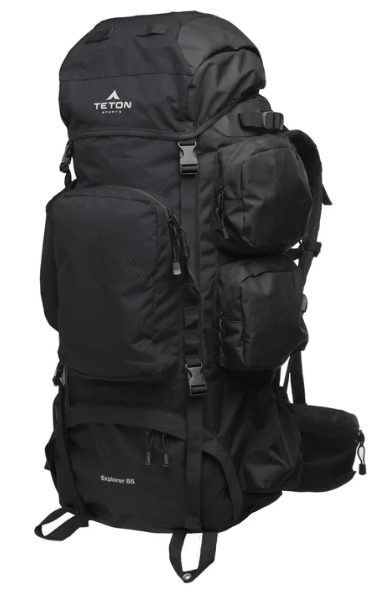
Solar
If you’re not expecting civil disorder so aren’t too fussed about grey man, there are also solar bags with voltaic panels on the back such as the Voltaic Systems Offgrid.
Ports
Many bags have pass-throughs into the bag for hydration or cables.
Weight
You can expect contents to weigh about 500g per litre. Backpacks typically weigh 1kg for the usual 500 dernier weave, but they range from 500g for an ultra lightweight 30l to 2kg for a 60l, and 30l bags tend to range from 750g to 1.5kg. Ripstop nylon will be lighter than ballistic nylon.
You can buy ultra lightweight bags, like Granite Gear’s Virga 2 54l at 526g or Sea2Summit Ultrasil 20l at 57g, but as the bag would normally only be 10% of pack weight you’re better off reducing item number and weight. And thin bags let items dig in your back and can’t pad shoulders or transfer weight to hips. They are a bit of a solution looking for a problem.
The worst thing you can do is hang everything off one shoulder, such as in a sling or messenger. Reduction in forced vital capacity (maximum lung capacity) doubles compared to a backpack even at 6kg, while muscles strain to compensate, and pressure on the shoulder doubles – increasing the likelihood of numbness.
Straps
At day pack size the options are limited, hip belts and load lifters are rare too.
Shoulder straps
Backpacks always have shoulder straps, and these should be short, wide, stiff, padded and rest on bone to avoid compressing the sub clavian artery with pressure of typically 27Kpa with a 10kg load. Backpacking packs are more likely to have adjustable straps and/or come in different sizes. Going too wide on shoulder straps can pinch the armpit and neck. Padding usually needs to be open cell foam on your body for softness then closed cell foam over that to take weight. One piece bridge straps reduce flexibility.
Hip belt
The next most common strap is the hip belt, whose purpose should mainly be to take and stabilise 30-70% of the weight to reduce spinal compression and rotation of the weight. Adults find it more comfortable with weight close the back and feel the work is easier with a hip belt. For decent weights and distances these need to bend and have padding to prevent numb thighs and eventual bone damage, but this must not be so big it constrains you when ducking about on the trail. Hip belts don’t reduce pulse or RER ( so don’t magically allow you to burn fat instead of carbs), but reduce oxygen consumption and feel easier. They do not increase speed, but do make users feel more stable and as if they are exerting less, although stability does not actually increase. Generally only backpacking bags have real thick padded hip belts that wrap around the back, with the rest usually at most offering a hip strap from the sides of the bag purely for stabilisation, some with enlarged sections to sit on the hips – these and even the thinnest straps still get some weight off your shoulders even if only by increasing grip into the lumbar area and cutting into your waist, which should be comfortable as it only a belt. Top end bags may also have a lumbar pad to take some weight. Beware bags with stiff bottom edges that will gouge into your spine.
Some hip belts have stabiliser straps to pull the bag into the hips when required.
One idea to get weight off the torso is lateral stiffness rods down the back of the backpack (eg KS Ultralite KS40) which can translate 14% of load to hips and avoid the back having to lean forwards, which backpackers normally do by about 9 degrees.
Sternum strap
The next is the sternum strap whose purpose is to stabilise it and switch which shoulder muscles are used and stop shoulders being pulled back. They can reduce armpit shafing. Ideally you want an adjustable height one but these are hard to find on small bags.
Load lifters
Bigger packs will sometimes have load lifters, straps that join the top to the shoulder strap whose purpose is to switch load from lower back to upper back. These should be at around 45 degrees and tightened to pull the bag’s centre of gravity towards you until the bag touches your back but not so far that the shoulder straps lose tension.
How to use
The order of fitting is hip belt, sternum strap, shoulder straps, load lifter and stabiliser strap.
Attachment points
Backpacking packs often have attachment points for equipment such as bungees, bike light loops or pig snout lash points (often as vintage decoration), whereas tactical bags are more likely to rely on molle or pass throughs for tools.
Compression straps or cinch straps pull weight in towards you slightly but are also handy as attachments points, can be more trouble than they are worth when they are designed across zips or pockets.
Grab handles are common, often on several sides, and are another attachment point.
Travel bags usually have rear pass-throughs to slide over a suitcase handle.
Load carrying technologies
Another idea to increase comfort is to smooth out peak force by floating the pack on a frame with elastic, which needs to happen at about 2.5Hz sinusoidal, and that is what Lightning Packs’ Hoverglide does, although it seems to have ended up as a $250k Kickstarter fiasco as the fundraisers have gone dark since 2021. Scientists started trying again with elastomers in 2021.
To get all the comfort and adjustment options you are talking about a big bag costing up to about £700 such as Osprey Unltd Antigravity.
Whether it is get home, bug out or INCH, you need to consider travelling light with your bushcraft skills, or getting the weight off your shoulders – and that narrows down your choices as you need wheels or a hip belt. By all means lug a 40l laptop backpack 100 miles, but don’t be surprised if you arrive late with a bad back at the one time in your life when you needed to be on time and fit. It may be time to forget tactical backpacks and look at wheeled travel backpacks.
Packing
Weight up or down?
Starting with the axial plane, or movement up and down, some research says pack the heaviest items at the top to save energy on level ground as only a small bend forwards removes the backwards moment; it can feel easy going uphill too. One test also found VO2 improves with weight higher up. But it reduces balance and increases dynamic moment 40%, so may not be great for rocks, and restricts breathing going uphill and one test found that with load higher up soldiers breathed faster, and used more oxygen on an incline; it also creates a bigger moment arm on the lower back if the body does not stay upright. However, soldiers have found it easier with weight at the waist, and another test found it feels easier on the shoulder if load is concentrated lower down even though it does not affect physiology apart from reducing the bend forwards. The only complaint from children about height of load is placing weight at the lower back increases abdomen discomfort. Because weight can only get to the hips by pressing on a bone, the only reason to move weight down from the shoulders on a level walk is you cannot put it into the spine through the top of the head and you want to spread the strain between shoulders and hips.
Front or back?
Turning to the frontal plane debate of whether to use a backpack, front pack or split it in half, some evidence suggests backs find it easier to carry weight in front packs, other evidence points to double packs with half or less than half on front. Some evidence suggests men do not suffer from not balancing weight on the front, certainly loading the front means you are really dumping more strain into your shoulders instead of wrpping it round your back. Runners have been found to be more efficient with load spread on front. Children’s necks do better with a small portion of the weight on their front. Women do better with double packs with some weight on their front. But there are not many such products, only a few with a smaller bag up front, and big front packs cause problems with heat, breathing and visibility. Your options are to use a bum bag round front, or buy a backpack with pockets in the hip belt (they are always tiny) or a separate chest pack or buy a double pack with a small front pack. Certainly weight needs to be against the back as each extra litre capacity costs 0.2% performance in tests on soldiers. One way to reduce leaning forwards is to hang some of the weight over the shoulders on the front, but a better way is to move some of the pack down into the hip belt round the front. Yet another idea is to incorporate shape memory alloy into shoulder straps to remove impact.

Middle or sides?
For stability and reducing pressure you want weight spread across your shoulders, back and hips, but most of it needs to go down the middle, so some will be transferred via straps rather than friction from the yoke, bag and lumbar pad. In the sagittal plane, you compromise between packing weight into the middle to avoid punishing your shoulders and hips and to use the spine as correctly as possible without balancing the bag on your head, and yet keeping it next to the back to reduce moment.
Organisation
Pockets & pouches
- Compartments can be external pouches or internal pockets.
- Side pockets for bottles are common but had to get to on your back, although some have forward facing holes but these let contents fall out when you set the bag down.
- Although it’s convenient to have quick access pouches, they destabilise load and reduce your comfort time by adding mass away from your centre of gravity.
- Internal sleeves are common for bladders and laptops. Laptop sleeves should be suspended or padded so the device doesn’t smash into the ground.
- Tactical bags may have internal velcro or molle to hand pouches on. Webbing daisy chains, like a loose molle, on the back are common, especially on commuter tactical bags.
- Some fronts have a kangaroo or shove or stuff pockets for things like jackets or helmets, either a stretchy pouch or the gap between the bag and a front pouch secured with straps.
- Some backpacking packs have floating lids which are small bags that strap on the top of the main bag to squash gear, such as a mat, between the two bags.
Opening
Most bags only open in a U shape around the top half, but some are clamshell like a suitcase and others open less than 180 degrees in splay fashion. Some hiking packs open in a U shape around a side instead of the top. Most bags are top openers but bottom openers exist in the trekking community, either a zip across the front, or just a bottom compartment like the Deuter Alpine Pro , or U shape cutting the bag in half like the Wanaka Adapt Adventure. There are also front centre zips like the Deuter Speed Lite 23, letting you get to the bottom stuff or split the bag open. Another rarity is the side opener, sometimes in addition to top opening, especially with camera bags such as the Boundary Prima. Another feature of camera bags is sometimes rear clamshell, against theft, like the Nya Evo, or the Deuter Jaypack 34 which zips onto the shoulder strap panel. Some, especially laptop bags, have a splay at the back, typically requiring you to fold the shoulders straps out the way. Some clamshell fronts have pockets on to lay out the contents. Roll tops are really for waterproofing and stashing stuff in camp, but a faff. Drawstrings tops are for cinching sleeping bags etc, typically covered by a buckled or zipped lid. Some flaps are closed with magnets instead of buckles. Another consideration is access to pockets, which can minimise having to take the bag off your back. The Deuter Speed Lite hiking pack has shoulder pockets and a hip pocket as well as a stuff pouch meaning you can run longer before having to dive run for the big stuff.


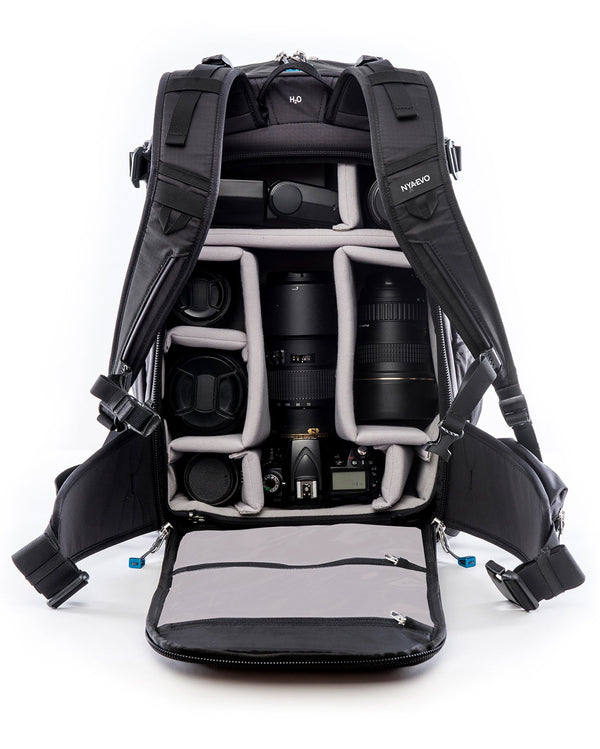

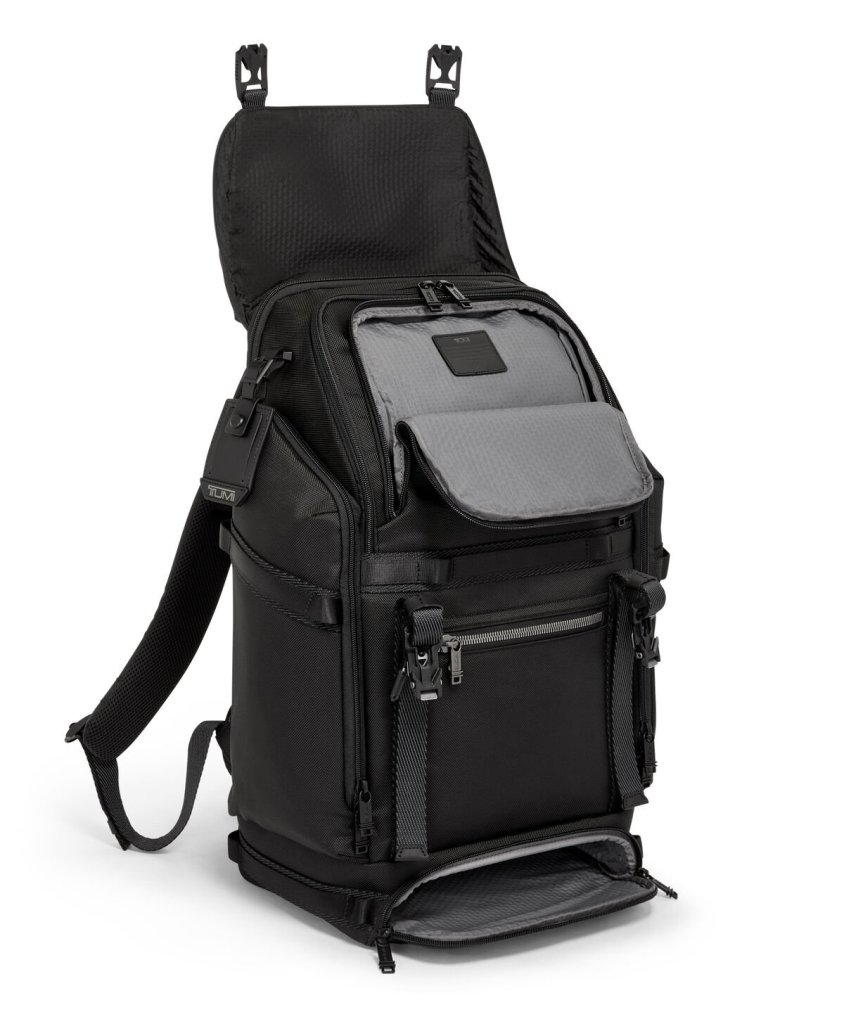


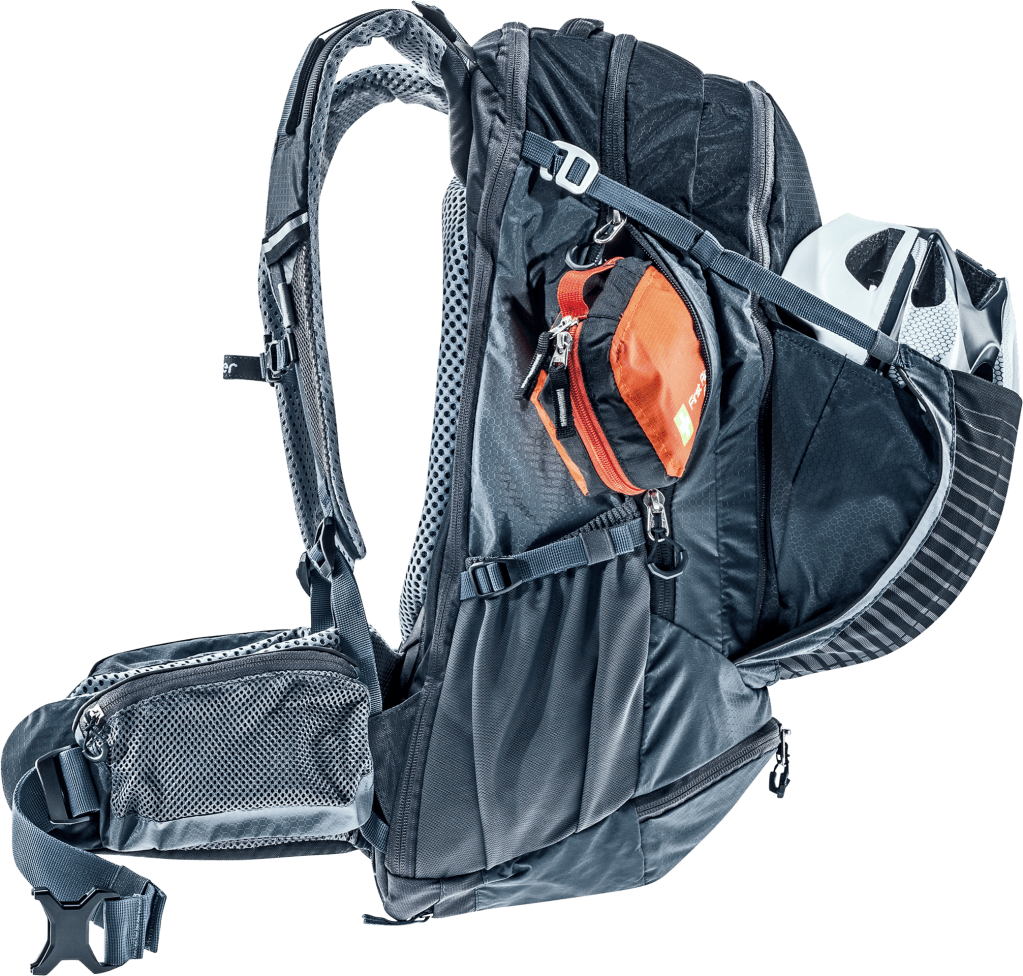

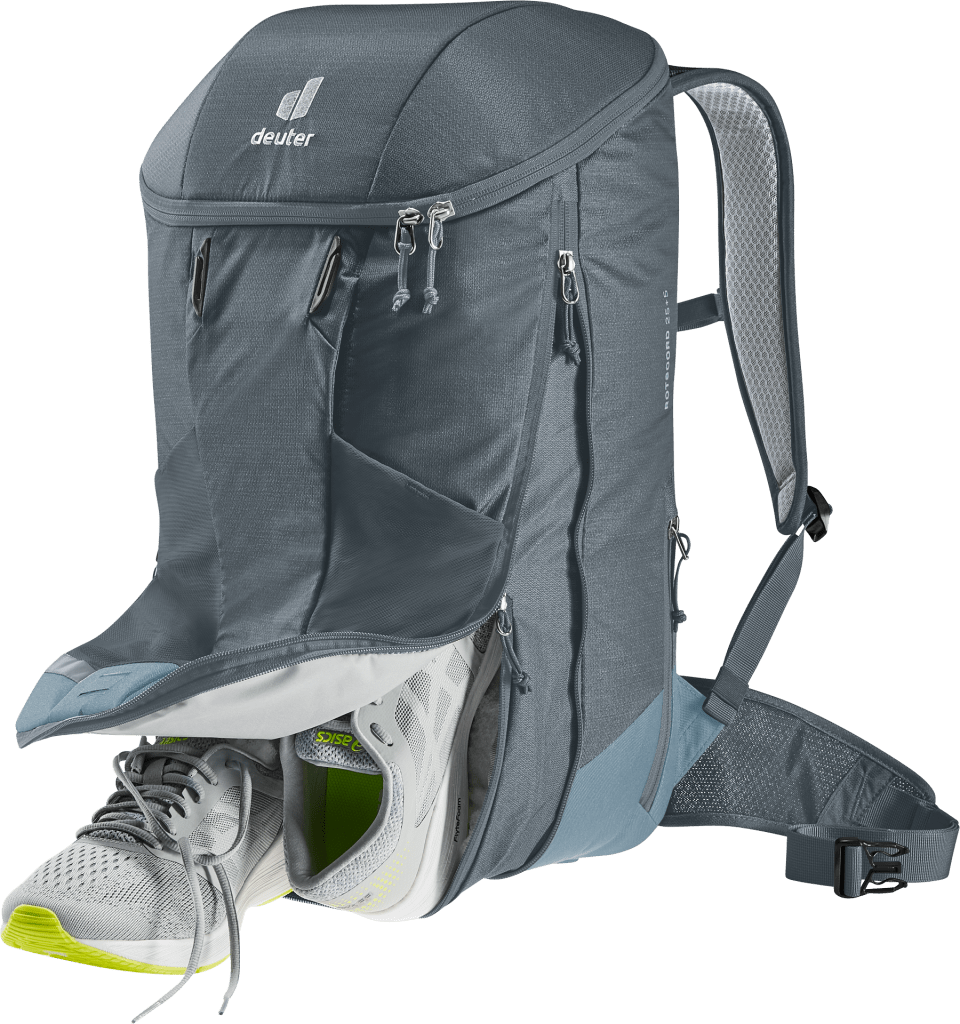
Choosing gear
Factors
What goes in each survival bag depends on what is in the others, budget, what skills you have, why you are travelling, where you are coming from, where you are going, what resources are available en route, weather, terrain, distance, deadline to arrive, familiarity with route, comfort preferences and whether territory is permissive. No two preppers will agree on a bag’s contents.
Academics have looked at this and concluded that recommendations lack context, and there are too many different recommendations (with only water being common to all 71 lists analysed) so we need one official list, but also that there should be one list for each type of disaster, perhaps creating more confusion than we have now. To make matters worse, this research mainly concerned bugging in.
Packing is a desperate race to eliminate weight:
- Consider maximising use of ultra lightweight and multi-function items, sharing load if several of you as, for example, you don’t all need your own tent and stove, and resupply on the run.
- Use only calorie dense food.
- Be sceptical of needing boots instead of trainers.
- A get home bag won’t need many spare clothes if you wear suitable clothes.
- You are not going to cook while rushing home, but if you cook during a bug out you only need a pot, that is your plate and bowl and cup.
- A spork is enough utensils.
- Build a fire rather than lug a stove, but if you want a stove would an alcohol stove be lighter? If you want gas you only need the smallest cannister for a few days.
- Use ziplocs rather than stuff sacks and one dry liner rather than several dry bags.
- Use high fill power down quilts rather than synthetic sleeping bags.
- Tarps and ground sheets are lighter than tents.
- A hand torch can be lighter than a headtorch.
- Any toiletries can be miniatures.
- A multitool is lighter than a survival knife.
- Filter rather than carry water.
- A Bic lighter is smaller than a bushcraft fire kit.
- How much rope would you really use?
- How much first aid can you really self administer?
- Will you really need replacement batteries?
- Can you drink more at a water source?
- Can you use powdered food and toiletries?
- Can you make do with reusing a plastic bottle of water instead of carrying a bladder?
- Go ultralight from the get go to avoid wasting cash on cheaper heavy gear you’ll end up dumping.
- Don’t worry about lightweight gear being less durable, you’ll only need it for a few days at most for a bug out bug.
- Pick warmer sites to camp, away from water, valleys, hilltops, with windbreak from trees.
- Modify gear to slash weight.
- Empty your bag to check for luxuries that have crept in.
- Weigh everything.
- Do trial runs and note what you didn’t use.
- Avoid duplicates.
- Adapt contents to weather before you head off.
- Attack shelter first as it costs the most weight: tent, sleeping bag, mat, coat.
Modular system
Each prepper bag contains modules, which can go in packing cubes, and each bag is itself a module of your prepper bag system. That system includes a separate go bag for convenience in unplanned shelters, and then survival bags: EDC, get home, bug out and INCH. Your prepper bag system is a module of your outdoor prep system which can also include cache modules. The only preps that are not in your outdoor prep system are your indoor prep system, consisting of preps around the home and bug out location.
Unless you can afford and justify duplicating for speed or you know you might not have access to your other bags, survival bags should fit inside each other like Russian dolls. That way you can upgrade say your EDC tin to a get home bag by putting it in a pocket of your get home bag, and you can upgrade your get home bag to a bug out bag by pouring your get home modules into your bug out bag, and you can upgrade your bug out bag to an INCH bag by putting it in an INCH bag that already contains everything else except what’s in the bug out bag. You can equally fold up your get home bag into your bug out bag so you have a day sack for excursions from base. Bags like the Osprey Farpoint come as combined detachable hiking packs and day packs giving you, for example, 40l + 15l, so could form a get home bag & bug out bag combo. If you have space where you can store a get home bag, eg work or car, then you can have a bigger more comfortable technical bag that you empty your commuting bag into if you are lucky enough to be able to access the bigger bag when you realise you have to walk home. That way you can have the convenience and style of a commuter bag for the risk abandoning your journey half way and a more technical or tactical bag for longer journeys starting at work for example.
There are arguably about 133 items for different purposes you could spread out amongst your bags. It’s going to cost a few thousand pounds to kit it all out. Just the bags could easily come to £1,500 if you buy brand names. On the other hand, you can start with an entry level pre-made bug out bag for under £200, and Ray Mears makes do with Karrimor bags.
- EDC is every day carry, what should be in your pocket. Urban Prepper suggests it is what is in your pocket on the loo. It is to buy time until you get to a bag or home and for short distances where you don’t see how you would need a get home bag. Some use it to mean a day pack of up to around 22l, like a commuting bag, but if they are adding more than a laptop and packed lunch then really they mean a get home bag. It can go in pockets, a pouch or a bag. A discrete well organised bag option is the 5.11 Emergency Ready Bag, which can serve as everything from a purse to a handbag and is popular with first responders for first aid. If you didn’t want clothing and sleeping bag the 6L version could even be your go bag, while the 3L version could cover even the most ambitious EDC. Maxpedition do the less subtle Neatfreak EDC 4.3L satchel. Eagle Creek have the 7l Ranger XE sling. Another EDC bag that’s big enough for a go bag is First Tactical’s 8l Summit Side Satchel. An interesting women’s option is the Baggallini Convertible Backpack, a handbag that can be worn slightly unceremoniously as a backpack or satchel, and could handle anything from EDC, through day trips to weekend underseat travel.

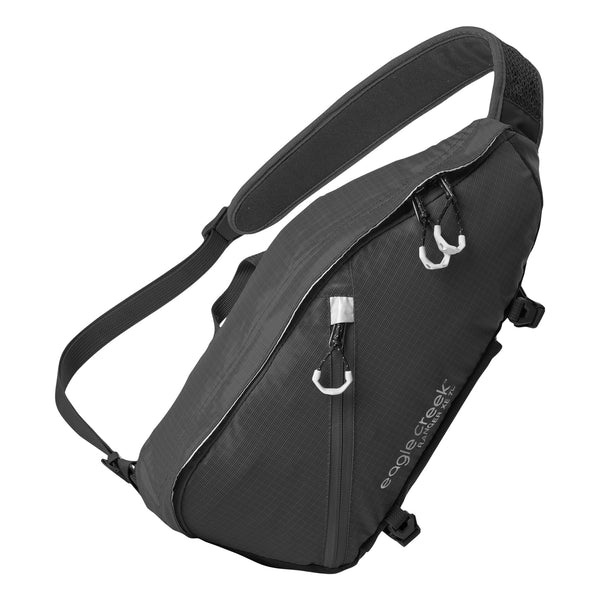
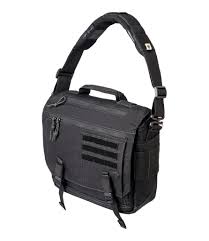
- A get home bag does what it says on the tin. Its size depends on the length of your journey. If you commute from Cornwall to Scotland it would be bigger than a typical bug out bag. It is a dumbed down bug out bag that assumes you will not be setting up camp, although maybe sleeping in the woods for a night or two. It relies on you knowing you will be home soon with all your resources and you know your route and what resources are on the way. Classically it involves asking “how would I get home if there’s an EMP while I’m at work”. Due to technical bags being marketed as tactical bags, get home bags are sometimes called 24 hour bags from the length of a mission, so the ’24’ denominator rarely means 24l. For large EDC or small get home bags consider biking backpacks which typically range from 3l to 30l, as they tend to have water bladders and low profiles, which would be great for escape & evasion or search & rescue or rough terrain when you need to duck and dive without getting the bag caught on obstacles, for example, Osprey’s Escapist. A special EDC bag that comes in 20l and 30l is Peak Design’s Everyday Backpack which has shelves accessible from the side as it was intended as a camera bag. An old 90s design that still looks modern is actually a snow bag but has front access, tool pockets, hip belt and room for a helmet strapped to the front, the 20l Dakine Heli Pro for only about £70. Bear in mind the biggest risks in hiking are Lyme disease from ticks, giardiasis from dodgy water, hypothermia and dehydration, so water, filter, clothing with Permethrin, DEET and shelter are key.
- A bug out bag is for leaving home, but in the hope of returning after a stay in the woods or bug out location. If you don’t expect to have to hide in the woods, and your bug out location is well stocked and nearby, then it would muck like a get home bag. But if you are heading far away to a poorly stocked bug out location then you are pretty much talking about an INCH bag.
- An INCH bag means I’m never coming home. It is for a bug out to a new home. It is your last chance to add to your bug out location stock. Whatever drives you from home may mean you have to use a bug out location further away than you hoped, so there is more likely to be camping involved on the way. You might want to bring sentimental items and original documents. You need to consider the risk of having to replace stock lost in your bug out location. Do yourself a favour and buy one with wheels in case you can use them some of the way. One recommended travel bag option as an INCH bag is Osprey’s Farpoint Wheels, a 36l or 65l wheeled duffel with removable backstraps; they also do the Daylite Carry-on Travel Pack 44 with removable backstraps on the back at only 1.1kg despite being 44l with wheels, laptop sleeve and sternum strap, and the 85l Daylite Wheeled Duffel with removable backstraps. Thule do the 35l wheeled Crossover Carryon with shoulder straps. Eagle Creek have the 85l wheeled backpack, the Expanse Convertible with front stash pocket, lash points, sternum strap and hip belt.
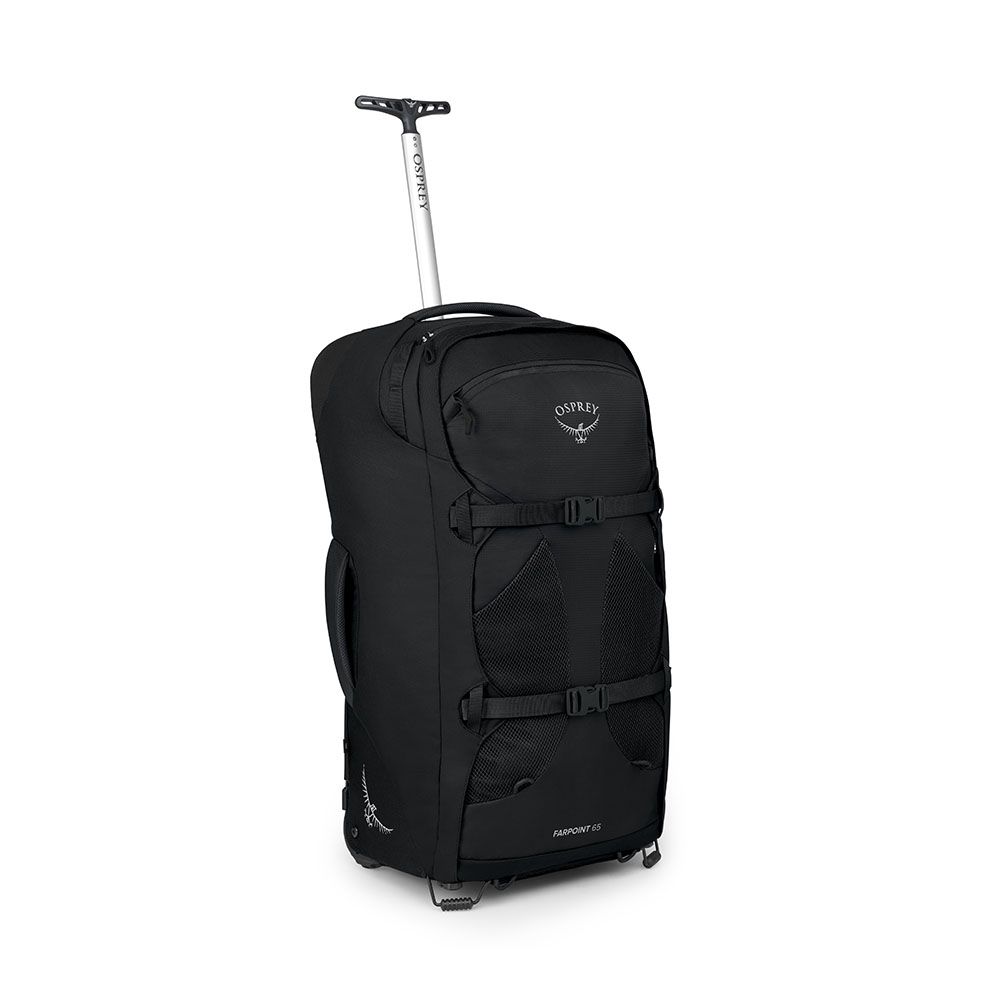
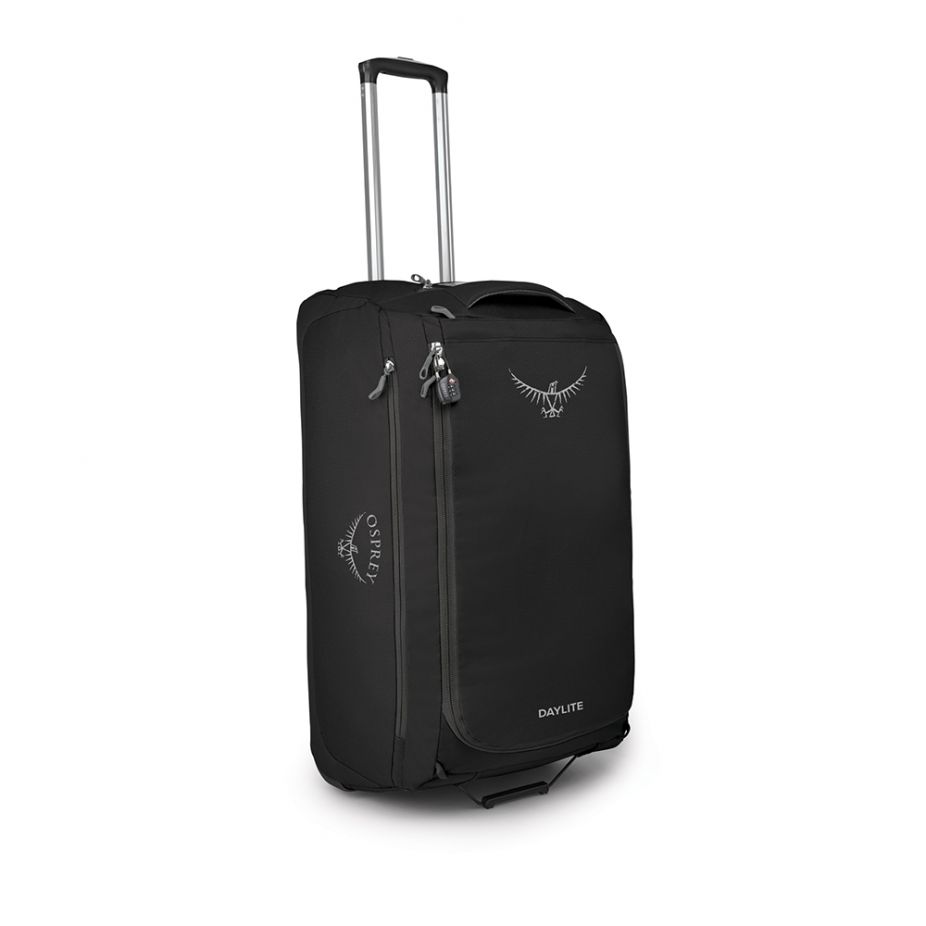
- A go bag is an emergency bag for sudden overnight evacuation or entrapment, taking or keeping you at a hospital, hotel, workplace or council gym floor for the night, often as government arranged or mandated shelter. It’s like a weekend bag for visiting friends. Keep one at work and one at home, you could even keep one in the car, although as you already have a car kit you could just add a foldable pocket backpack to shove bits in if you have to abandon the car.
- You could keep an extra hospital module at home to add in that or another bag for admissions, as they will let you bring more stuff and give you a cupboard, so you could have pouches for hygiene and of extra toiletries and especially change of clothes to additionally take to a hotel or hospital where you have the luxury of a bathroom, although you would already have basic toiletries in any go bag. Bear in mind you will be doing a lot of reading stuck in hospital.
- A hotel module would cover hygiene and safety challenges for beds and doors you don’t control.
- You might get away with a more luxurious pack in a locker at work too, in fact it could double up as a get home bag to bug out bag standard by combining modules you can switch out if not needed, or it may just be a toiletry bag as everything else might be your get home bag, but remember sleeping on a hard floor soon gets old.
- A ‘civic’ module for council shelters would need to cover sleep and food challenges in a crowded popup shelter.
- You could of course just throw everything in one master go bag, after all, suppose you think a trip to a hotel will be like a holiday but then suddenly you are ill, they run out of food or there is an all night party on top of you. But the basic go bag module needs to be small enough to throw on the floor next to your yoga mat in a packed gym or to get on a bus with it on your lap, so keep it shopping bag size at most.
- So you could have four go bags: car, work, hospital and basic, but your work module probably actually turns your get home bag into a ‘stay bag’ and stays at work, whereas for hotel, hospital or civic shelter you are running out the house for maybe a couple of nights. It could realistically range from a 6l 5.11 Emergency Ready Bag for a basic go bag for a civic shelter, through a 8l First Tactical Summit Side Satchel, to a 13l 5.11 LV10 Utility sling for longer stays in hospital.
- Government advice on go bags is designed to reduce reliance on rescuers by buying three days sheltering in place or evacuating, so they assume a combination of a mini bug out bag for non-preppers and keeping essentials about the home, including gear like tools and plastic sheets to repair and protect shelter, so they are really ‘stay bags’ too. Only some of their advice is for evacuation bags or go bags for emergency overnight government shelters, and it is not clear which. Flood survivors have said the the items they used in go bags was water, food, medicine and blankets, so for civic shelter consider going large for these bulk supplies, perhaps spread out across one bag per family member. 5.11 have LV slings from 8 to 13l.
Editors choice: I have set up a 6l Emergency Ready Bag, but it bulges from trying to be too many modules, so I will have to start another bag for hospitals etc with sleeping comforts or just admit defeat and move up to a 13l LV Utility.

Contents
EDC
Pouch
- Storm matches
- Tinder
- Button compass
- Mini torch
- Paper & pencil
- Whistle
- Purification tabs
- Keys
- Money
- Phone
- Contact list
- Watch
- Pen
Nice to haves
- Seasoning
- Laser
- Survival guides
Go bag
EDC +
- Tissues
- Medicines
- Wet wipes
- Powerbank
- Nitecore NB10000 is one of the lightest at 150g
- Water
- Snacks
- Hand gel
- Important documents
- Sleeping bag / bivvy bag / space blanket / blanket
- Glasses
- Kids stuff
- Towel
- Emergency poncho
- Toilet paper
- Wash bag
- Charger & cables
- Radio
- Torch
- Tin opener
- Spare key
Hospital
- Portable urinal
- Sick bag
- Pyjamas
- Slippers
- Buildup shakes
- Reading light
Hotel
- Waterproof covers & sheets
- Portable lock and alarm
Emergency civic shelter
- Extra food
- Ear plugs
- Sleep mask
- Inflatable pillow
Work
- Extra sleeping gear
- Inflatable pillow
Nice to haves:
- Duct tape
- Knife
- Candles & matches
- Work gloves
- Helmet
Get home bag
EDC+:
- Bivvy – MSR Ebivy 170g OR Poncho – RAB Sil Poncho 232g or Tarp – DD Hammocks Superlight Tarp S 290g, RAB Sil Tarp 1 242g, Gossamer Gear Solo Tarp 208g & Groundsheet – DD Hammocks Magic Carpet L 260g, RAB Nylon Ground Cloth 140g, Gossamer Gear Polycryo 104g
- Down blanket – Montell Down Blanket L – 417g OR Down jacket – Montane Antifreeze Lite Hooded Down Jacket 330g, Haglofs LIM Down Hood 300g, RAB Mythic Alpine 252g, Montbell EX Light Down Anorak 215g
- Anorak – Outdoor Research Helium 176g, Enlightened Equipment Visp 159g, Montane Minimus Nano 110g, RAB Phantom 89g & Overtrousers – OMM Halo Pant 95g, RAB Phantom 79g
- Lighter
- Candle
- Headtorch
- Protein bar
- Filter bottle – Lifestraw Peak Collapsible Squeeze 650ml 102g, Sawyer Micro Squeeze with pouch 85g, Pure Clear Collapsible Squeeze 500ml 59g, Katadyn BeFree 600ml 59g
- First aid kit
- Travel toilet roll
- Paracord
- UK legal knife
- Multitool
- Diarrhea tablets
Nice to haves:
- Towel
- Mosquito net
- Hand warmer
- USB drive
- Pace beads
- Cup
- Mask
- Lip balm
Bug out bag
GHB+:
- Torch
- Flint
- Mirror
- Solar crank radio torch
- Bladder
- Spork
- Can opener
- MRE
- Stove
- Pot
- Foil
- Soap
- Toothpaste
- Hand gel
- Wipes
- Insect repellant
- Sunscreen
- Floss
- Dust mask
- Medicine
- Batteries
- Rubble sack
- Saw
- Monocular
- Ziplock bags
- Tent / Hoop bivvy / SOL Escape bivvy
- Zpacks Plex Solo 395g
- Big Agnes Fly Creel HV UL1
- Ankle and knee braces
Plus advise to supply own cash, water, protein bars, maps & clothes: waterproof gloves & socks, work gloves, beanie, bandana, Shemagh, waterproofs
Nice to haves:
- Bleach
- Paper Plates
- Flexicuffs
- Yo-yo reel
- Machete
- Trekking pole
- Crowbar
- Wire
- Rope
- Collapsible bowl
- Trekking poles, especially if descending, as they protect hips, knees and ankles
- Sleeping mat
- AtomPacks The Thinny 1/8″ pad
- ThermARest NeoAir Uberlite 340g
- ThermARest XLite NXT 510g
- Sea2Summit Etherlite XT 625g
- Nemo Tensile
- Klymit Insulated Static V lite
- Sleeping bag
- Western Mountaineering Apache -9c 595g
- Enlightened Equipment Revelation quilt 425g
- Yeti Fever 15c 280g
- Hammock Gear Economy Quilts
- UGC Bandit Top Quilt 450g
- Hammock Gear Econo Burrow Quilt 680g
- Pillow
- Sea2Summit Aeros Ultralight 62g
- Sky Pillow
- Trekology Ultralight 110g
- Nimo Fillo 260g
- Down jacket
- Mountain Hardware Ghost Whisperer 202g
- Borah Down Jacket
- Timmermade
- Nunatak
- Goosefeet Gear
- Montbell
- Decathlon Down Hiking Jacket Mt100 290g
- Jack Wolfskin Helium 450g
Vehicle bag
BOB+
- Tool kit
- Shovel
- Tow rope
- Jumper cables
- Extinguisher
- Battery charger
- Sleeping bag
- Handwarmer
- Battery radio
- Ham or CB radio
- GPS
- 5l water bottles
- Flares
- Spare tire
- Jack
- Puncture kit
- Petrol can
- Fuses
- Escape tool
- Antifreeze
- Oil
- Rag
- Washer fluid
- Duct tape
- Bin bag
- Kitchen roll
Plus advise to supply own extra food, spare parts, hiking boots & clothes
INCH bag
BOB+
- Seeds
- Foraging guide
- Solar charger – Sunslice Fusion Flex 12 240g
- Sewing kit
- Fishing kit
- Slingshot
- Sleep pad
- Axe
- Nails
- Machete
- Cable ties
- Ranger bands
- Safety pins
- Folding saw
- Pry bar
- Super glue
- Powerbank
Plus advise to supply own ID, key docs, toiletries, sunglasses, thermals
Who has prepper bags?
The excuses for not buying preps include not knowing what to buy, not having money, storage being inconvenient, not believing risks, not believing they will be able to get to the preps if disaster strikes and believing government will rescue them.
In the USA, 60% were found to not have a go bag and those in the navy were no more likely either, although navy vets were. The richer the person the more likely they had preps. In a FEMA survey 56% had no preps, and we know in the UK we have less money and land so it is probably lower here. In London it was found we had more preps than New York, especially among those exposed to the 7/7 bombing, although, unexpectedly, lower social classes had the most comprehensive items. 92% had some preps and 48% had four out of five recommended go bag preps. Like the USA, about 46% had a battery radio. Another survey, on tsunami prepping, found women and those in community groups have more preps.
 Limey Prepper - UK Preppers Handbook