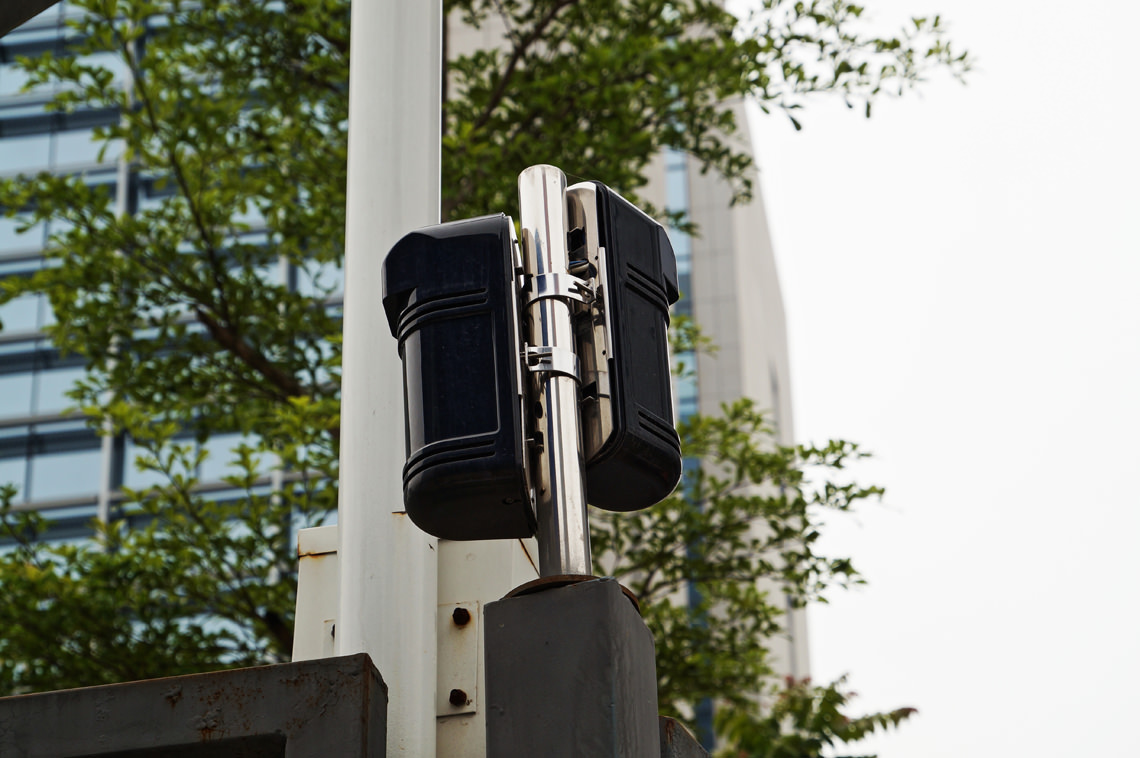
Perimeter alarms:
- Perimeter alarms can be justified even where you do not have guards, but they cannot be linked to police so you still need your own reaction force of some description nearby.
- If you are going to have a perimeter alarm then you need to decide:
- what it will detect, classify, locate and identify,
- how you will immediately know what to do with an alert,
- whether to link it to CCTV,
- how to balance false alarms with sensitivity,
- whether to have backup power,
- whether you can have a sterile area outside a fence and perhaps a no mans land inside,
- what detectors and signalling system,
- how many sensors to trigger an alarm,
- reset time,
- how granular the zoning so you can zoom in with a camera to the point of intrusion.
Standards
BS8418
BS8418 covers alarm receiving centres.
MoD
- JSP440 classified alarms for the military into four levels from class 1 up to class 4. Class 4 requires backup from other systems such as CCTV, lighting and response force, and is supposed to delay an expert with extended planning, specialist equipment and substitution components. Example are the government AC12M and Almond systems. Class 3 is similar but only supposed to delay a less sophisticated intruder with tools and equipment. Class 2 is supposed to delay an intruder with the necessary basic tools and instruments and limited knowledge. Class 1 is supposed to delay an intruder with little knowledge and limited common tools.
NPSA
- PIDS rated by NPSA to Base need testing yearly, Enhanced or Class 1/2/3 six monhly, and Class 4 quarterly.
Products
PIDS
- Perimeter intrusion detection systems (‘PIDS’) can be made of three elements: detection, assessment, and command & control. Detection can be sensors like radar or fence alarms. Assessment is often electronic analysis to reduce false alarms and increase true positives, but can be CCTV. Sensors can detect image, presence, movement, weight or fence disturbance.
- PIDS can be built into a barrier through taut, coax or optical fibre wires or electric field signal, or underground seismic, or nearby with pressure sensors such as RF, microphonic, optical fibre or balance fluid tube, or microwave, infared or laser as a perimeter intrusion detection system, but should have anti tamper protection.
- Vegetation, wildlife, traffic and weather will create false alarms. This is accepted as a cost of doing business for external alarms and is why it needs patient monitoring by your response force, multiple detectors to give confirmation, and granular control panels to say exactly where signals are coming from. You should decide how discreet you need it to be (maybe you have to use ground based sensors) and who (guards) and what (maybe a camera per zone) it will link to.
Fence disturbance
- One technology is a laser shone through a cable and measured at the other end or accelerometers are attached to cable to detect disturbance within a few feet. These alarms can be seen from their junction boxes, sensors and wires with bends covering patches of fence. They are simple as they just go on the fence and follow the terrain, but they need a good fence and can be bridged or tunnelled.
- Electric field sensors can go on a separate fence, follow the terrain and can handle long runs, but might not be able to narrow down a breach site, need metal object grounding and are subject to interference from vehicles and radio. Electric field wires can be desensitised by steam.
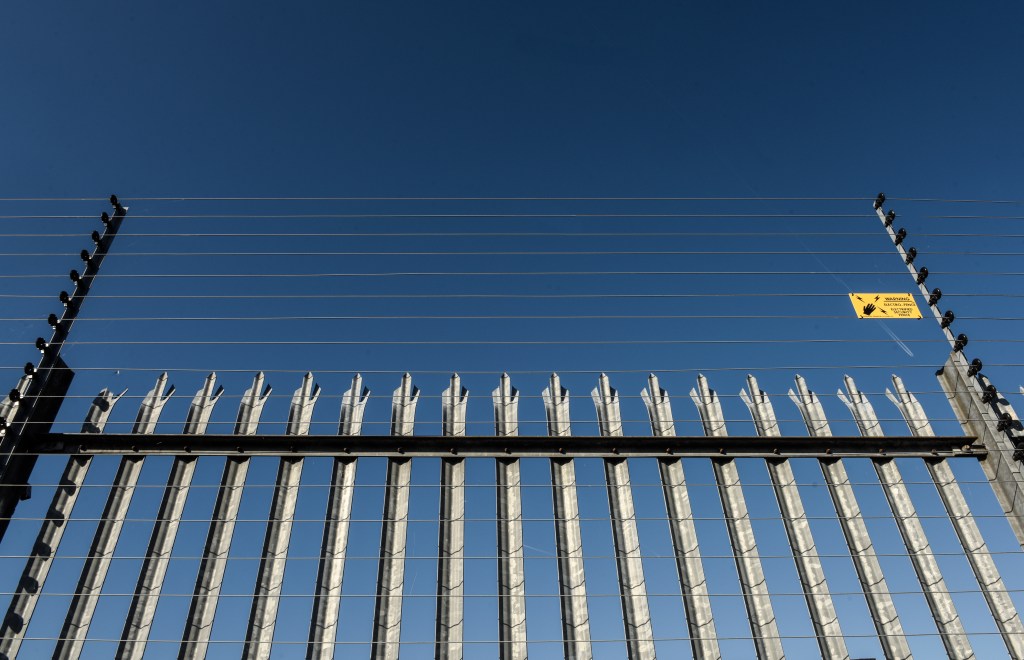
- Taut wires alarms come combined with an electric fence. For example, APS ElectroFence NPSA rated with 2.5mm wires 95mm apart tensioned to 20kg, detecting cut, short circuit & voltage drop. Gallagher are another leading supplier of electric fences alarms, theirs uses wires 60mm apart tensioned up to 40kg. Their PulseSecure alarm using 50mm spacing. Electric fences are typically extended 1.2-1.6m beyond the fence top.
- Buried cables can detect crawling and are covert, but subject to interference from vehicles and radio and cannot gauge size of object.
- Southwest Microwave’ Intrepid Micropoint II uses time domain reflectometry to calculate where intruders are attacking the fence.
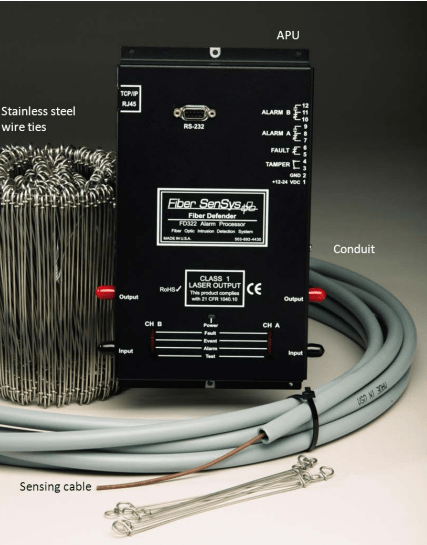
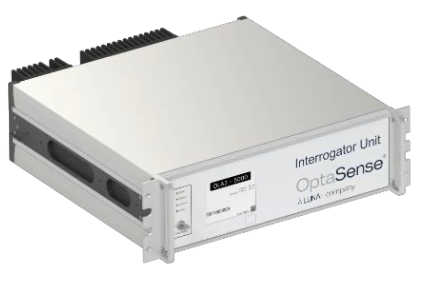
- Although ruinously expensive due to the sensors and government client list, there is demand for products like SBD terror rated APS Flexiguard which uses fibre optic cable to measure light being jiggled, turning it into a seismic detector. Exactly the same technology is used to detect earthquakes with comms cables under the ocean. Optex do the FiberDefender FD322 to NPSA. Luna have Optasense fibre optic for fences and burial.
- Sysco’s Sona 5 Eco puts accelerometers on the top of the fence.
- Toppings are not just delay but needed to provide shake for sensors.

- A similar product is ST Engineering Urban Solution’s Agilfence which uses Fibre Bragg Grating with fibre optic to detect strain.
- Other products may use a couple of piezoelectric microphone wires near the top of the fence like Flexiguard, Harper Chalice’s NPSA rated FenceSecure using 3.5mm VibeWire (eg South Staffs Water), Heras Eliminator (Defensor GD5000 is NPSA rated), or Detection Technologies’ Duotek analysers are NPSA rated working with Vibratek microphonic cable, GPS Perimeter CPS Plus.
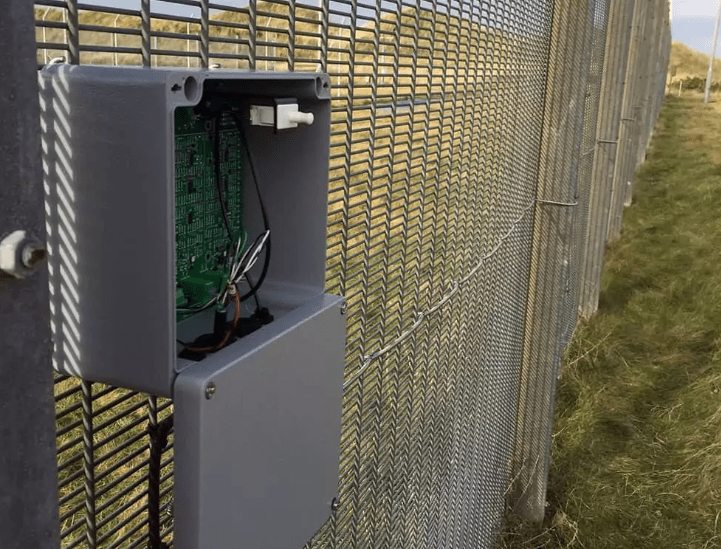
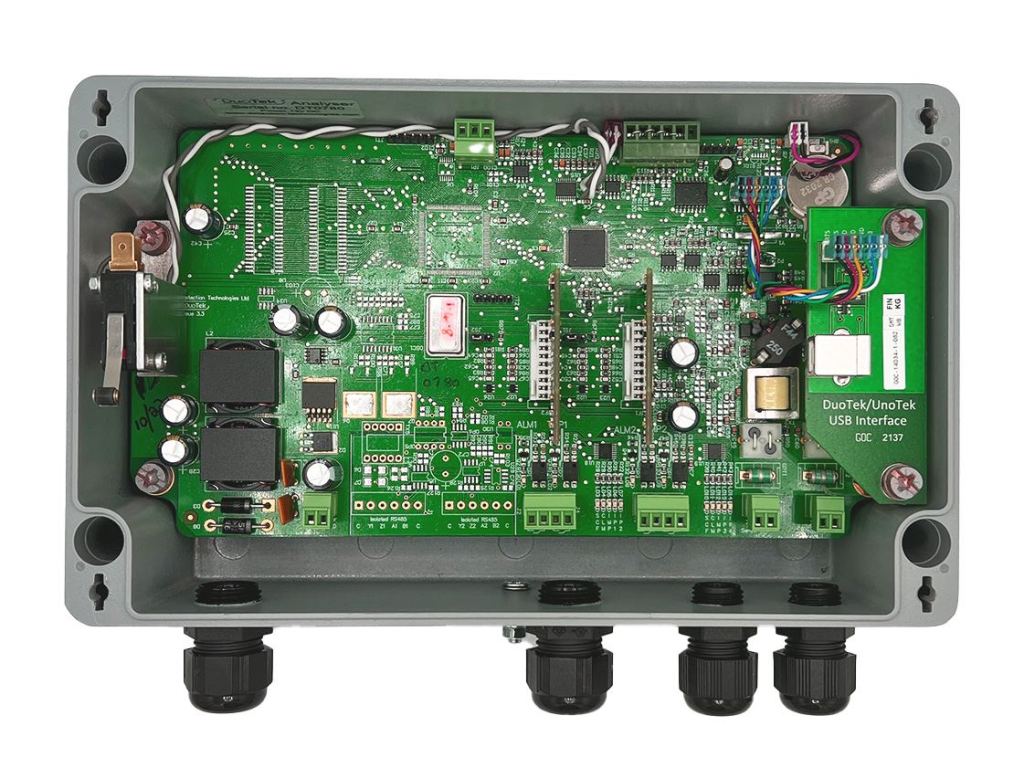
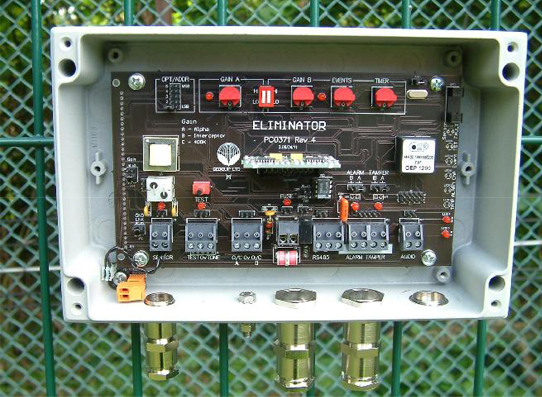
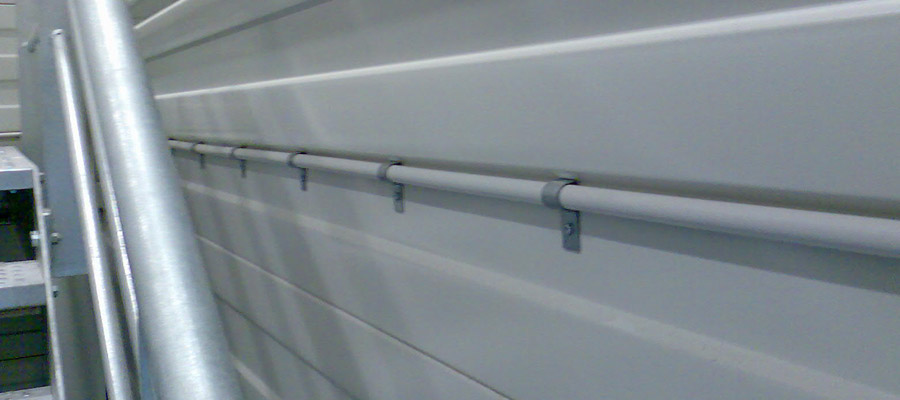
- Vaylia resell Flexiguard.
Non-fenced based
- Other detectors not using a fence include PIR, infra red beams, microwave (cigar shaped beams), laser scanners (for extra configurability) and seismic detectors, all creating a curtain, often used after an intruder has breached a fence, to help reduce false alarms. Infra red and microwave can be line of sight or volumetric but need level ground. Buried cables sometimes use similar tech to that used on fences but underground, options are pressure, magnetic and radio.
- Underground RF cable is covert, distinguishes animal size and avoids weather problems except water. Microphonic cable is cheap but suffers false alarms. Optical fibre is expensive for small sites.
- Senstar do NPSA rated Omnitrax ported coaxial electromagnetic cable for runs up to 800m, using pulses to locate intrusions to within 1m, detecting human size breaches in a 1m tunnel projected above ground.
- GPS Perimeter do NPSA rated GPS Plus, buried pressure tubes (up to 4) about 25cm deep and 125cm apart, 4 core cables, pressure sensors, compensating valves, analyzers and multiplex. It allows runs of 100m and needs ground access panels for each run. Fluid tubes are reliable but need maintenance and the access pits are obvious.
- Takex do NPSA rated infra red detectors, the PBIN50HFA, using four double modulated beams with 50m range. Active infra red needs flat ground but helps avoid false alarms and avoid dead zones, some models don’t like fog.
- You can also buy alarmed anti trespass panels to lay across ground such as ATP Plus from Rosehill.


Volumetric
- Radar is good for long distance open space and can track targets in all weathers, but only for movement and plays up if used in confined space and is expensive as it needs high resolution range and azimuth. For the right money you can use radar with software to distinguish humans. These need backing up with CCTV using movement detection or content analysis software.
- CIAS make NPSA rated ERMO 482XPRO 3.0 microwave detectors designed for gravel sterile zones between fences. Bistatic microwave doesn’t mind weather but needs overlapping and ground maintenance. Doppler microwave can be set to a fixed range to avoid false alarms.
- Passive infra red suffers false alarms from sun.
Driveway alarms
- Much more affordable is a DIY perimeter alarm just inside the boundary.
- There are videos online how to buy or make trip wire alarms such as the Bisley 12g shotgun alarm mine for £19 (blanks £25, clear fishing line £6).
- Look at firms like parabeam, detectalarms, ultrasecuredirect and gsmactivate for solar wireless & GSM PIR alarms which can sound a buzzer or a klaxon and light a LED on a radio receiver indoors or can even ring your mobile. You are looking at easily £300 to put a perimeter together. A SBD accredited supplier is MyDome.

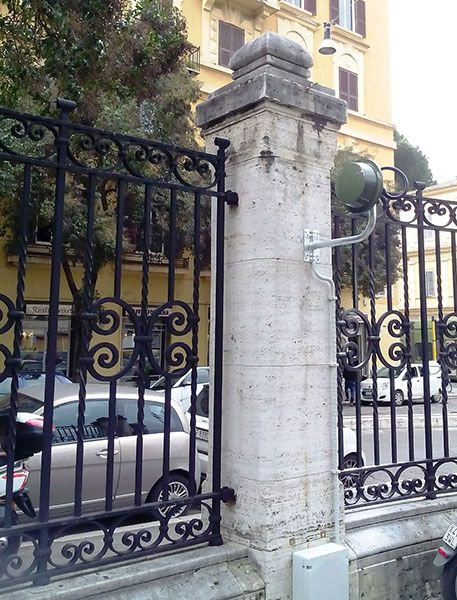
- Vehicle detectors are available NPSA rated from Turck Banner, the Surecross, which can be hidden in street furniture and uses radar with line of sight radio network.
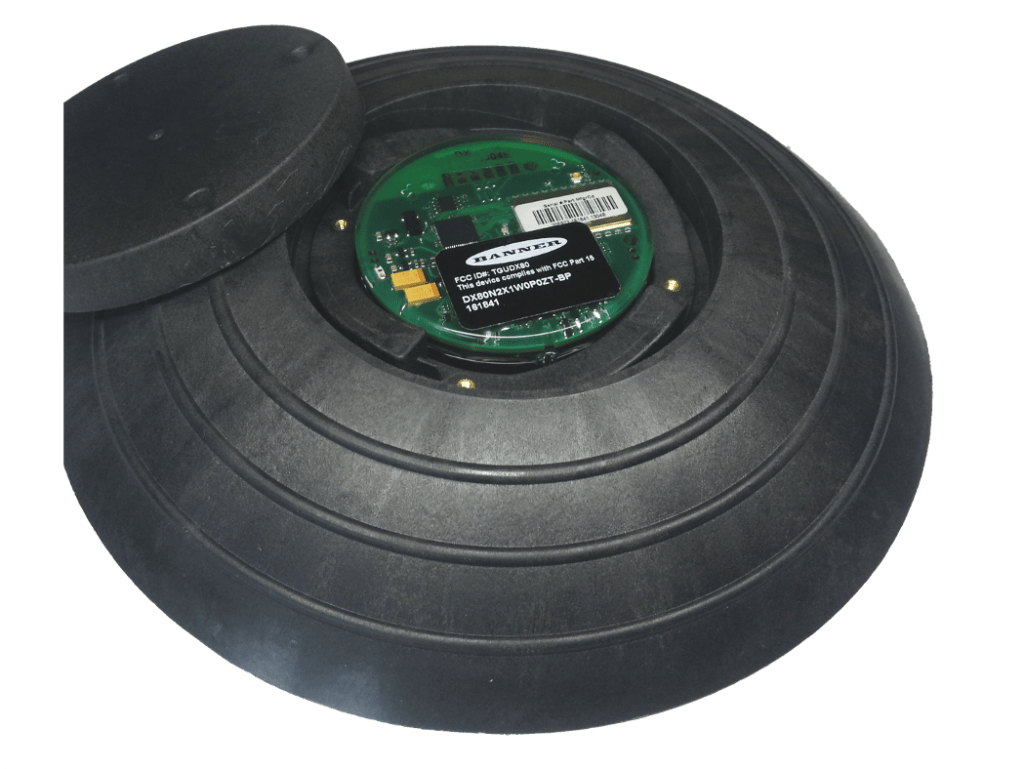

- Manhole covers (and bunker hatches) can use with hatch alarms such as Sentinor Watercress or Harper Chalice HatchSecure.
LRAD
CCTV
Purpose
- Alarms need to be backed by CCTV for assessment. CCTV is mainly for verifying alarms but can also cover area, perimeter, vulnerable spots or can even act as an alarm itself by alerting when a scene changes.
Standards
- The British Standard for CCTV is BS EN 50132. BS62676 covers CCTV and BS8418 covers detector activated CCTV. BS7858 covers control rooms.
Specifying
- You need to decide what quality you want, how it will be monitored (how many screens and guards), whether to have backup power and anti-tamper, how to avoid glare from sun and blockage from foliage, and whether it will link to an alarm, response force delay and any neighbour considerations.
- A control room has considerations of comms, vetting and training. Guards needs surprising amounts of practice with PTZ cameras so they know where they are looking.
- Presumably your specification as a prepper is monitor your home for potentially running intruders on one screen by an amateur for a mutual assistance group reaction force with CCTV alarm as a force multiplier, so you do not need cameras zooming in everywhere or export facility or remote links, and you may not even need recording, at least beyond replay a loop of the last few seconds anyway, but you probably need a decent frame rate like at least 5fps.
- Fences and PIDS allow you to check feeds left often.
- Cameras need to be a combination of wide dynamic range, low light and thermal (low resolution but good with rain). Modern digital camera systems are scalable, high resolution (1080 (HD) or 4K (UHD, check storage, frame rate, low light & lens quality)) and be viewed anywhere. Choose how many cameras you will use bearing in mind whether you want to monitor distant threats after an alarm in which case traditionally you could accept targets filling only 5% of screen height, or or detect targets without an alarm in which case you need them to take about 10% of screen height, or recognise targets to confirm if they are supposed to be there in which case you need them to take up about 50% of screen height. This can vary depending on resolution and compression and the rules of thumb were based on PAL screens whereas now you can buy digital cameras several times finer. The camera’s field of view depends on lens, sensor and distance from scene. You could add a pan tilt zoom camera for dealing with alerts over a large area, but you still need fixed cameras for their careful setup and in case attackers distract a PTZ. If you need to ID anyone, eg you have a busy mutual support group, coming and going, consider narrower fields of view to zoom in on pinch points like sideways, gates and doors. Otherwise perimeter cameras can work with 10% height and grounds cameras can zoom closer in case you need to ID anyone already inside who might be legit or might not. Cameras should overlap to cover each other.
- Infra red cameras use IR LEDs that produce no shadow as they effectively come from lens, but may need extra IR lamps. IR is short range and struggle with bad weather; they produce greyscale images, although day & night models are available that switch to colour in daylight by filtering out IR. IR degrades focus unless expensive correction is used.
- Mounting poles must be inside the fence.
- Check you can see even light and spot intruders 24h.
- The best screen for SHTF is probably LCD due to low power consumption.
- You need about 3 lux lighting or infrared. Try to avoid asking one camera to cover a scene with brightness range of more than a factor of three. Illuminate both dies of the fence.
- Ideally get advice from an expert as terrain, weather and lighting affects what will work.
- Data protection can be solved, if you even care, by not storing images, by configuring filters to mask neighouring land, and by buying enough land for standoff without spying on neighbours. There is a voluntary Home Office surveillance camera code of practice. There is also ICO guidance, which confirms ICO don’t like enforcing against homeowners.
- You could consider Stentofon for audio.
- If relying on guards to spot everything you’ll need many, as attention spans are short.
Thermal
- Thermal sensors are good at long distance as they use longer IR wavelength to cut through dust and moisture and produce an image of heat. They are also better at night and long distance than visible spectrum. It could let you avoid giving intruders routes and shadows to use if it avoids having to illuminate for visual spectrum. But, with their low resolution from diffraction, noise introduced by several stages of processing, and atmospheric scatter and radiation, they need a PTZ to zoom in alongside. They are also expensive, bulky and grainy. Thermal isn’t for identification of friend or foe, it just for detection to let you spot an intruder sneaking around.
- Thermal sensors either detect photons, or IR with microbolometers. Photon cameras, using Cadmium Mercury Telluride or Indium Antimonide, will set you back over £65,000, partly due to the cooling needed and are very noticeable, but are higher resolution than uncooled microbolometer cameras, using amorphous silicon or vanadium oxide, which are also more limited in range to perhaps 2km but cost nearer £15,000. Uncooled cameras need large apertures so have low f-numbers.
- Another material that makes thermal imaging expensive is that lens have to be thermally transparent, so geranium is typically used.
- MWIR helps cut through humidity so is popular in regions attracting Bond villains.
- Go for the highest signal to noise ratio, aiming for SNR over 10.
- Place thermal sensors along the perimeter so that intruders cross their path rather than move towards them.
- Thermal imaging needs a heat survey to check you won’t get false alarms from heat sources.
- Beware that the sun can heat background to roughly match humans in various temperatures.
- The signature thermal sensors show as contrast is called radiance and measured in milliKelvins. The sensitivity is measured as noise equivalent temperature difference.
- Some software combines visible spectrum and thermal in one camera housing, and can fuse images into something easier to interpret. Some software lets you switch from white heat to back heat and/or colourise heat. Software should let you process out defects.
- Guards will have less tolerance for staring at thermal images compared to visual spectrum. Patrols are more likely to be needed to confirm what the control room think it’s seeing.
Transmission
- Transmission up to about 200m up to about 1gb can be by wifi but this is insecure as be disabled and is unreliable and needs encryption. Security comes from microwave or cable.
- Microwave needs height and expense but gives maximum distance and bandwidth.
- Coaxial cable can suffer interference and is easy to tamper with, but is cheap.
- Optical fibre is cheaper than microwave for high capacity long runs, more secure and less susceptible to interference.
- Twisted pair or ethernet is cheaper but less secure than optical.
- IP cameras ideally need encryption against replay attack, for NPSA Base they need IP address filters, for Enhanced they need a CPA fire and for High they need a CPA proxy with network monitoring such as Address Resolution Protocol (ARP) monitoring, port scanning and persistent heartbeat verification.
Analytics
- CCTV can be enhanced with thermal, infrared or analytics. It can be combined with alarms and at the top end can include volumetric object surveillance such as for museums.
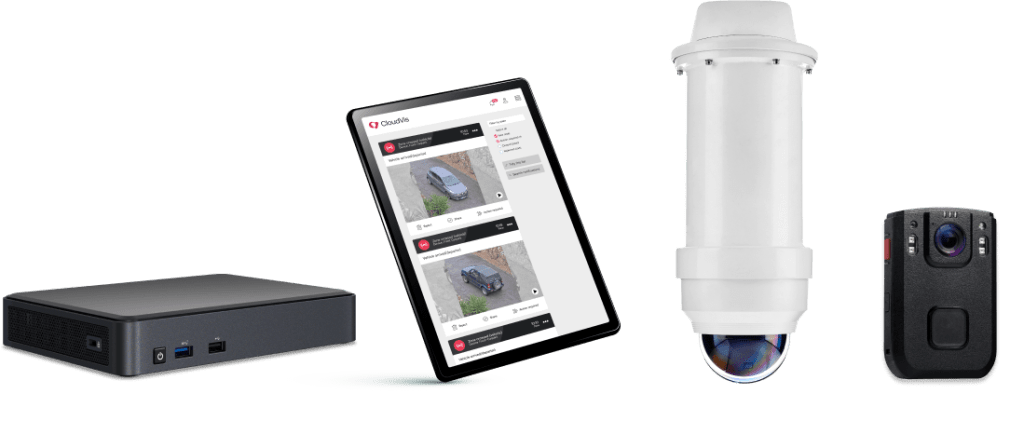
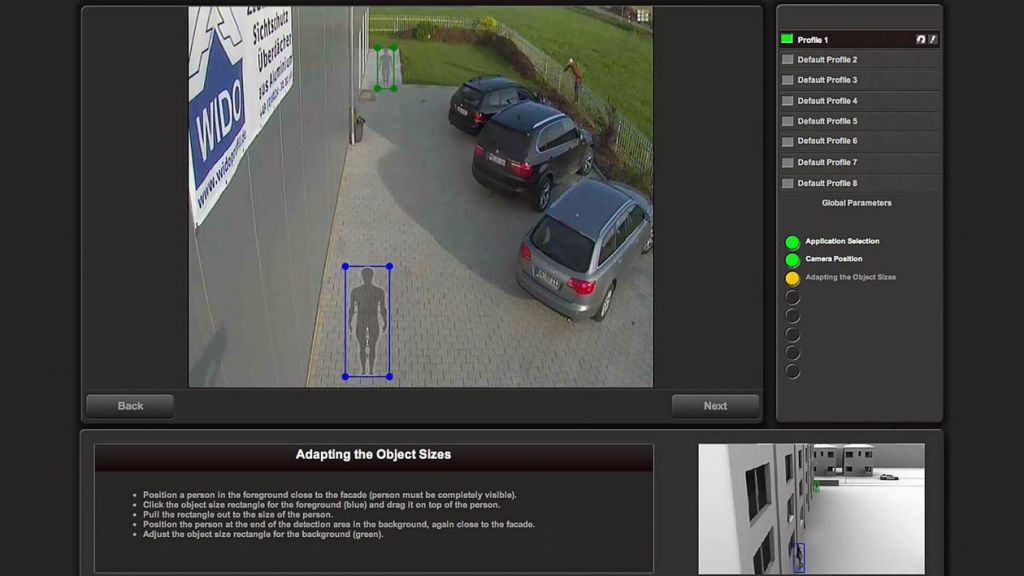
- CCTV video management systems can be linked to analytics, which use the CCTV as a giant alarm sensor to detect suspicious shapes moving suspiciously on video or thermal in a programmed zone, including bounding boxes, tracking trajectories, with an option to set off alarms, lights and speakers. But cameras may need adjustment with the seasons.
- The alternative is detector activated CCTV with loudspeakers, linked to a remote video response centre; these are accredited so that police response is possible and they can potentially replace guards, remote guards can challenge trespassers verbally before deciding whether to send a response. Analytics used for PIDS should have been tested equivalent to the old iLIDS or the new NPSA Video Analytics standards.
- SBD approve CCTV, including some for CNI which specialise in spotting suspicious behaviour and have options to improve on infra red, handle distances beyond the usual 67 metres, stabilise images and follow suspicious characters around between cameras.
- NPSA rated analytics include:
- Axis Defender.
- Intellivix.
- Evitech Jaguar.
- Davantis Dfusion.
- Honeywell Video Analytics Active Alert.
- Digital Barriers Edgevis Safezone video router.
- Securiton IPS.
- Ipsotek Visual Intelligence Suite.
- Genetic Kiwivision algorithm.
- NPSA recommend 95% detection rate and it’s accepted that will be false alarms to achieve that. Assume you’ll get a false alarm every one or two days per 100m.
- Test your system at various angles by crawling, rolling, walking at various speeds, trying to hide, and with vehicles.

Drones
- Aerial cameras are only really for chase. They need separate guards in the control room and on the ground to guide each other as it’s hard to maintain situational awareness, and someone needs to responsible for maintenance and operation. NPSA only certify the wifi link to Base and only if encrypted with WPA2.
- As a DIY option, you can get a Spypoint 3G PIR camo cam that texts you movement alerts and images for £240, and wifi overt cameras are even cheaper.
Radar
- Radar can be rotating under a radome, or fill-in in a housing like a camera.
- Radar works 24h and all weather (if below 30GHz), but ideally needs to avoid bodies of water, buildings, vegetation and uneven ground. It needs to avoid normal movement of metal gates and vehicles. Metal mesh fencing tends to blind radar or trigger false alarms.
- Radar needs combining with overlapping cameras, ideally including thermal, to investigate alerts, and labelled by location to pinpoint radar target locations.
- Radar for security will use electronic to overlay the plan position indicator into a site map.
- Some radar has analytics software to allow tracking.
- Fill-in radar are available for around £5,000.
- Ofcom may try to limit frequency and power.
- Settings may allow adjustment of update rate, which depends on distance and speed of targets. Far pedestrians needs a slow rate perhaps 1Hz, while nearby vehicle needs a fast rate perhaps 2Hz.
- Use electronic or guards to look out for jamming.
Gunshot detection systems
- CCTV can be mapped to zones from gunshot detection systems. External gunshot shots detectors use acoustics. As they are less reliable than internal detectors they aren’t yet rated.
Access control
- Automated access control systems enforce a database of permissions for zones using tokens (eg encrypted smartcards on 13.56Mhz via OSDP2) and readers (eg keypads) with portals (eg gates). They may have options to detect forcing, tampering, tailgating and duress. The best protection against tailgating is an airlock. You can decide whether to fail safe or fail secure in an emergency. They should have backup power. The highest security cards use Desfire Ev3.
- NPSA have an AACS rating for automated access control systems, which counts as Class 1 – attacker with basic knowledge, rudimentary methods & not evading detection. Class 2 is an attacker with equipment and technical knowledge seeking to evade detection. Class 3 is an attacker with specialist training, knowledge & tools. A higher, CAPSS rating, is required for Class 2/3 secrecy ratings. A token and guard is enough for NPSA AACS Base level. 2FA (token & PIN) and guard present or watching CCTV is required beyond NPSA Base level’. 2FA is needed for Class 1/2′ at Class3/4 PINS must be machine generated. For admin passwords, NPSA Enhanced level needs a NCSC password system, while High or Class 4 needs the addition of NCSC approval. Network must be standalone, or use a NCSC CPA VPN impact level 2 for Base and level 3 beyond Base, or NCSC encrypted LAN; WAN is possible to secure with expert advice but unrated. Tokens must be CPA Foundation level for Base/Enhanced or Class 1/2 or CPA Augmented for High or Class 3. Class 3 isn’t available for biometrics unless with CAPSS, and biometrics are an expensive faff anyway.
- Faces are easily faked, fingerprints can be more secure with ultrasonics and conductivity checks, but the only high security product is an iris scanner.
Security management systems
CCTV, access control and alarms can be run through a controller, but if they use IP they could be hacked. NPSA have a standard, CAPSS, for IP connected physical security systems; it’s required for NPSA Class 3 secrecy. It’s for you to implement, but a few products are certified and more have been tested that control CCTV, perimeter alarms or access. Even those that are certified would connect to uncertified products though. Access controllers typically involve a server, workstations, controller, software, expanders, readers
Considerations in guidance include configuration, backup power, backup data, passwords, privileges, encryption, anti-tamper, updates, audit, malware and physical security.
CAPPS controllers include:
- Gallagher Command Centre & High Security Controller 6000
- Genetic Security Centre & Synergis Cloud Link
- Nedap Aeos
Non-CAPPS controllers include:
- Chubb ADACS Assure
- Identiv HIRSH PACS with Velocity
- G4S Symmetry Enterprise



- Integrated security management systems should be compliant with NPSA Integrated electronic security measures. Remember that whilst integration improves situational awareness and automation, it increases complication for each operator and creates a single point of failure. There is BS7807 for integrated security systems.
Lighting
- Lights can deter intruders, reassure residents, hide guards from intruders via glare and help spot intruders, let cameras work and allow a response. Lighting is to deter through fear of being seen and to let you see; without surveillance to back it up, it just helps the intruder see what they are doing.
- Mount luminaires at least 2m inside the boundary, with outreach arms over the fence (to avoid reflecting in guards’ eyes) illuminating a a 10m strip. Columns should be to BSEN40 and PD6547 and anti-climb and not so high that losing one takes out too much perimeter lighting, so stay below about 8m. Using multiple cables and multiple phases with cutouts reduces the proportion of lamps lost in a fault. Glare lamps ought to be about five feet high and twenty feet apart and should put out at least 4 lux at 30cm height 10m out. If guns are expected you can use buried glare lamps that project with mirrors. If you have patrols you can silhouette intruders by aiming lights along building walls at pedestrian height on the ground floor, these do not have to be bright, just enough to notice shapes. Do not light up guards or guardhouses. Use floodlights to light up any area intruders would have to cross, using two lamps covering each spot in case of bulb failure. Use bulkhead lamps to fill in any dark spots. You can try to divert intruders to where you’d rather they go by leaving less sensitive areas darker, using a formula of log asset lux over log background lux. Entry control points probably need about 100 lux. Guardrooms should use only desklamps and use dark colour surfaces to help guards see out.
- Lighting can be controlled by timers, solar cells or switches. Sensitive sites like your home can be further protected with event actuated lighting such as a PIR floodlight, which could equally be triggered by PIDS or a guard. Beware that intruders can manipulate photo sensors.
- Consider armoured switched and cables and vandal; resistant luminaires to frustrate sabotage.
- Consider linking lighting to backup power so you keep it even if someone cuts your mains, or go further and set it to all come on if someone cuts your mains. In the age of LEDs this is now feasible.
- Consider linking lighting to an alarm tamper circuit so you are more likely to know of attempts to sabotage it.
- Normally for surveillance you want at least a colour rendering accuracy of Ra>60 or 80 for CCTV and entry control points. You also need 3 lux illuminance per square metre. However, 20 lux is better for gardens, which is streetlight intensity – this is equivalent to a candle a metre off the ground for every 9” square. Buildings regs L ask for photocell PIR lamps no greater than 150W or lamps more efficient than 40 lumens/W (which basically just rules out white sodium or tungsten for continuous use). To stop observers looking through a window needs lighting 7 times brighter outside. Driveways and foliage reflect little light so need brighter bulbs, whereas white paint and glass are good reflectors. If you have a car park you want at least 5 lux there. If you’re worried about light pollution complaints you would limit vertical illumination to 1 lux and upwards ratio to 5%.
- The old debate about which expensive or orange light to buy such as sodium, halide, fluorescent or tungsten, is over. LED is cheap, long life, quick to restrike, and white enough, although not as white as tungsten (dim and blows quickly) or fluorescent (which does not last as long as LED either).
- Unavailability should be below 12 hours a year per lamp and six hours for the system.
Torches
- The torches below are mostly rechargeable searchlights that get hot and quickly power down to below maximum output for cooling off. So you will need a power source from time to time, gloves or some kind of strap to hold it away from your skin, and to buy more maximum output than you need for a walk, for example, so that it remains bright enough after your first minute of turbo.
- If you want an outrageous searchlight for guards on your estate then look no further than the rocket launcher-sized Japan Cell Alpha1 LED searchlight with 3.1M candela (about 250,000 lumens) – twice as bright as a lighthouse.
- For garden searches, walks and turning the village green from night to day, there is the Imalent MS18 100,000 lumen (£476) – which powers down intermittently to 25,000 lumens while a fan cools it, or the MS12 ($540) with 50,000 lumens. Turbo will not be needed unless you are searching a farm. If you are not an outdoorsman or search and rescue operator it is probably expensive overkill and you may struggle to recharge it on the run.
- For gardens and out and about, Imalent have the 25,000 lumens MS06 (£140), which reduces output to cool off after 70s, and Olight do the X9 Marauder for £550, also with 25,000 lumens and similarly dropping to 6,400 after 3 mins, so not obviously worth the triple price tag. These are hefty enough not to be EDC but would stay on charge in your utility room or conservatory for indoor use on low settings or trips or investigating intruders in the garden on high settings.
- For urban courtyards or indoor use the Imalent MS03 (£93) with up to 13,000 lumens or the Olight X7R at £253 with up to 12,000 lumens should do the trick. On turbo they can temporarily floodlight a garden so are a good EDC all rounder if you do not need a proper searchlight.
- For EDC you could try the Nitecore TM9K from their Tiny Monster range, with 5s blasts of 9,500 lumens after a few clicks for £155. This can handle virtually anything in short burst except search and rescue, so is a great choice for the car door pocket, get home bag, EDC pouch and kitchen cupboard.
Alarms
- Intrusion detection systems cover what are terms supervised premises. They consist of a controller, detectors, notification to either your, your control room or an alarm receiving centre, power supply, and sometimes expander modules and sometimes a warning device such as siren or strobe. Alarms need CCTV and guards to confirm.
- The British Standard for alarms is EN50131 as implemented by PD6662. This has ratings from Class 1 to 4. These are unrelated to NPSA Class secrecy ratings. To avoid confusion it’s best to refer to EN50131 classes as grades. Grade 1 assumes amateurs with limited tools, grade 2 adds more tools such as multimeter, grade 3 adds skill and tools, grade 4 assumes a well resourced attacker could substitute components. PD662 adds grade 2X with a bell and is the UK domestic standard. Grade 3 requires remote monitoring. NPSA protection levels of Based to High build on grades 3 and 4, with Base needing grade 3. As there are hardly any grade 4 products most NPSA Enhanced or High certification relies on NPSA testing.
- The only grade 4 system is MoD SSG’s AC12, using balanced encoding to stop notification being tampered; MoD have to adapt components to match that standard. Seimens do a grade 4 dual tech volumetric detector, Eyetec IRO840T, with continuous curtain option, and PIR and optical anti-range reduction.
- Police response requires BS8242, BS8473, NPCC compliance and any local policy specification. This needs confirmed alarm only by either sequential trigger from detectors of different location or technology (2.5m apart of volumetric. Tamper or path fault can count as a trigger; faults on two paths counts as two triggers. Relying on sequential location trigger is advised against, better to use several technologies and overlap them.
- There is also BS5979 for security receiving centres.
- Setting and unsetting is by key, code, token (eg fob – not allowed beyond NPSA Base) or alarm receiving centre. High security requires a code to be involved. It’s advised to use a shunt lock on the designated entry door to unset, to avoid false alarms, followed by code and maybe a token.
- Control panels should be steel and ideally be given tamper seals if visitors will have access. They should have tamper switches to detect opening the back and front or taking off the wall. They should ideally be tucked away separate to the user interface and must be beyond the entry unset route. No buzzers should be enabled in a control panel nor any warning devices fitted near it. They typically incorporate the PSU with transformer and battery. Backup power is needed, eg generator, and 60 hours recommended for grade 3 or as long as you expect to be off grid. Connect via unswitched fused spur. Power supply must be equally tamper resistant. Wiring to detectors should be shielded and the wire should be screened twisted pair.
- Don’t allow remote updates. Any connection to the internet is a no-no unless approved by NCSC using their accredited systems. Wireless systems are limited to grade 3 and Base. Likewise integration with building management systems is dangerous.
- Remove branding from everything.
- Detectors are usually either line or volumetric. Detectors each need their own monitoring, except five vibration detectors and double door reeds can be treated as one detector.
- Line detectors include protective switches, breakglass, vibration detectors, and active infra red.
- Protective switches include plungers, mechanical switches and reeds. Plungers and mechanicals are rare in high security compared to magnetic reeds, which are usually surface mounted. In future the risk of substitution may be solve through RFID. High security reeds are triple biased, so have three reeds in different directions meaning a magnet attack triggers anti-tamper. NPSA protection grades allow a gap in the door before trigger of 20mm, but Class secrecy grades don’t allow a gap. They can be wireless at NPSA Base. Separate closed supervision loops for alarm, tamper and fault are OK up to NPSA Enhanced and Class 1. Resistor must be added on alarm and fault and after tamper in series for up to High or Class 2. Polled encrypted packets over a bus with power, data and clock lines are needed for Class 3 and allowed for High.
- Breakglass detector include sonics, foil and alarm glass. Piezoelectrics and acoustics need thin glass and ideally hard surfaces, and can be defeated with film, although manufacturers make bold claims about processors. Cheaper models are vulnerable to false alarms from tapping and background noise. Foil is easily seen, defeated and accidentally damaged. Alarm glass with a sandwiched circuit is more reliable but expensive. The best for laminated glass is active ultrasonic which fires sound across the surface and is tamper resistant.
- Vibration detectors can be seismic, inertia or shock. Seismics are piezoelectric and aimed at strongrooms and aren’t suited to soft masonry like breeze blocks. Inertia sensors are cheaper and involve shaking breaking a contact. Shock sensors typically use accelerometers and are for big impacts on solid materials. They may have settings for material, pulse count, sensitivity and filtering, but still work best away from traffic.
- Active infra red create a fence of modulated beams between transmitter and receiver, and beyond about 5m cost more as they needs special lenses or mirrors to focus. The modulation prevent sun saturation. The transmitter and receiver can be in the same housing by using a reflector, but this can only achieve NPSA Base. They are used for walls, ceiling and openings, including outside windows as a component of a PIDS. Outdoor models can have heaters to stop condensation which could be useful in cold rooms. Settings may be available for sensitivity (eg 20ms to allow for insects), channels and how many beams to trigger. Prefer models with back tamper to detect removal. Opting for supervision circuit to detect fluctuation on signal strength combats bypass; a higher security option is encrypted signature over an interconnecting wire to prevent component substitution.
- Volumetric detectors include motion detectors, acoustics, capacitive and inductive. For Class 2 secrecy tamper seals are needed. Decorations, moving furniture, openable windows and heating or fans may render some rooms unsuited to volumetrics as you or police (after 3 false alarms in a year) will tire of it. You can use standard DD CLC/TS 50298 to confirm a system is isolated. Lower security detectors are available to throw longer beams down corridors or a continuous curtain under a ceiling. Avoid obstacles that would mask coverage as these won’t be spotted by anti-masking beyond some 50cm. Detectors may use weakened back panels that snap under attack to trip anti-tamper; these should be pre-snapped. Motion detectors need anti-masking for NPSA Class or Enhanced rating.
- PIRs usually rely on pyroelectrics. They should trigger on about a 3 degree celsius difference moving across the background. They deploy curtains at various interlaced heights. Coverage is usually around 15m, beyond that the gaps could be too great between sensitive zones. Pulse counts are deprecated – if you want a confirmed alarm use sequential detectors. PIRs can false alarm if the shun shines on them or its field of view, likewise with heaters. Cloaking attacks are assumed for NPSA Class 3; detectors are available with anti-cloaking and it can be stopped by dual tech. Dual PIRs use two zones to qualify as non-overlapping ones as a confirmed alarm under BS8243.
- Microwave detectors for indoors are monostatic with transmitter and receiver in one housing. They are effectively a Doppler speed gun, covering a balloon shape, better at detecting movement along rather than across the beam. It’s hit and miss which obstacles they penetrate. Microwaves are commonly found as dual techs, doubled up with PIR. It’s so hard to evade microwave that false alarms is the risk. These work fastest when the radius is 45 degrees off the likely approach.
- Rarely, a dual tech with PIR or microwave is doubled up with ultrasonic, which works best with hard surfaces. Another rare technology is infrasonic, picking up pressure changes from breaking in, but with risk of false alarms from draughts.
- Warning devices aren’t needed unless you want to catch intruders more than you want to scare them off. Mainly they signal to burglars what target suits them. What used to be bells are now changing to self contained sounders or self actuated sounders bells. Self contained sounders use tone generators, with their their own batteries recharged from the control panel. Self actuated bell batteries only kick in if the control panel connection is lost. Internal sounders are available, either buzzers powered by the control panel or horns with tone from control panel. External warning devices should have anti-tamper against opening and removal. Flashing lights are available, which aren’t subject to the 20 minute noise pollution limit on sounders.
- Automatic transmission systems use a transceiver to alert the alarm receiving centre, which may be in-house, remote or outsourced. Copper wire was scheduled to be replaced with fibre optic and PSTN switched off by December 2025, so signalling customers moved to broadband as the primary path with mobile as the secondary path, with an option for a second SIM for roaming. GSM or mesh radio can be jammed and isn’t allowed for NPSA ratings for Class or beyond Base. If you do use an aerial, the connection to the controller must be wired. High security demands a direct line. Multiple transmissions paths are recommended. Connections should be polled. Faults should be reported automatically within seconds.
- Maintenance should be quarterly for the highest security. Inspections should be weekly, including logs, checking nothing has been added or removed, cleaning detectors, looking for obstructions and loose building fabric, and check volumetrics haven’t been sprayed and reeds are still aligned. Do regular walk tests.


Interesting list of high priced gear.
High-tech has it’s place in the modern world, just not when all the power goes off and lifting up a phone or using your cell phone to dial 999 doesn’t even give you a dial tone.
I wonder also about those who spend out so much on so little. A lot that is listed is rich mans and commercial thinking and beyond the means of the average ‘guy next door’.
It’s always been my experience that peppers think and like low-tech.
On the other hand, preppers who will forage for what they need, LOVE high tech. I know I do. Especially when the grid goes down, high winds, or a lightning storm. 😉
Ask any professional security firm what they think about, and do, with constant nuisance tripping of alarms. Apart from tying up roving personnel at one site for their entire shift.
Incidentally, we did a survey of self charging PIR lights and alarms last winter with our prepping group.
We chose two consecutive days when the ambient light was a little worse than usual. All of the six units I surveyed failed within half a dozen nuisance triggers and none lasted the night. Fine during summer, dire during winter. The overall results from others were close to that.
LikeLike
Thank you so much admin for uploading such amazing content with us your blog is really helpful for me. wish you all the best for upcoming comments. I am also wanted to write blog kindly guide me if my topic is seismic sensor manufacturers then what should I do first and how will I create new and unique content on this topic
LikeLike
That’s great I will keep an eye out but am not an expert on seismics I’m afraid.
LikeLike