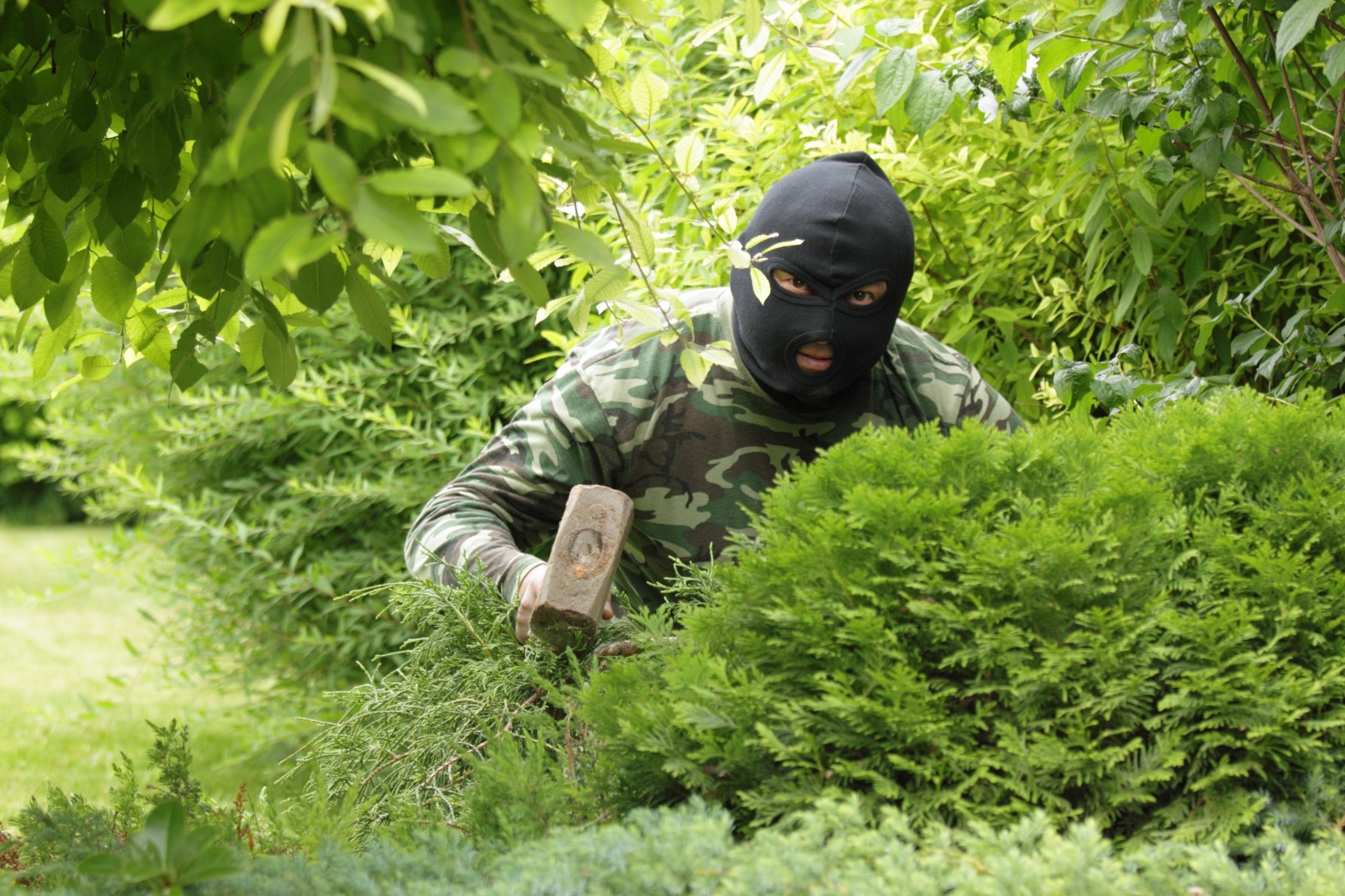
But supposing the intruder makes it into your back garden or is heading for your front door. Now you need a defensible space, increasing fear of being watched through lighting, CCTV, alarms and windows, avoiding helping breaching your building, and giving you time to react before they make any impact on the facade.
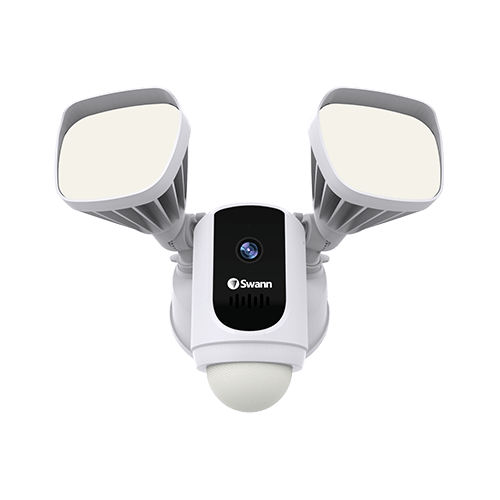
Your front garden may have no boundary to buy time so would need extra lighting, CCTV and alarm, which can be provided by a PIR lamp and wifi camera with mobile alerts and maybe also floodlight. Products include Ring, Nest, Netvue, Hive, Canary, Blink, Logitech, Somfy, Neos, Swann Floodlight. Some cameras have lights and even run on batteries, but a dedicated PIR lamp will be much brighter for when you have electricity, some do not charge a subscription for video storage.
Try to portray a boundary out front with some kind of fence.
Ideally for security, gardens should be an empty, alarmed, lit and filmed surveillance gap.
Keep up with maintenance and litter picking to avoid looking like you don’t care and can’t cope and can’t afford security, to further show you are not a soft touch.
Keep tree crowns above 2 metres and shrubs below 1 metre to maintain vision, keep tall plants away from fences, trim branches away from lights and cameras.
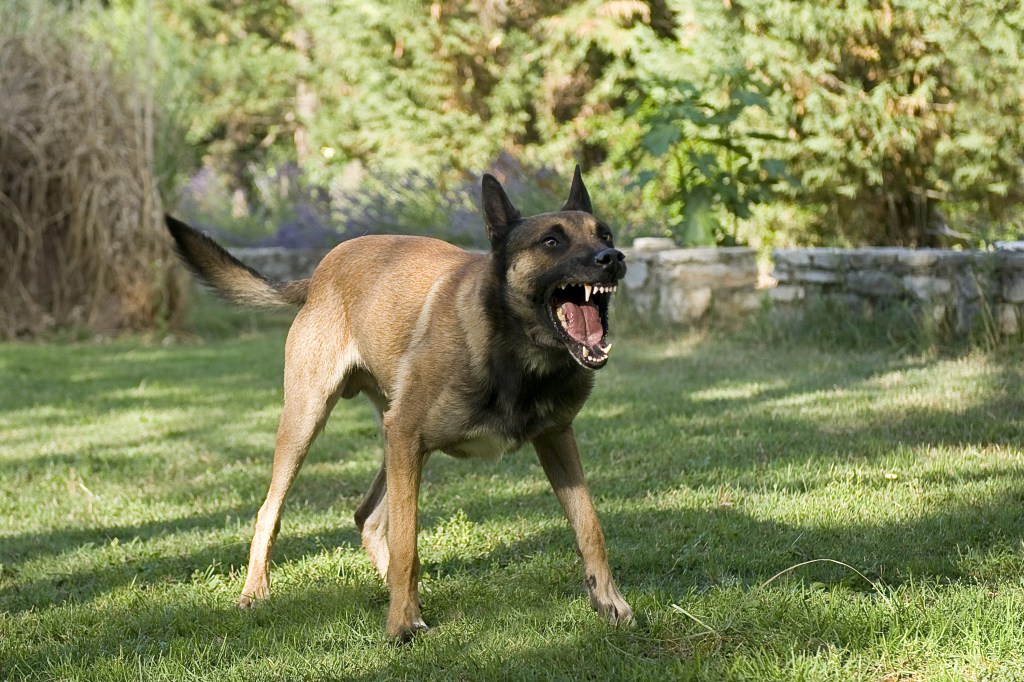
Are you OK with the cost, mess and exercise involved with a guard dog? Most guard breeds need a big house, over two hours exercise a day and plenty of grooming.
Belgian Malinois
Beware diversions as adversaries may launch mock attacks, by, for example, luring you into an ambush out the back while sneaking in the front. Ensure you have 360 degree awareness.
Survey your land and surroundings to work out what concealment and cover you and adversaries would have and what are the avenues of approach.
Randomly check buildings like garages, sheds and the location of your stash when tensions rise.
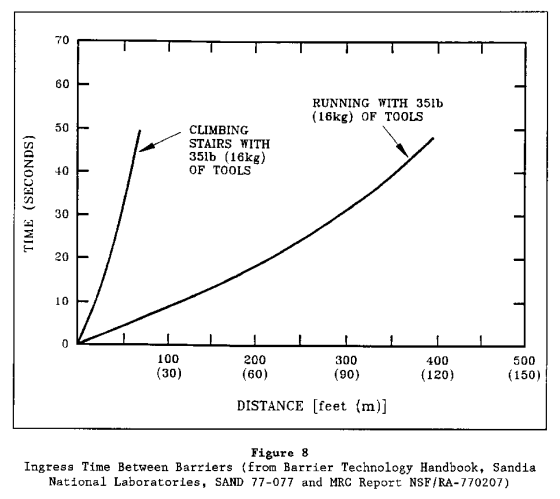
Even if you have a big enough garden to have a big perimeter it is inefficient to patrol it, as an intruder can make it from perimeter to building faster than a guard can make it from potentially the opposite fence. Unless bombs are a risk and so you want standoff, it may be better to station guards at the building, with the benefit of early alarm from sensors on, or beyond, the fence. Running with tools is about six times faster than climbing, so hardening the ground floor makes extra sense.
Force intruders to attack an upper floor and straight into an ambush. Assume that by the time you react to a fence alarm the intruder is at the facade.
Perimeter standoff
Ideally you want a garden big enough to give you standoff.
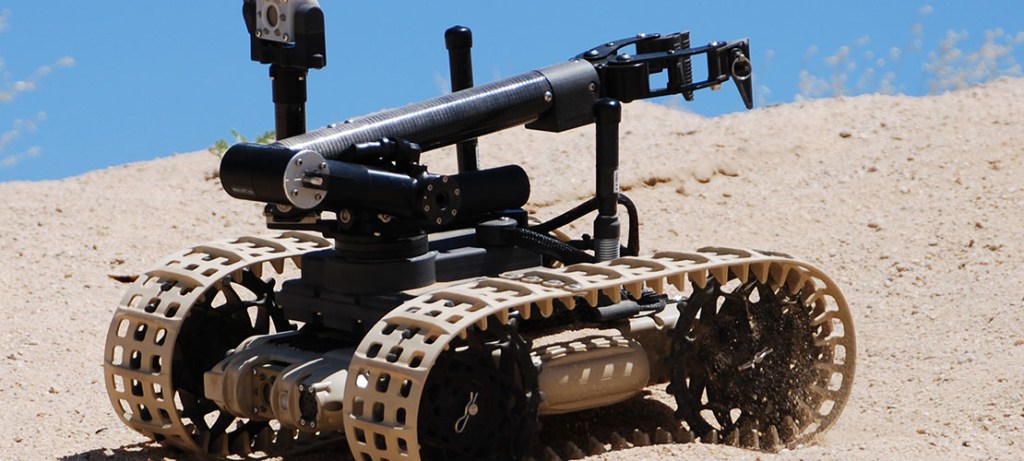
Consider surveillance bots. You could remote control a CCTV robot round your land based on a concept like the Qinetiq Dragon Runner. Or there are garden drones like Sunflower Beehive.
Qinetiq Dragon Runner 10 recon robot
Challenge all suspected trespassers.
You aim is to see attackers, eg from a video wall of wide angles cameras, and lock down and summon backup before they attack the building.
Be reluctant to evacuate under attack as opening a door lets attackers in and turns the building into a kill zone.
If petrol bombs are the start of an attack assume it’s low sophistication, so you are more able to stand your ground.
Look for hidden, unusual or suspicious objects or people.
Tools
Lock away potential makeshift tools, ladders and weapons like wheelie bins, furniture or rocks.
Armorgard has SBD & SS Bronze rated security chests for tools such as the Tuffbank.
The ultimate toolbox may be the The Big Ugly Box rated as a safe to STS205 BR5, the large weighing a ton and coming in at £4,690.
The Big Ugly Box to STS205 BR5
Lock away a machete, rope, nails, saw, pickaxe, shovel, sandbags, barbed wire and posts to combine with elements of your MoE kit for building fortifications.
Anti climb
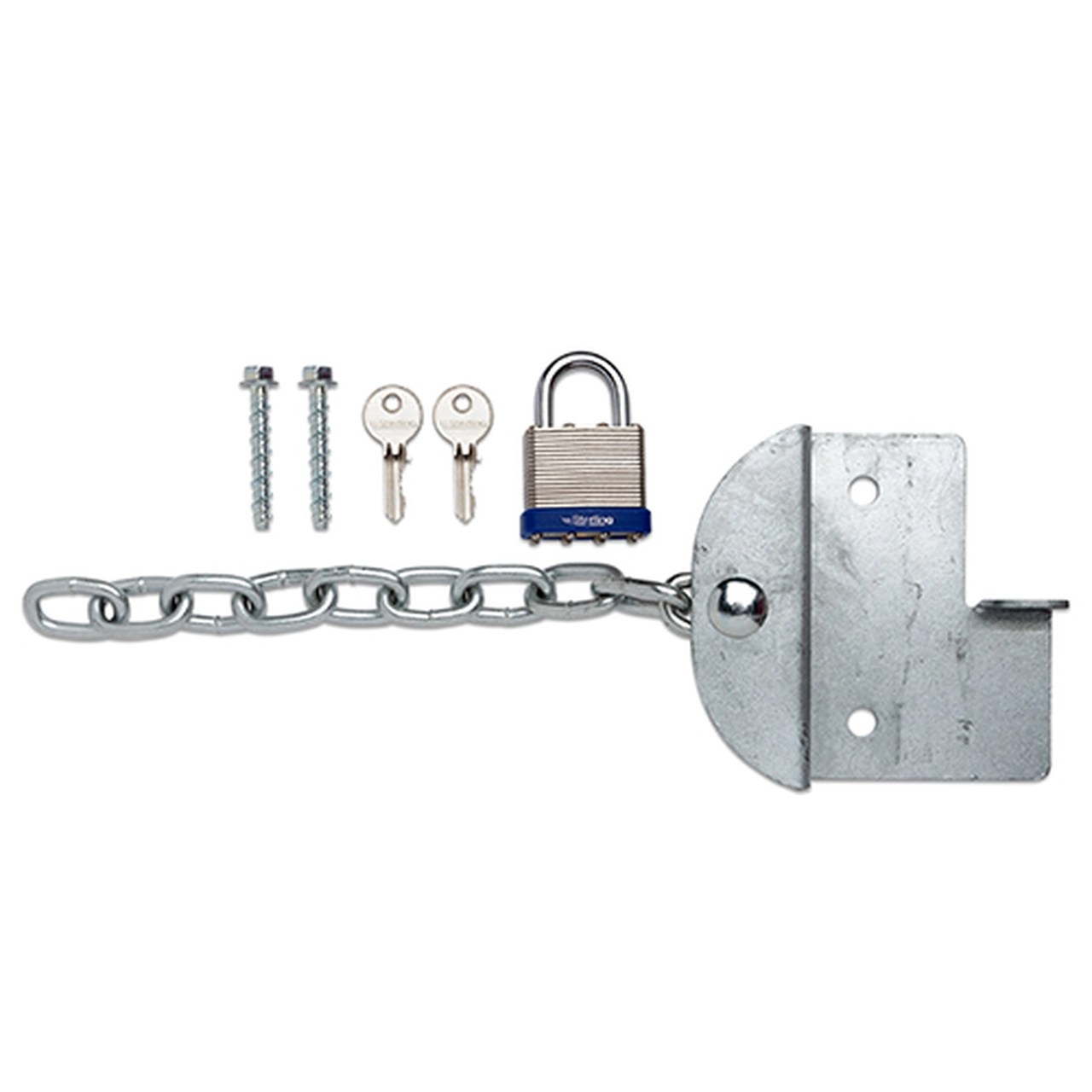
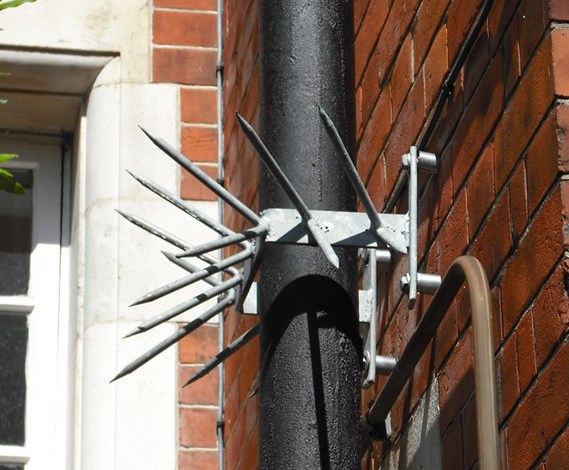
Harden drainpipes with a collapsible ‘Kelly’ coupling if you can still find such a thing (or make your own with EPDM rubber tube), or anti climb box (£50 for 2m tall box) or spikes or anti climb paint, or replace with a 10’ length of high security downpipe for £100.
Plant Hawthorn under accessible windows and roses up fences.
Access
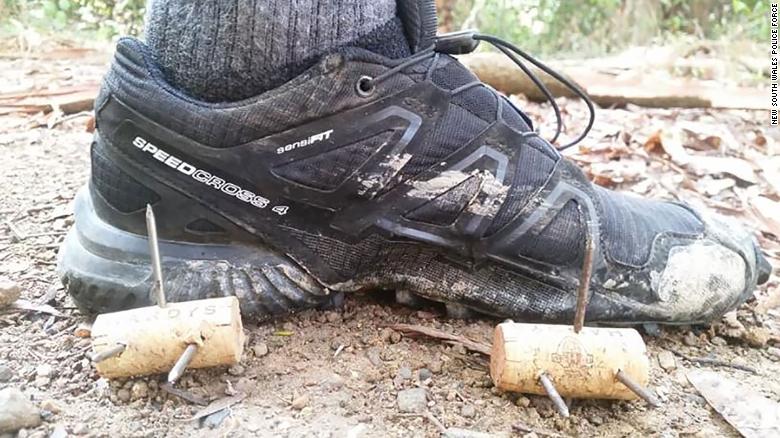
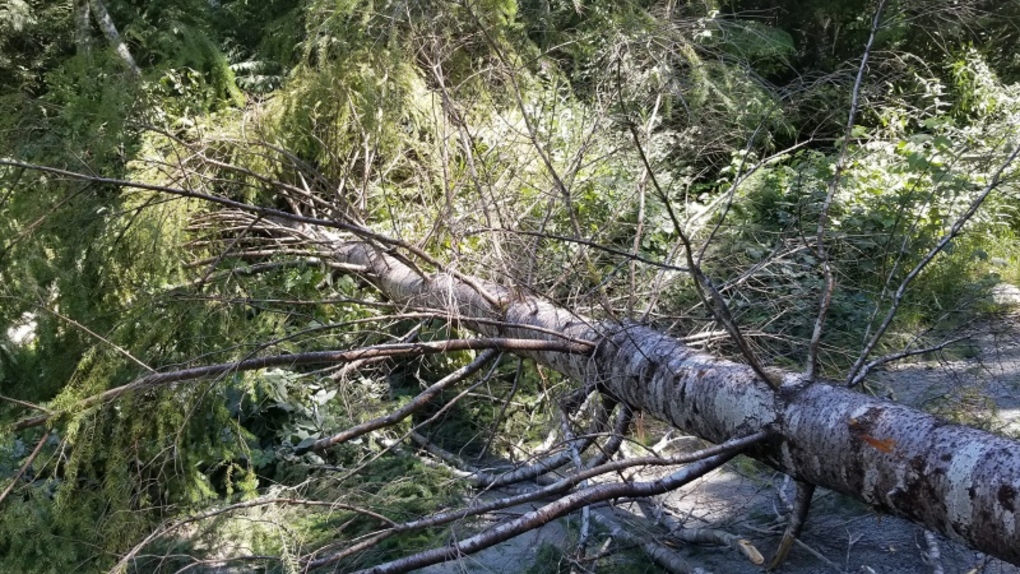
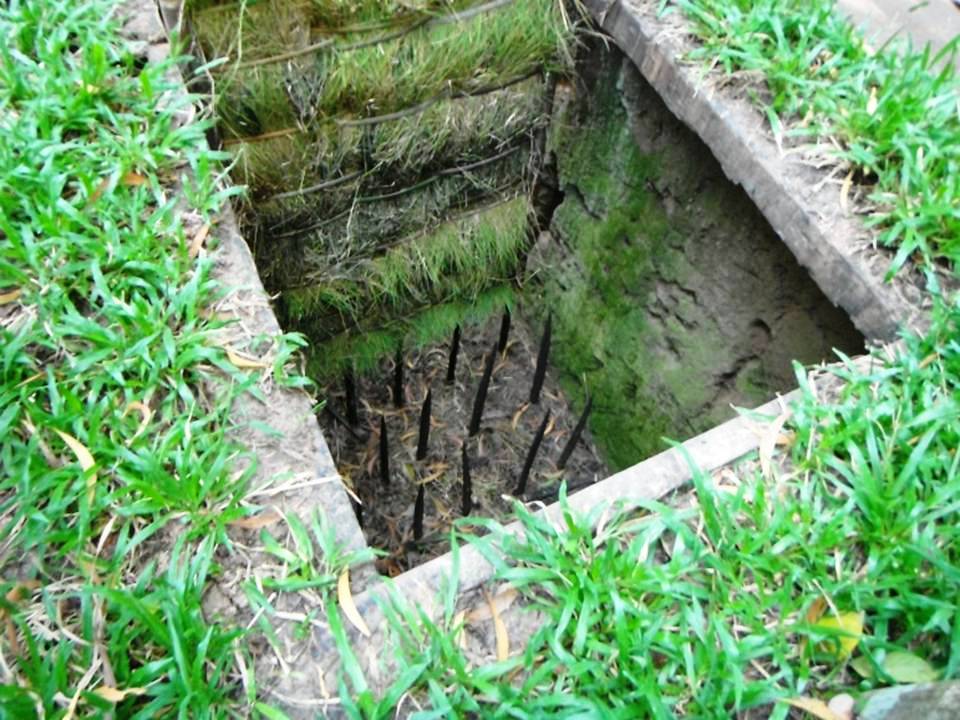
If you can block your access roads with ditches, logs, steel hedgehogs, traps and caltrops you can get the best total obstacle by buying with a river to your rear, although then you are putting yourself near a line of drift. Other possibilities include ravines and escarpments.
What is your escape route if you are overrun? A tunnel?.
Hide and armour utilities underground.
Shootouts
If things get real bad, and you have the hardware and land to take a stand, you can buy a Burton Safes Ares portable ballistic wall made of metal lego-style blocks from Safe & Vault Company, or you can buy sacks of ceramic balls, or build with rubber ballistic blocks from Rosehill.
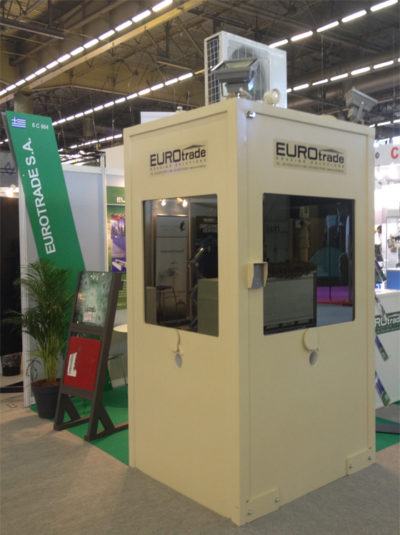
Eurotrade do ballistic sentry boxes like the Aspis, that can double up as outside panic rooms with gun ports to pick off undesirables waging armed warfare against your stash. Burton Safes sell Kratos ballistic guard huts that can be mounted as guntowers.
Other options could be snow or dry sand which can stop bullets if thick enough.
The ultimate, though, may be a Salzer guardhouse from Germany, used as a garden panic room. They take up to a week to build, from steel framed modular panels on a concrete base (and small ones can arrive pre-built). They are available gas-tight, and to RC5 or RC6 (depending whether windows open), FB7 NS ballistic and EXR3 blast. The US embassy 15FEBR standard is also available for forced entry with ballistic option. They come in 10′, 20′ and 40′ lengths, all modules 8’6″ wide to fit on a lorry before being doubled up on site if necessary. Sanitary and power supply is possible, and colours and materials can try to complement existing buildings with aluminium, stone, wood or stainless steel. They can as easily be designed as pool houses as embassy lobbies. They also make watch tower booths, so have experience in mirrored glass.
Sentrikey LPS1175 C1 keysafe
If you don’t need windows you could have something stronger like a Transporta armoury container from Burton Safes, which are technically safes up to EN1143 grade 3 and weigh up to 9t with a £35,000 cash rating, with facility to add power and air con.
A less than lethal option is something like the X-net man catcher; try shops like NetGunStore.
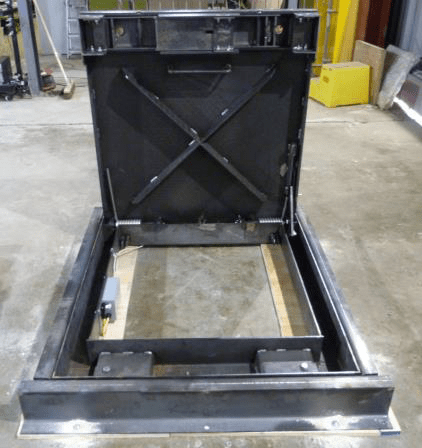
There are insurance and terror rated hatches for 762mm x 610cm apertures available from Technocover to SR4 & NPSA, but attackers can padlock you in, although blocking exits is always a risk and you would normally have an escape tunnel locked from the inside. Steelway Brickhouse’s Modifed Defender to NPSA solves the padlock problem by letting you override it from inside. You can remotely monitor a hatch against vibration, cutting and lifting with a Harper Chalice HatchSecure alarm. Harden do the rifle resistant SD-STD-01.01 FEBR60 covert hatch. North West Shelter Systems were a USA bunker hatch supplier worth a look.
Hatch alarms include NPSA rated versions. First Alert
Prisoners
Plan how you will take, keep and dispose of prisoners. Perhaps it is enough to strip, hood, shackle and sleep deprive them before interrogating them then dumping them at night in the middle of nowhere. Nappying, walling, slapping, standing, waterboarding, hosing down or immersing them or using stress positions or stuffing them in confinement boxes or blasting rock music at them 24 hours a day will probably be counterproductive by wasting resources, risking injury, alerting passers-by and making enemies. They are unlikely to know anything you have the resources to use by the time you get it. But it is all explained in the Al-Nashiri case if you are interested.
Fire as a weapon
Attackers may attack you or your preps by arson via incendiary or accelerant.
The aim may be death, damage or gaining entry amid the panic. The immediate dangers are fire and smoke. Assume sabotage of fire protection, and multiple fires design to stop escape.
It’s a reason to have constant surveillance of strangers.
Use fire resistant building fabric and don’t leave combustibles like vegetation, vehicles, waste, plastic or furniture, or nearby combustible outbuildings, outside. Avoid letterboxes, post should be diverted or go in exterior auto-extinguishing boxes. Ensure windows resist petrol bombs coming through, ie at least 8mm panes; even 6mm tempered isn’t enough; polycarbonate, laminated glass, films or shutters are best. Ensure doors have no gaps; they may need seals and threshold plates. Fit flame retardant flooring, eg fire resistant carpet, near doors if accelerant could be poured through. Escape routes should be hardened against sabotage. Internal layout should be compartmentalised against fire and smoke.
Disconnect gas in times of tension.
External infrastructure, such as HVAC, needs to be watched, alarmed and hardened.
Install a fire alarm.
Rehearse firefighting and evacuation, including rolling alight, crawling under smoke, extinguishers and fire blankets. Water handles most fires, but foam is best for petrol as it doesn’t let fuel float over it.
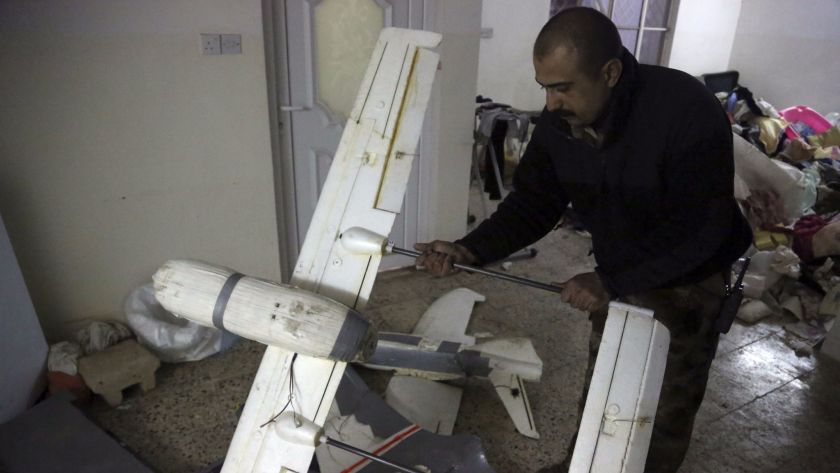
Radioactive drone landed on Japan PM’s helipadGreenpeace drop smokebomn on French nuke plantISIS drones
Drones can compromise your operational security but generally are a minor nuisance as amateurs only have models that can carry a pound in weight and last half an hour. They can be used to look, crash or drop payload.
Your main risk is living near a nuclear reactor where a terrorist might fly a UAV into the spent fuel pool. Also a terrorist tried to nuke the Japanese prime minister with a drone carrying powder, others have been used to set fires, and ISIS dropped hundreds of IEDs in Mosul from them. But it is unlikely anyone just wanting your stuff will get hold of anything scary enough for you to fear them dropping it from a done.
Mitigations include concealment, barriers and hardening to stop attackers targeting you, getting to you and damaging you. Then it is down to various types of gun to disable the operator or drone or disconnect it. CUAS systems detect, track and identify but you also need effectors to take out what you discover. Barriers include blast hardening, nets and sacrificial skins to provide a modicum of standoff. People and equipment should be kept away from the exterior fabric, especially windows. To protect against newer drones touching the wall carrying several kg you need 60cm concrete or if less it needs steel lining. Gaining 1m standoff with nets for example reduces necessary concrete thickness to 15cm. Brickwork would be effectively ignored for calculations and you would need several mm of steel lining both faces to anchor the brick and protected face lining. Concrete roofs can be reinforced with ceramic, kevlar or metal (steel, aluminium or titanium depending on weight and weldability). A civilian drone bomb wouldn’t cut steel reinforcement but can blow concrete off it.
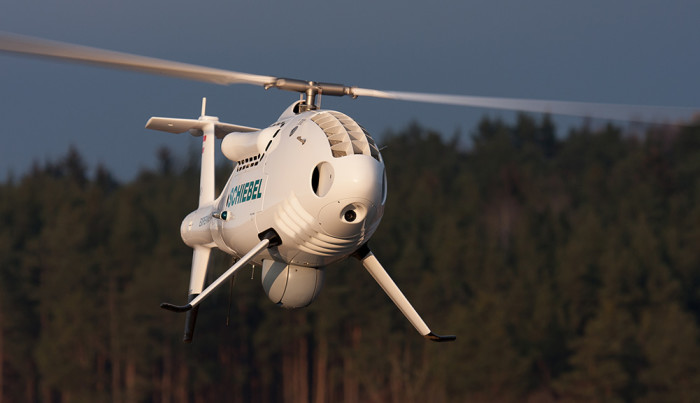
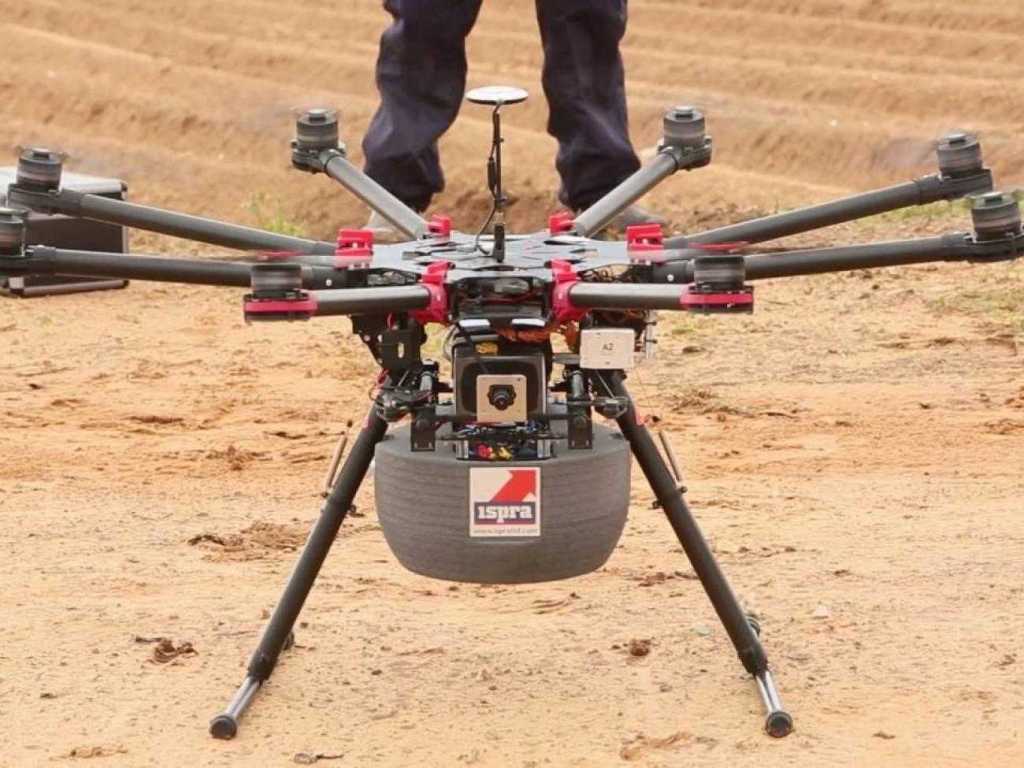
State actors have options, which officially may not exist and would run up against proliferation laws, like the AeroSurveillance MPL30 bomber copter, Schiebel Camcopter smoke grenade (in reality, non lethal munitions) launcher, Desert Wolf Skunk pepperball drone or ISPRA Cyclone pyrotechnic riot drone.
MPL30 tear gas drone
Schiebel Camcopter
Desert Wolk SkunkISPRA Cyclone
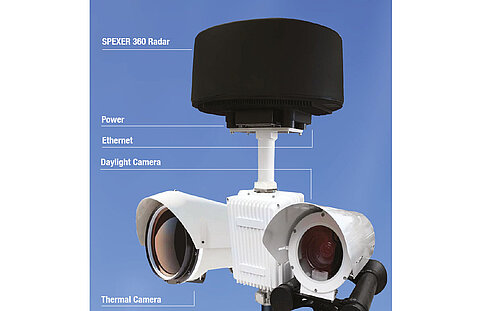
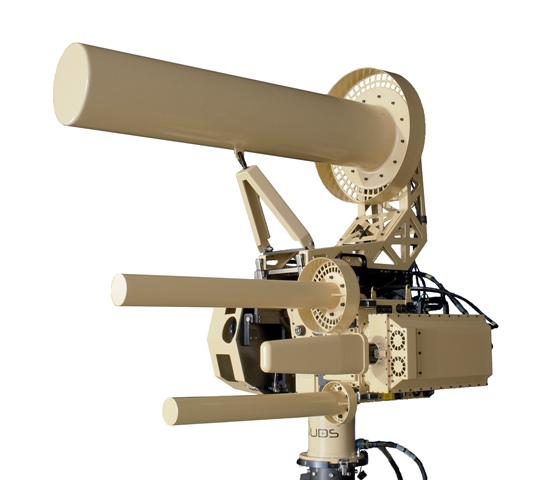
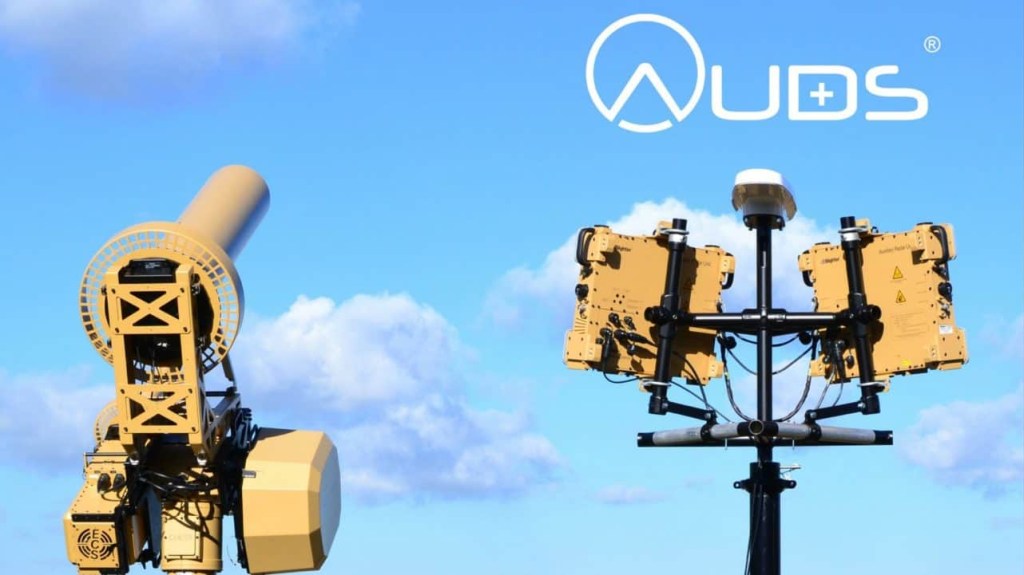
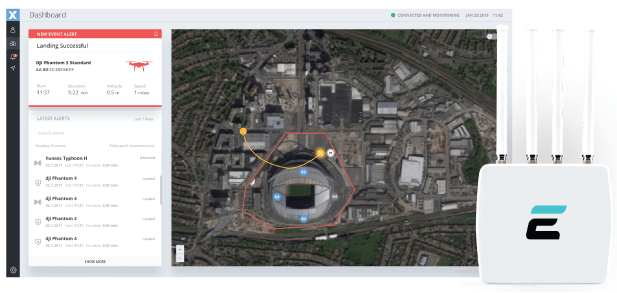
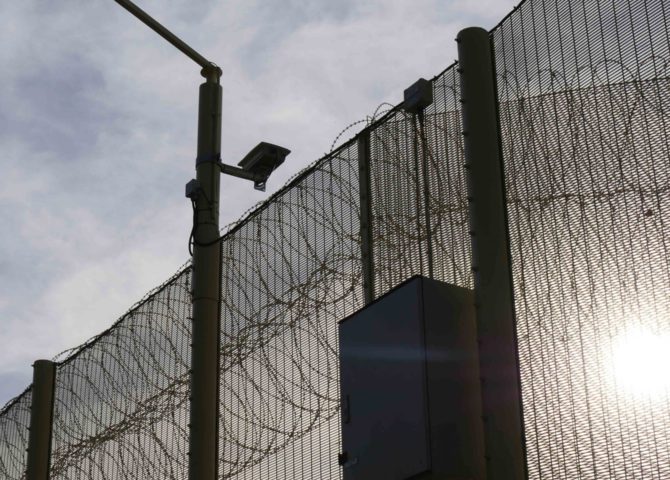
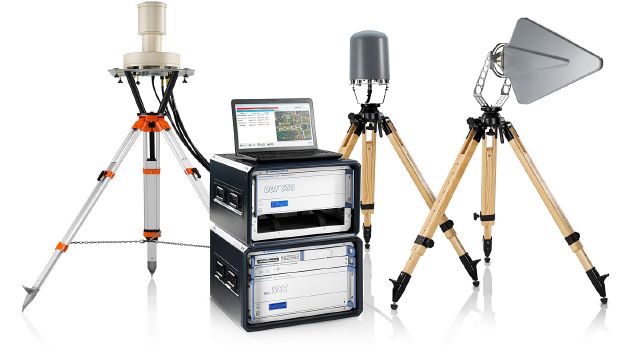
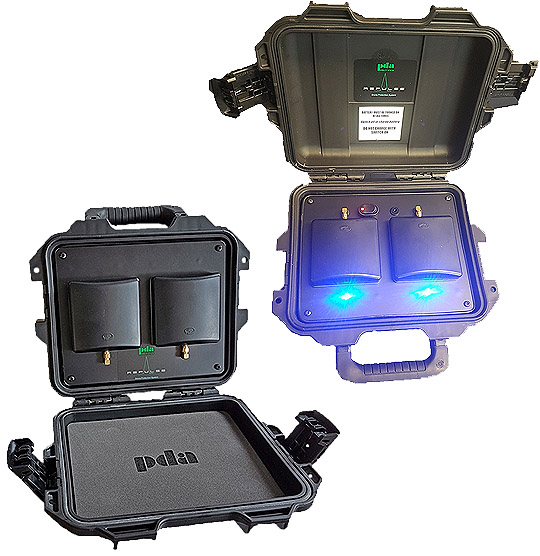
Your detection options are video analytics, acoustics, infrared, radar or RF. Radar needs line of sight and a big object but can spot multiple drones and find altitude. RF is the more sophisticated solution using nodes dotted around your area, which can find the operator, although it is useless if the drone is on a pre-programmed route. Consider how landscape and transmitters may interfere. Beware CUAS that channels your data through the manufacturer. Products vary as to range and number of drones that can be tracked, whether they can track ground control stations and what weather they can handle.
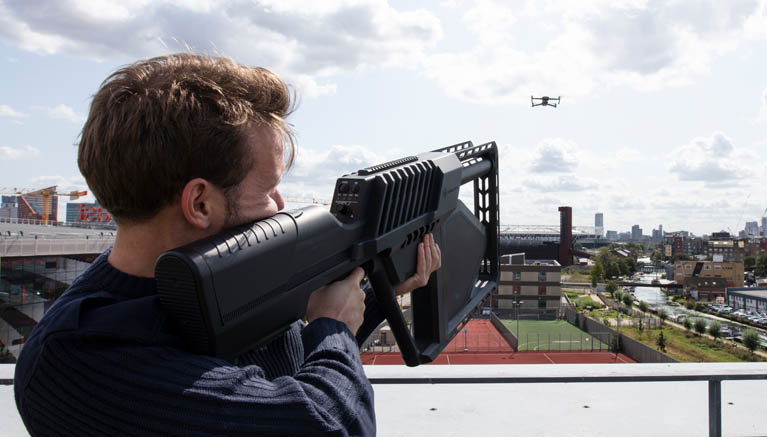
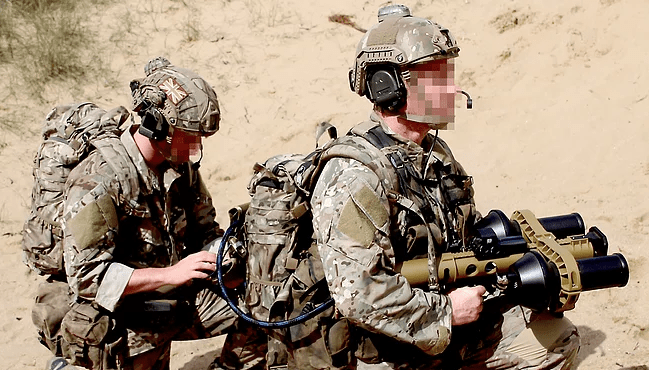
Your effector options are hack it, jam its RF and GPS, shoot it with direct energy like laser or catch it with a ground based or drone based net or trained bird of prey. Radar can detect them whereas radio sensing can fail in built up areas with too many confusing signals. Governments can buy neutralisers such as the Dedrone Federal jammer which can be shoulder mounted or spin on a gimble. Leidos say they have THOR and TIGER microwave blasters but they do not really exist yet. The RAF use Leonardo C-UASand Metis Skyperionto help them build ORCUS counter UAV.
Dedrone Federal Defender
ICO guidance says drones must not be flown within 30 metres of people or 50 metres of a structure, so that may provide some moral justification for taking out a spy drone. Over 20kg they are classed as aircraft so in time of tension you might decide they are enemy combatant UAVs and prevent that international offence under law of war by neutralising it. In time of civil war you will have to decide if you are bothered about the Computer Misuse Act, Air Navigation Order and Wireless Telegraphy Act when you hack or jam a drone.
The technology is sometimes made in the UK and exported as it is illegal to use here except by police (including at airports and events like the London new years party) and prisons. Only kinetic effectors are used at nuclear sites as the other technology is itself countermeasured by existing countermeasures.
Dedrone(RF technology, RF160 detects 1 mile, RF300 locates and tracks 1 km, with optional 3 x Echodyne (1km) or 4 x FLIR (1.5km) radar and PTZ cameras (Axis 1km or FLIR 2km) and DroneDefender RF and GPS jammer, but only alert is available for private customers and only governments can buy the jammer),
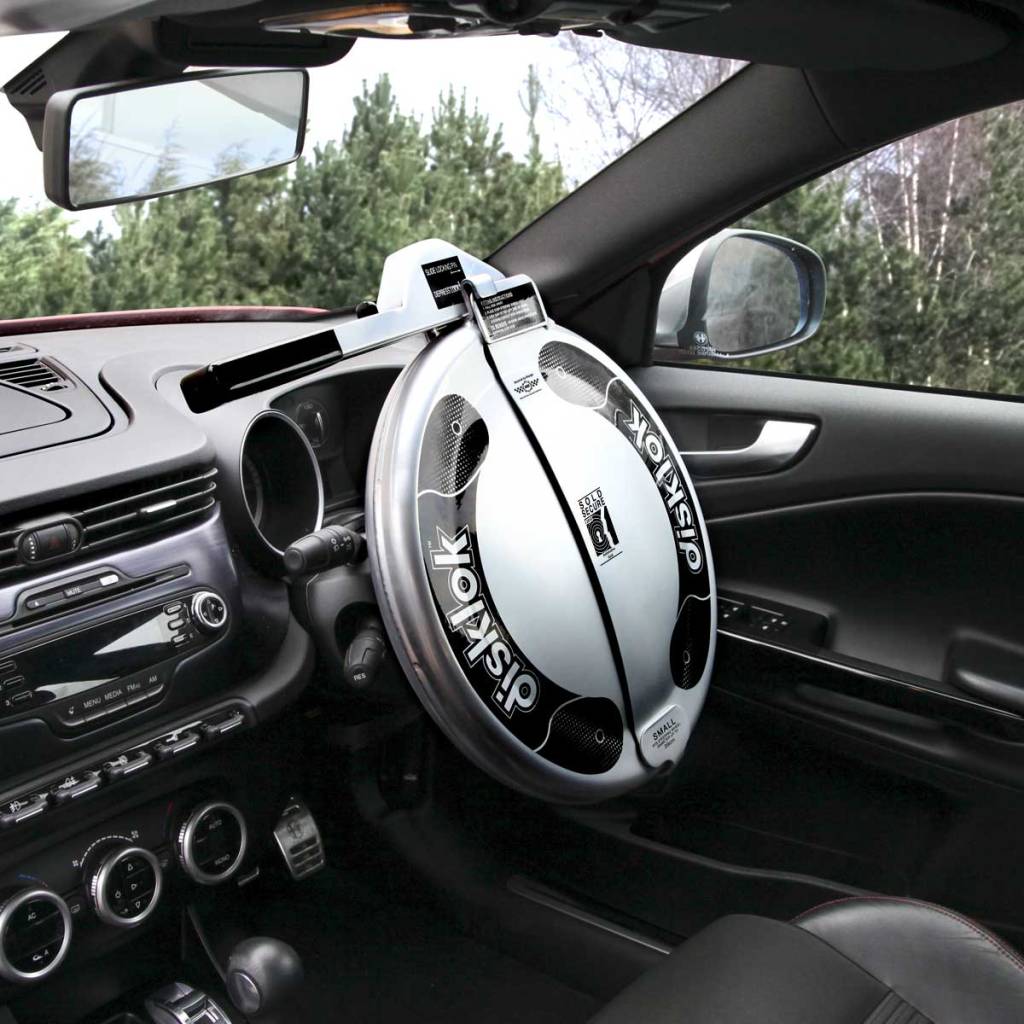
SBD rated Disklok faraday walletfor £7. Disklabs (faradaybag) sell various sizes of SBD rated pouch. A new option is to disable your fob against relay attack with a Keyshield.
To deter access in or out of your driveway there is the SBD & SS Gold rated Lamcal Triple Stop T popup barrier.
To avoid your car being sabotaged also consider a catalytic converter lock such as the SS Gold rated Catloc.
To avoid your car being stolen by hacking the EMU consider an immobiliser. such as the SS rated NoGo.
Your best bet is a Disklok and Triple Stop T.
For vans you get metal covers to protect locks (eg Armaplate), ECU, OBD, pedals and ignition
CatlocTVL pedal box SS GoldTVL OBD lockTVL ECU shieldTVL ignition shieldArmaplate Ford Escort lock plate
Garage
Any garage you may drive out of should have a door viewer or CCTV so you can check what you driving into.
Security garage doors are dealt with here later under security shutters.
Having a garage is thought to increase burglary risk, probably due to weak concealed connecting doors but also burglary tools stored in them. In fact a detached garage makes you 25% more likely to be burgled than someone with an attached garage, and an attached garage makes you twice as likely to be burgled than no garage.
Driving
Keep a grey man car with a full tank of fuel.
Ideally drive in convoy, or at least take passengers.
Keep comms in the car like a radio back to home and your destination.
Stick to lit popular roads and drive at random times.
Stay in the middle or outside lane to deter boxing in or running off the road.
Avoid crowds.
Do not stop for dodgy ruses like fake checkpoints, accidents, roadworks and detours.
If attacked, ram the adversary or obstacles out the way if necessary, go up the kerb at 45 degrees if necessary, and put another vehicle between you.
Consider an evasive & defensive driving and security chauffeur course to learn driver down drill, reversing, ramming, skids, rolling slalom, PITs, Y-turns, J-turns, kerb mounts and, for convoys, cross decking.
PIT on moving cars needs powerful cars nowadays, as ESC protects newer cars from some of the impact and you need to be able to brake heavily to avoid crashing into the bad guy afterwards and to accelerate again if you need another go due to ESC. A moving bad guy’s ESC will easily throw you off the road unless you are in line with him.
Consult an expert on deactivating airbags and any fuel pumps inertia switch ready for PIT.
Key safes
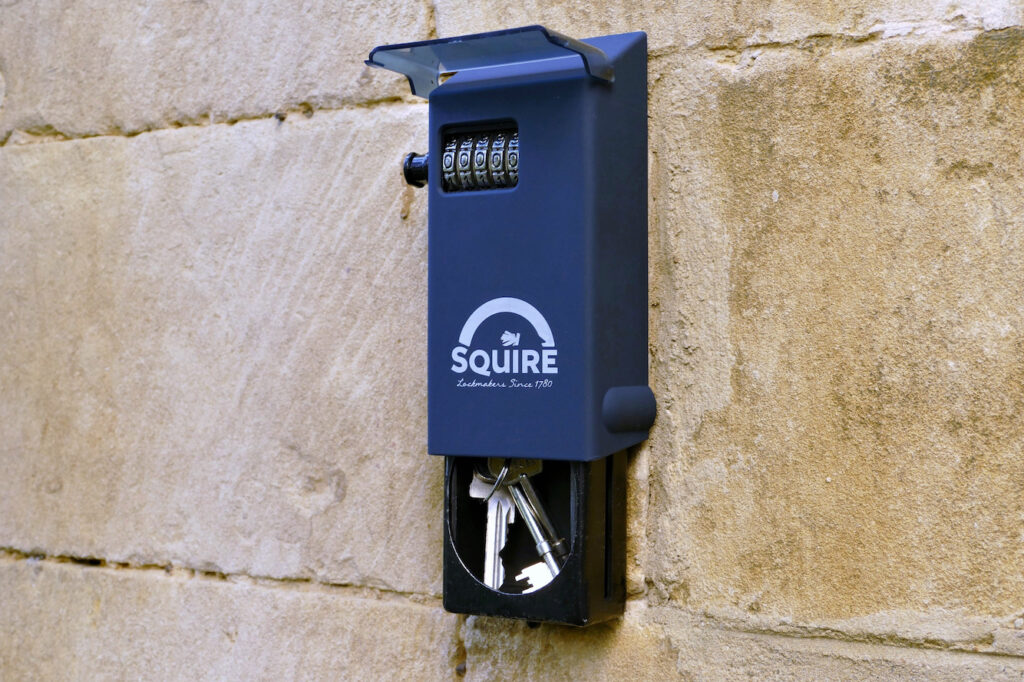
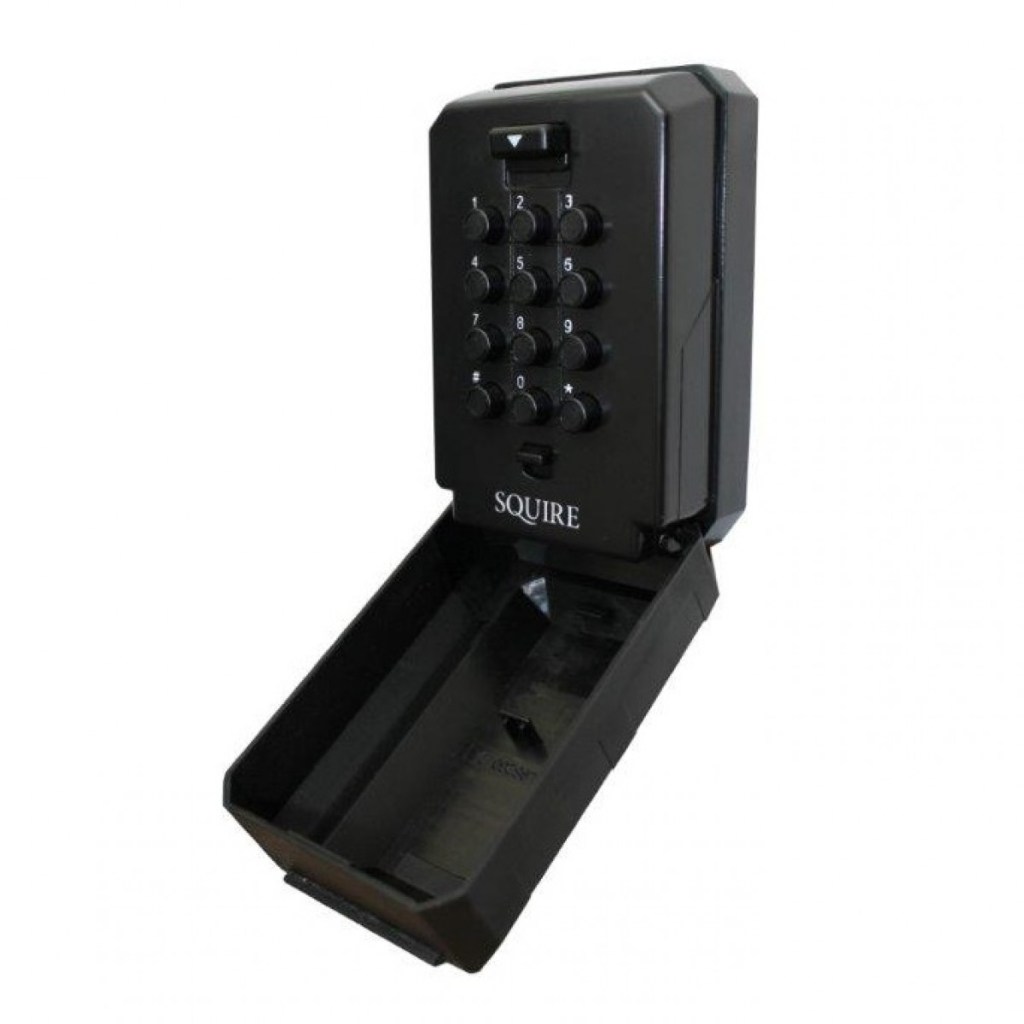
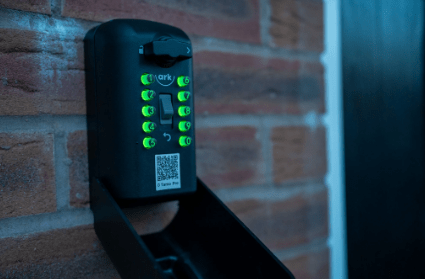
Keys hidden in gardens undermine security, and even key safes still reduce your facade security rating to that of the product. A risk, certainly to cheaper key safes like some HuanLang (can be jiggled open with a penknife), Kiya, Abus, Masterlock and Brinks models, is the Sparrow Decoder, or even a drink can shim, or by feel in the base of push buttons, or plumbers torch in the case of circular tumblers.
There are, however, SBD rated key safes (in increasing order of strength) such as the:
Squire’s 1.66kg Strongholdat £65 also with SS Bronze (they also do an SBD rated 0.68kg Keykeep2), Masterlock HSHC or 5426EURD to SBD & SS Bronze, Loxol KSL letterbox key safe with SBD & SS Bronze rating, Solon Security’s Defender Protec to SR1, UTC’s Supra P500 to SR1 (£79) (extra steel & alarm integration version option (£96)) or C500 also to A3 for £60, P500 Pro (£81)/C500 Pro to A5 (£63), Burton/Banham Keyguard XL for £75 which weighs 2kg and is triple rated to SBD, SS & LPS1175 but only to A3 so will not keep out any real tools but still stronger than the Supra, their Keyguard Digital is rated A5, Supra Wolflok/Tamo to A10 (£117) or Wolflok Pro/Tamo Pro to A10/B1 (£162).
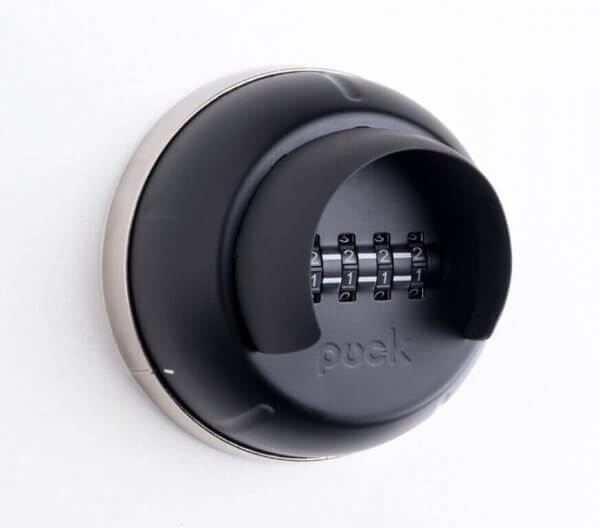
The strongest key safe for normal walls is the SBD & LPS 1175 (A10, B3 & C1) rated digital Sentrilock Sentrikey Bluetooth BLE-WM / NXT-M Lockbox from Sentrilock via Keynetics which uses a Bluetooth app (similar to TRACVault BT Smart L to SR2 that has minimum order of 10), but is dear as it comes with software and training and is sold as access control for companies with multiple users. They also do the Sentriguard to C1, C3 for steel substrate. The second strongest is the much cheaper much more practical Puck or even cheaper Tamo Pro.
Supra P500Supra C500Masterlock 5426EURDSquire StrongholdSquire Keepkey2Burton KeyguardXLLoxol letterbox keysafeSentrikey Lockbox
Sheds
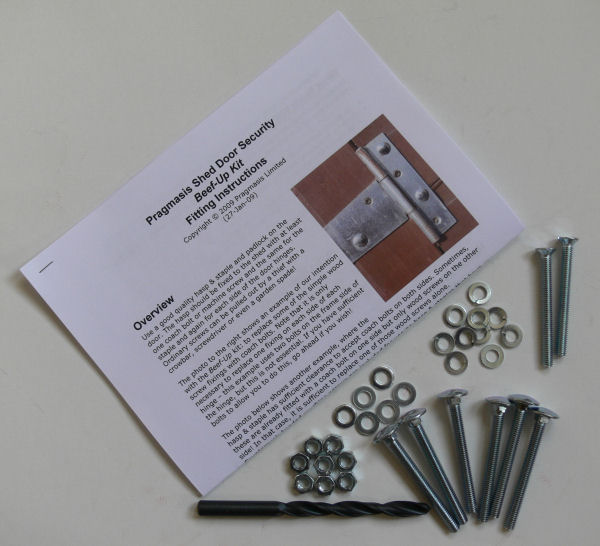
Sheds can be improved with something like the beefup kit for £8 from Pragmasis which replaces hinge screws with bolts.
Or you can buy an SBD & SR1 shed from Asgard if you have at least £1,250 to spare; they are windowless so you may want to rig up some kind of lighting.
Do not store valuables outside, force intruders to risk coming into the inner sanctum for anything you need for survival.
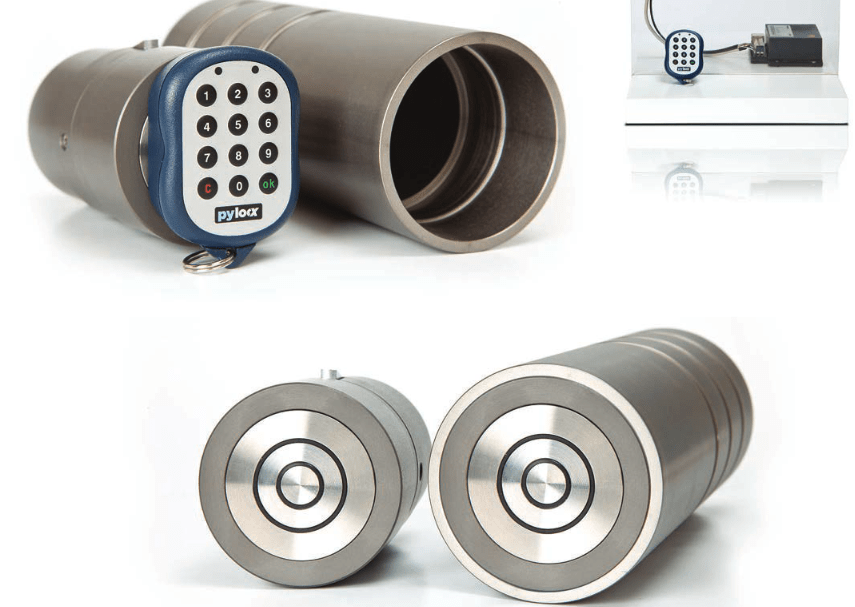
If you want to stash supplies outside and stop anyone opening it and have the cash to spare and don’t mind weatherproofing it, you can buy a Burton Safes Pylocx tube with removable code key, leaving nothing to hack or pick.
Bolt down kit weighing less than 500lb, such as crates of gear.
Apply the advice from chapters on above ground buildings where appropriate, eg walls and isolating HVAC.
Be careful who you hire as bunker consultant, many have no company or comprehensive website and want paying up front, and some have gone bust after boasting in the press about being inundated with calls.
Purpose
Ideally you would have a bunker to combine nuclear and blast protection with a saferoom, plus an escape tunnel. This is a specialist subject and even the best nuclear bunker builders may not use the right reinforcements or doors for a saferoom – normally they use thin watertight and airtight submarine-style blast doors with the hatch taking the brunt. Nuclear bunkers are typically made from concrete or corrugated steel.
Cost
You will not get much change out of £200,000 after stocking it, even assuming you do not want sophisticated decontamination shower, generator, compressor, tanks, filtration, ventilation, fire fighting and operating theatre.
Life after the bomb
The question is can it give you survivability for an acceptable life? The UK is too small for you to easily dodge a large blast, so even if you can afford a strong enough bunker what will be left when you emerge?
There expectations are:
no military, utilities, fuel or medicine,
only subsistence rations of food (for up to 20% of the population if they can find enough staff and gas has not been cut off, such as biscuits and tins if not looted from councils by mobs and not until one to three weeks has passed to organise lists),
hospitals will be moved to makeshift clinics accepting the most survivable patients, the dead will remain unburied,
rubbish will not be collected,
refugees (including most Londoners) will flock to the countryside and eat animals,
unscathed homes will be ordered to accept billeting,
about 20% will be dead from burns, cuts, disease and starvation,
80% of staff will not be working,
50% of industry will be taken out,
40% of homes will be rubble,
military will be unable to help civilians as they will be busy moving NATO from USA to Europe,
police will be backed up by traffic wardens and volunteers (where not effectively replaced by vigilantes) and retasked with redirecting people and sealing petrol stations,
firemen will be stood down to await water distribution and decontamination assignments,
government will commandeer transport, utilities, land and communications,
people will be asked to work on farms,
cashpoints will be disabled,
lighting will be banned,
courts will be allowed to sentence to torture or death,
some phones might be left working,
some conurbations will declare independence,
some villages will unilaterally close to refugees,
special forces (Chinese, Russian, Iranian or North Korean) will have landed disguised as asylum seekers, and
biological or chemical weapons may have been unleashed.
Examples
Kelvendon bunker with 10’ concrete walls was only rated for 20kt near miss and Chilton with 0.5m concrete walls was only rated for 500kt at 5 miles.
Materials
Burster slabs
Burster slabs are not needed unless you expect to be targeted by a missile. They would be minimum 1.4m thick, extend beyond the roof to form a 45 degree angle and the minimum 2m gap filled with sand.
Shielding
Once you have enough security layer and strength to hold up to blast or collapsed soil or house, you can add shielding with weaker material like plasterboard – which you need five times more of than steel but benefit from being lighter to carry. If the bunker is buried then the soil can do the shielding, leaving you only to worry about waterproofing, ventilation, structural strength to PSI of over 11 and attack resistance.
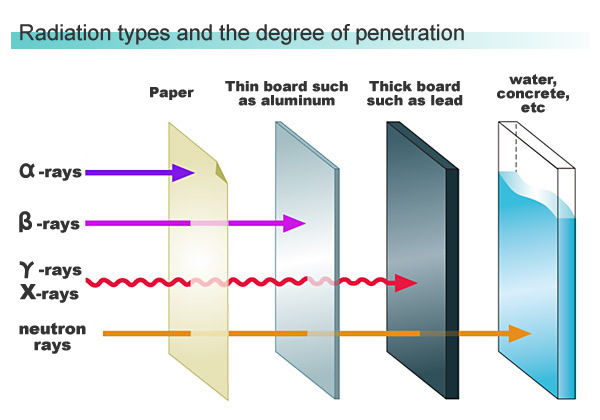
The denser and higher the atomic number the thinner it can be as you are increasing the linear attenuation coefficient by increasing probability of interaction. A lot of protection comes from mass, which is why you don’t just use air – it’s as good as concrete per gram but not dense enough so to replace a metre of concrete you’d need a 2km air gap.
Concrete has the benefit of being structural and can be improved with barium.
Lead is cheap and dense enough to be thin, but heavy, soft and toxic, and unnecessary unless you are tight for space.
Steel that can double up as structural strength and physical security. Each half inch steel halves the gamma radiation. 3mm steel is a good spall layer.
If you don’t need any more anti spall then you could use plasterboard, it will just be five times thicker than steel, unless you use leaded plasterboard which is lined with 0.8-3mm lead, or leaded plywood which can handle double the lead thickness.
Tungsten is dense and strong so better than lead, but not quite as efficient in linear coefficient and ruinously expensive.
Uranium is most efficient and cheaper than tungsten, but radioactive and liable to catch fire after exposure to air, so a hard sell.
Soil will provide a lot of shielding so there might not be anything left to add to the thickness already required structurally for support and blast protection as long as will hold off ballistic and manual attacks.
If you only want a thin wall but worry about radiation then one option is to line it with lead bricks.
For a neutron bomb you need high hydrogen content materials like water, especially with a dash of boric acid, and lots of it, as the gamma shielding undermines it with its high atomic number whereas you want low atomic number for neutrons. Water is cheap but needs sealing well to survive a blast.
Against an earth penetrator missile all you can influence is trying to destroy or detonate it before it gets too close where it can couple too much energy into the ground, either with missile defence such as interceptors, or jamming to reduce accuracy, or unexpected burial depth. Then, if it arrives, decelerate it by depth of cover and increase the scaling factor using rock but also minimise shock propagation. The difficulty is that once underground, the ground shock coupling factor is about 20, meaning 20 times stronger than at the surface, so you have to expect ground shock and just deal with it by depth, geology and construction with thickness and shock isolation such as springs and ductile liners. Deep enough in granite you might survive 4 kilobars. In nuclear tests on granite it was found velocity and peak strain reduces about ten times faster than depth, so that being 1,500 metres deep instead of 150 metres reduced peak strain by 99%. Peak stress reduced about three times faster with depth. The depth of hardened bunkers is usually less than 250m and rarely more than 400m with the deepest thought to be 700 or 2,000m. Military bunkers are generally up to 30psi hardness for C3I basements, up to 50PSI for shallow underground structures and up to 1,000PSI for silos, most military bunkers are designed to under 40PSI although may need to be designed up to 40,000PSI.
Construction
The reinforced concrete bunker underneath the house needs roughly a floor 1m thick, walls 1.5m thick and roof up to 10m thick, and protected by a recommendation of 1.4m thick burster slab overhead extending far enough to form a 45 degree angle to the walls and with sand in between if it’s to address missiles, jets, helicopters, gyros or missiles into it. Most bunkers this strength use a roof 0.5-2m thick protected by two 1m burster slabs separating 3m of typically 8″ rocks. You can reduce concrete thickness by reinforcing with polymer fibres or using UHPC which is two thirds cement but additionally has finer particles of silica fume and quartz powder, superplasticiser and 2% fibres, but costs about £3,000/m3, mainly due powder and fibre.
The UK has its own bunker builders like Paul Thompson’s UK Nuke Shelters.
Location
Location should be away from dangerous materials and accessible despite debris from nearby buildings. Ideally live far from likely targets, as you cannot control bomb size, height or depth, and somewhere with soil that is poor at transmitting shock and has no ground water. Keep vegetation at least ten feet away to avoid chemical weapons sticking.
Utilities
Use electric systems for heating and lighting. Consider a diesel generator. Use positive pressure (0.1 iwg, so about 0.5cfm/f2 for a concrete bunker) to keep out pollution. Install manual ventilation backup. Lighting should have UPS battery. Torches should be ready to grab. Alarms and gas detectors should be as per above ground buildings, likewise radio and satellite comms.
Bunker manufacturers should be able to arrange the waterproofing, blast valves, renewable energy, plumbing, sanitaryware, water ventilation and generation, although you may want to go further with firefighting, medicine, comms, waste disposal, water filtration and geothermal well. The bunker can of course be your food and water storage.
Without filtration you can only stay until CO2 or pollution leaking in builds up. HVAC should include HEPA and carbon gas filters in series. Aim for 15cfm flow. Absorption should be 99.9% chemisorption or 9.999% physical (300Kg-minutes/m3). Filter seal bypass should be under 0.1%. External fans should be push-through and internal fans should be pull-through. You may need air con to counteract the heating caused by filters. Fit pressure gauges to check positive pressure.
Layout
A porch roof is recommended to keep debris off the door.
Sizing should be minimum 6m2 per room, 0.75m2 per head usable and 1.35 times that for gross area, minimum height 2.3m of which 2m unobstructed.
Rooms could include an airlock of two blast doors, minimum 2.5m2. Then a corridor with a 90 degree turn. Then a first aid room of 10% total area.
Accommodation is normally one room for everyone.
A toilet should be minimum 1m2.
Space is needed for storage of food and water.
A control room is optional for monitoring equipment.
A mechanical room of about 3.5m can accommodate filtration and ventilation.
Ventilation channel should be short and have two 90 degree turns.
Emergency exit can be through a wall into a shaft minimum 60x80cm, with stairs if ascending over 1.5m, with inward opening door, the shaft may be at the end of a drained tunnel over 10m long under minimum 50cm soil.
Avoid sharp edges and suspended items.
Doors
The door will be a blast door, duplicated for the escape tunnel which can be protected by an escape hatch. Hatches can be given anti-tamper stickers.
The door can often also have a ballistic rating and could be commissioned to approximate a forced entry standard, otherwise you’ll use an airlock with a separate security door inside or you’ll commission a military size multi threat door – but that won’t be so fast to open in a crisis. A customised door is likely if you also need a door for shielding, although there are radiation doors that can go behind the blast door such as from Abloy, but that only boasts 1.6mm lead so will add little to the shielding available from a beefy security door in front of it.
At least one manufacturer can make Bond villain doors and that’s Booth – who make specialist doors for spies and armies. An example of their doors for a nuclear facility cost £300,000 each, weighed ten tons and took 1,500 hours each to make. They can even make the hangar doors for your getaway helicopter.
Rhino Doors are worth consideration too for hangars.
Sommer do a forced entry, blast, ballistic, gas, water & radiation bunker door, the OST Barrier.
Assa Abloy do 1.75” thick lead lined doors with up to an inch (1/16-3/16 inch under latest spec) of lead sandwiched between 22 gauge steel reinforcements behind 16 gauge steel skins under wood finishes with fibreglass insulation, with ballistic, blast rating up to 12pi and beyond, and RF options.
You can buy RF film, foil and paint from shops like ElectroSmogShielding. Skunkworks like Qinetiq have been known to add a crafty extra 25db attenuation by nailing up wall hangings of chainmail, although at high frequencies it has nasty resonances. You can see a youtube video of one such abandoned site with RF/IR film left on the window; these metal & oxides films can stop 99% of IR and 40db of RF.
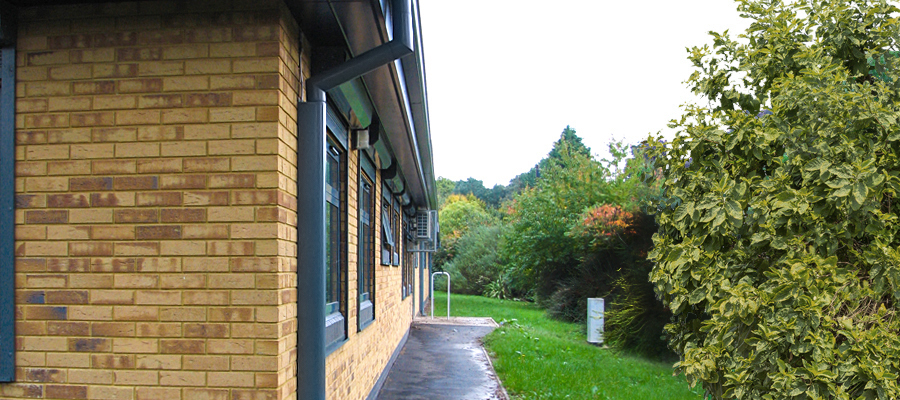
Now, what if the intruder makes it to your facade – they might only have had to stroll up your garden path.






































 Limey Prepper - UK Preppers Handbook
One thought on “Scenarios: Unrest: Home invasion Pt10: Physical protection: Outside – Gardens, Keysafes, Sheds, Bunkers, Vehicles & Drones”